
Autism Spectrum
When to worry about autism in a 6-to-9-month-old
At 6-to-9 months, autism cannot be reliably identified — the patterns it is recognised by emerge later. This is the age for joyful interaction and routine developmental monitoring, not an autism checklist. Screening becomes meaningful around 16–18 months. Only a clinician can assess; worry is best channelled into watchful connection.
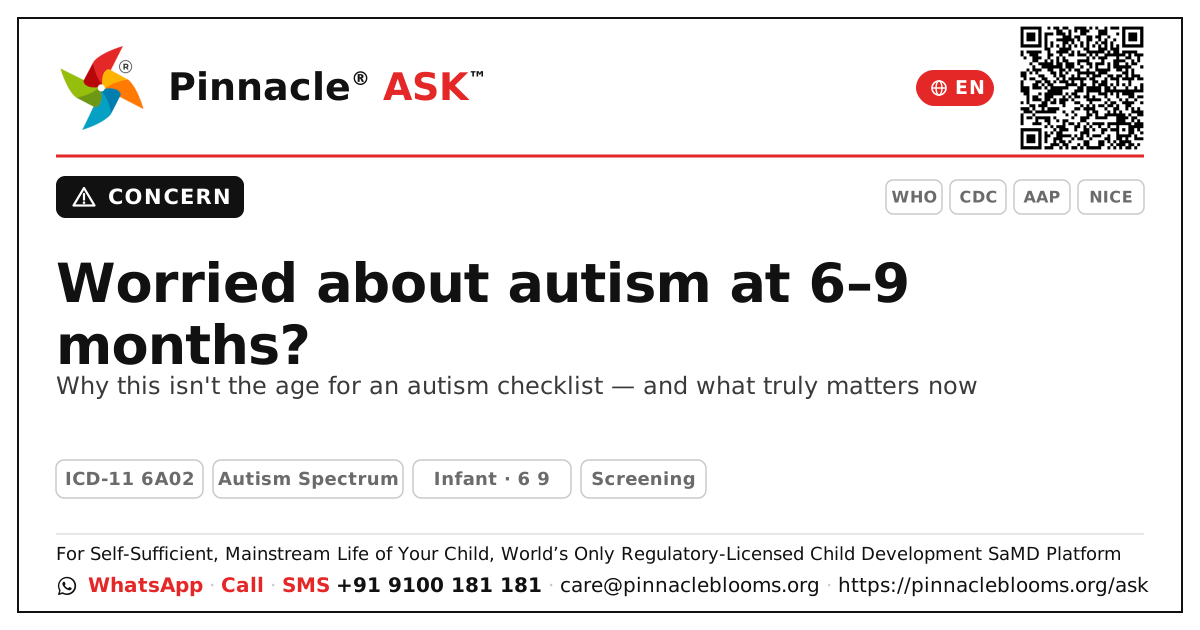
If a worry about autism has settled in your mind at six or nine months, that worry deserves a clear, honest answer — and here it is.
In short
At 6-to-9 months, autism cannot be reliably identified — the social and communication patterns it is recognised by simply have not had time to emerge yet. So this is not the age to look for autism "signs". It is the right age to enjoy the back-and-forth of babbling, smiles and shared looks, and to flag anything that feels off to your paediatrician at routine visits. Worry now is best channelled into watchful, joyful interaction — not a checklist.What is actually meaningful at 6–9 months
Rather than scan for autism, watch the building blocks of early connection — these reassure when present and are worth a mention if consistently absent:- Social smiles and warming up to familiar faces
- Babbling — "ba-ba", "da-da" sounds by around 6–9 months
- Following your voice or a sound, and turning toward you
- Shared looking — glancing between you and a toy
- Responding to their name beginning to appear toward 9 months
Hearing should always be checked first, because a baby who isn't responding to sound may simply not be hearing well. A single quiet day means nothing; a persistent pattern is what a doctor wants to know about.
The science, briefly
The WHO classifies autism spectrum disorder under ICD-11 6A02, and its defining features are recognised reliably only later — most screening tools (such as the M-CHAT) begin around 16–18 months. Before then, the kindest, most evidence-based step is general developmental monitoring at every well-baby visit, exactly as the CDC's Learn the Signs. Act Early. programme and the Indian Academy of Pediatrics advise.The Pinnacle way
A clinical AbilityScore® and any diagnosis are formed only at a Pinnacle Blooms Network centre, under qualified clinician care — never from an online form or an infant checklist. If anything about your baby's hearing, responsiveness or development feels off, a gentle developmental check gives you clarity and reassurance. Should support ever be needed later, our autism therapy pathway is ready — but at this age, observation and connection come first.Trusted sources
WHO ICD-11 (6A02); CDC Learn the Signs. Act Early.; Indian Academy of Pediatrics; American Academy of Pediatrics (HealthyChildren.org); NICE CG128.Next step — Keep your routine well-baby visits, mention any concern to your paediatrician, and if you'd like reassurance now, book a developmental check with a Pinnacle clinician.
This is general information, not a diagnosis — a clinical AbilityScore® and any diagnosis are formed only at a Pinnacle Blooms Network centre under qualified clinician care.
What to watch
Mention to your paediatrician if your baby is not babbling at all, never turns to your voice or sounds, shows no social smile, or doesn't begin responding to their name toward 9 months — and have hearing checked first.
Try this at home
Play simple turn-taking games — peek-a-boo, copying baby's sounds back, pausing for them to 'reply'. This back-and-forth is the richest early-development practice there is, and it tells you a lot about how your baby connects.
Trusted sources
Developed by SETU Consortium · Pinnacle Blooms Network · Last reviewed 2026-06-10 · reviewed every 365 days
This is general information, not a diagnosis. A clinical AbilityScore® and any diagnosis are formed only at a Pinnacle Blooms Network centre, under qualified clinician care.
Frequently asked
Can autism be diagnosed at 6 months old?
No. The social and communication patterns autism is recognised by have not had time to emerge at 6 months. Most screening tools begin around 16–18 months, and diagnosis happens later, by a qualified clinician.
What should I actually watch for at this age?
Watch the building blocks of connection — social smiles, babbling, turning to your voice, shared looking, and beginning to respond to their name toward 9 months. Mention any consistently absent pattern to your paediatrician, and always have hearing checked first.
Should I get my baby screened now if I'm worried?
Routine well-baby visits with developmental monitoring are the right step now. If a worry persists, a gentle developmental check with a clinician gives reassurance — but formal autism screening becomes meaningful around 16–18 months.