
Intellectual Disability
When to worry your 2-year-old might have Intellectual Disability
At two it is too early to confirm Intellectual Disability — the brain is still developing rapidly. Watch development as a whole, and check any concern early. A pattern of delay across communication, play and daily skills, or loss of a skill, is a reason for a developmental check — not a diagnosis you can make at home.
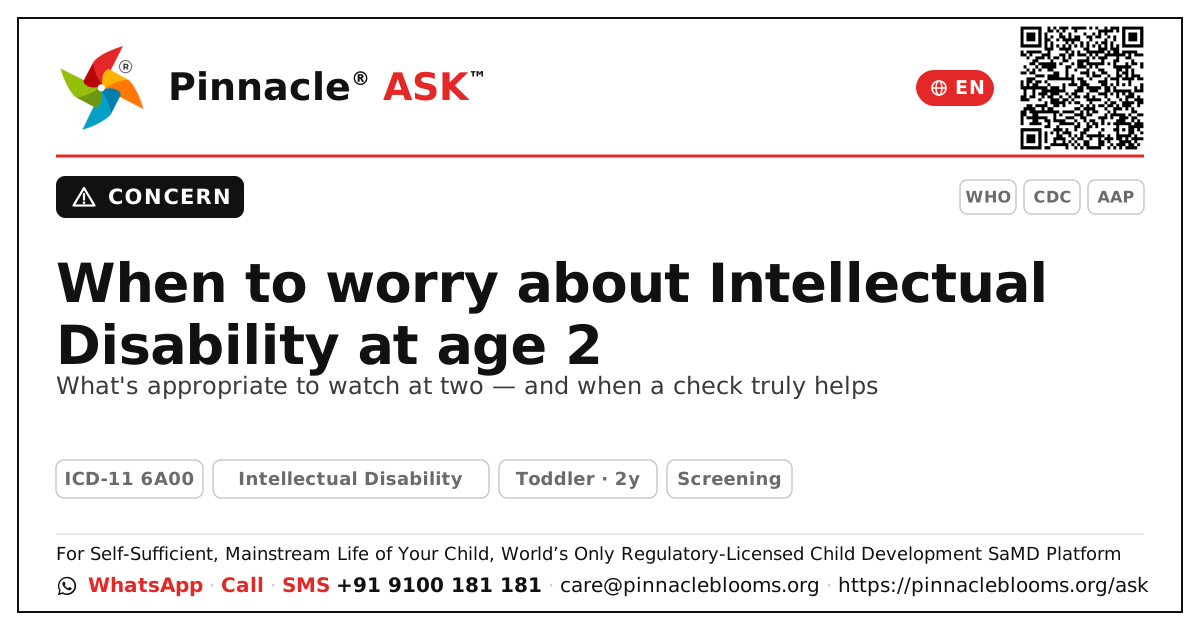
If your two-year-old isn't doing what other toddlers seem to do, the worry is real — and it deserves a calm, clear answer rather than a frightening label.
In short
At two, it is too early to confirm Intellectual Disability — the brain is still developing fast and milestones vary widely between healthy children. What is appropriate now is to watch development as a whole and check any concern early. Worry is a good reason to do a developmental check; it is not, by itself, a diagnosis. Only a qualified clinician can tell whether a delay is a passing variation or something that needs support.What to watch at two
Think in patterns across several areas, not one missed milestone:- Communication — very few or no words, not pointing to show you things, not following a simple instruction like "give me the cup"
- Play & thinking — little pretend play, not exploring how toys work, difficulty with simple problem-solving (stacking, fitting shapes)
- Daily skills — not yet trying to feed with a spoon, drink from a cup, or imitate everyday actions
- Across the board — when several of these lag together, and especially if your child loses a skill they once had, that is the signal to check sooner rather than later
The science, briefly
In ICD-11, 6A00 (Disorders of intellectual development) describes significant limitations in both reasoning and everyday adaptive skills that begin in childhood. Crucially, a reliable diagnosis usually needs standardised assessment at an older age — at two, clinicians monitor, support and re-check. The hopeful part: the toddler brain is highly plastic, so early stimulation and the right support can change a child's trajectory meaningfully.The Pinnacle way
A clinical AbilityScore® and any diagnosis are formed only at a Pinnacle Blooms Network centre, under qualified clinician care — never from an online form. Our clinician measures your child against their own AbilityScore baseline, looks for treatable causes first, and builds a plan through gentle, play-based special education support. The goal is your child learning and thriving — not a label.Trusted sources
WHO ICD-11 (6A00 · Disorders of intellectual development); CDC "Learn the Signs. Act Early." milestone guidance; American Academy of Pediatrics (HealthyChildren.org); Indian Academy of Pediatrics.Next step — The kindest thing to do with worry is to check. Book a developmental assessment with a Pinnacle clinician.
This is general information, not a diagnosis — a clinical AbilityScore® and any diagnosis are formed only at a Pinnacle Blooms Network centre under qualified clinician care.
What to watch
Seek a check sooner if several areas lag together — very few words, no pointing, little pretend play, not following simple instructions — or if your child loses a skill they once had.
Try this at home
Turn daily routines into back-and-forth play: name what you're doing, pause for your child to respond with a sound, word or gesture, and celebrate every attempt. Ten warm minutes a day builds language, thinking and connection.
Trusted sources
Developed by SETU Consortium · Pinnacle Blooms Network · Last reviewed 2026-06-10 · reviewed every 365 days
This is general information, not a diagnosis. A clinical AbilityScore® and any diagnosis are formed only at a Pinnacle Blooms Network centre, under qualified clinician care.
Frequently asked
Can Intellectual Disability be diagnosed at age two?
Usually not with certainty. At two, development varies widely and the brain is still maturing, so clinicians monitor, support and re-check rather than label. A reliable diagnosis generally needs standardised assessment at an older age.
What is the difference between a late talker and Intellectual Disability?
A late talker is typically delayed mainly in speech while other areas — play, problem-solving, daily skills — develop on track. Intellectual development concerns show as a broader pattern of delay across several areas. Only a clinician can tell the difference.
Should I wait and see, or get my child checked now?
If you have a genuine concern, an early developmental check is the kind, sensible choice. It either reassures you or starts support early — when the toddler brain is most responsive — so there is no downside to checking.