
Developmental Trauma
When to escalate a child showing signs of developmental trauma
Escalate when stress-related behavioural, emotional or developmental signs persist beyond 2–4 weeks, occur alongside known adversity, or carry any safety risk. ASHA/PHC workers notice, document, support and route to the Medical Officer and child-protection services — never diagnose. When in doubt, refer.
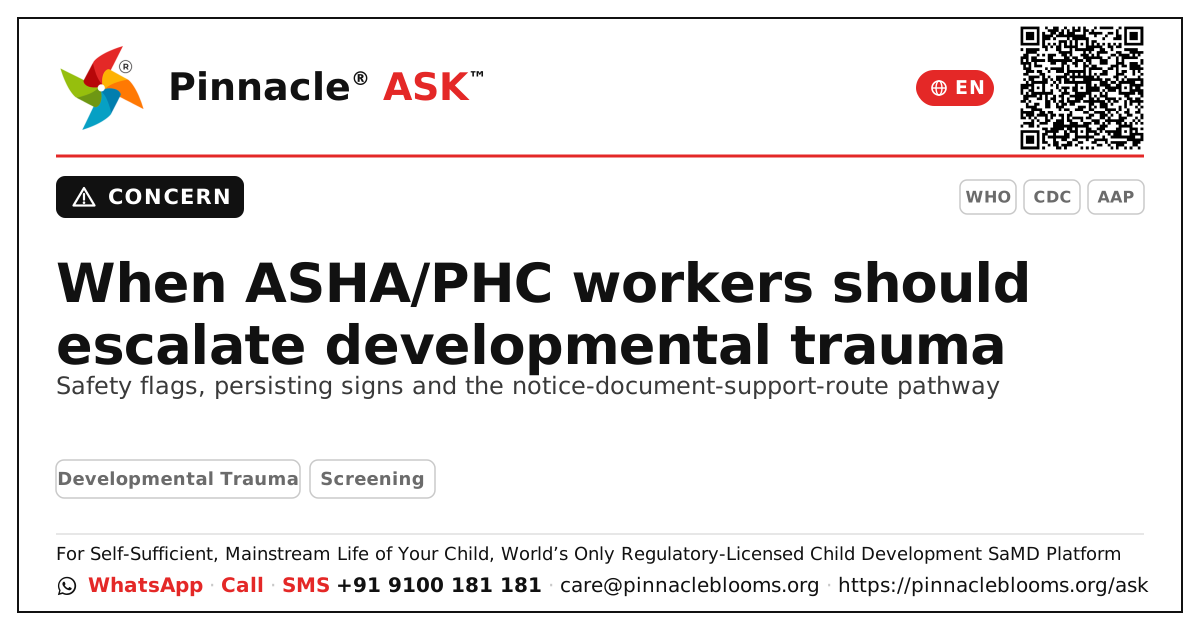
A child who has lived through hardship can carry it in their body and behaviour — and the frontline worker who notices first holds real power to change that child's path.
In short
Escalate when behavioural, emotional or developmental signs persist beyond a few weeks, when they appear alongside a known adversity (loss, violence, neglect, separation, displacement), or when there is any sign of ongoing harm or safety risk. Escalation does not mean diagnosing developmental trauma — it means routing the child promptly to the Medical Officer at the PHC and, where indicated, to child-protection and RBSK/DEIC services. When in doubt, refer; under-referral costs far more than over-referral.Signs that warrant escalation
For an ASHA or PHC worker, the pattern matters more than any single behaviour:- Safety first (escalate immediately): disclosure or signs of abuse, neglect, exposure to violence; injuries inconsistent with the given history; a caregiver unable to provide basic care. Route to the Medical Officer and Child Protection (CHILDLINE 1098) today.
- Persisting >2–4 weeks: extreme clinginess or withdrawal, frequent unexplained fear or freezing, sleep and feeding disruption, regression (loss of skills previously gained — speech, toileting, walking), and developmental milestones falling behind.
- Dysregulation: intense, prolonged tantrums or shutdowns, hypervigilance, difficulty being soothed, marked startle.
- Relational signs: indiscriminate friendliness with strangers, or strong avoidance of the caregiver.
Use the RBSK 4 Ds lens — Defects, Deficiencies, Diseases, Developmental delays — and document what you observe in plain, factual language without labelling.
When to refer, and to whom
- Immediate (same day): any safety concern → Medical Officer + Child Protection / 1098.
- Priority (within the week): persistent regression, marked developmental delay, or a child not soothed by usual care → PHC Medical Officer for review and onward DEIC referral.
- Routine watch: mild, settling stress responses with a supportive caregiver → reassure, support the caregiver, and review at the next home visit; escalate if no improvement.
Your role is to notice, document, support and route — never to diagnose. A warm, calm caregiver conversation is itself protective.
The Pinnacle way
A clinical AbilityScore® and any diagnosis are formed only at a Pinnacle Blooms Network centre, under qualified clinician care — never from a screening or an online form. When a referred child reaches a centre, the clinician uses a structured, clinician-administered assessment against the child's own baseline before any plan is shaped. Learn more about developmental trauma, our child psychology and behaviour support, and how the AbilityScore® is calculated.Trusted sources
WHO ICD-11 and Nurturing Care Framework for early childhood; CDC and AAP guidance on childhood adversity and toxic stress; India's RBSK screening framework (4 Ds) under the National Health Mission.Next step — When you spot a persisting or safety-flagged pattern, route the child to your Medical Officer the same day, and refer the family for a developmental assessment.
This is general information, not a diagnosis — a clinical AbilityScore® and any diagnosis are formed only at a Pinnacle Blooms Network centre under qualified clinician care.
What to watch
Escalate immediately for any disclosure or sign of abuse, neglect or violence, injuries that don't match the history, or loss of previously gained skills. For persisting fear, withdrawal, regression or developmental delay beyond 2–4 weeks, refer to the Medical Officer that week.
Try this at home
On home visits, coach the caregiver in calm, predictable routines and gentle reassurance — a soothing, available adult is the single strongest protector against the effects of early adversity.
Trusted sources
Developed by SETU Consortium · Pinnacle Blooms Network · Last reviewed 2026-06-10 · reviewed every 365 days
This is general information, not a diagnosis. A clinical AbilityScore® and any diagnosis are formed only at a Pinnacle Blooms Network centre, under qualified clinician care.
Frequently asked
Can an ASHA worker diagnose developmental trauma?
No. The ASHA or PHC worker's role is to notice, document factually, support the caregiver and route the child to the Medical Officer. Diagnosis is made only by qualified clinicians after structured assessment.
How long should signs persist before I escalate?
Most stress responses settle within a few weeks with a supportive caregiver. Escalate priority cases when behavioural, emotional or developmental signs persist beyond 2–4 weeks, and escalate immediately for any safety concern regardless of duration.
What if I see signs but the caregiver disagrees?
Document what you observe in plain, factual terms, reassure the caregiver, and still route to the Medical Officer for review. Never delay escalation when a safety risk is present.