
social greeting
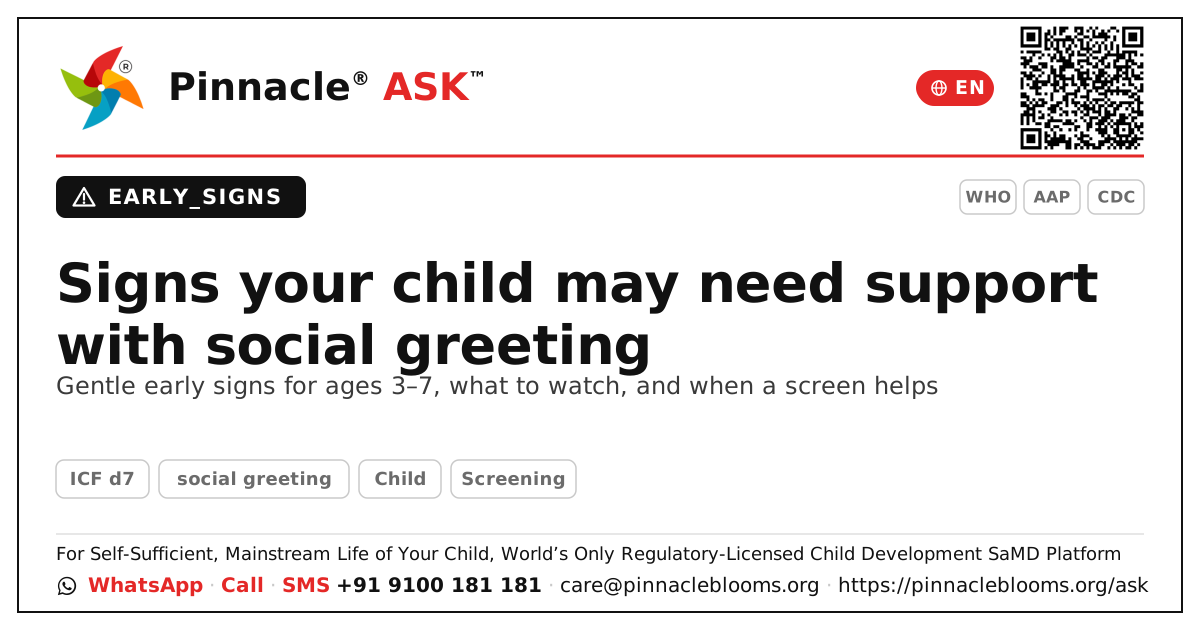
Signs your child may need support with social greeting
Between about 3 and 7 years, most children greet familiar people with a wave, smile, eye contact or a simple hi or bye, increasingly on their own. Signs your child may need support include rarely returning greetings, not noticing when greeted, turning away, or needing heavy prompting every time. These are signs to observe and share with a professional, not to diagnose at home. Consider a screen if differences are consistent across people and settings, show little progress over months, or appear with other communication or social-play differences.
A wave, a smile, a shy “hi” back — small greetings are a child’s first bridge to the people around them.
In short
Between about 3 and 7 years, most children begin to greet familiar people with a wave, a smile, eye contact or a simple “hi” or “bye”, often with a gentle nudge at first and then more on their own. Signs your child may need support include rarely returning greetings, not noticing when someone says hello, looking away or turning their body away, or struggling to start a greeting even with prompting. These are things to observe and share with a professional, not to diagnose at home — and warm, playful support helps greatly when started early.Signs worth watching
Greetings grow through copying, comfort and practice. A few gentle signals to notice:Responding to others
- Rarely waves, smiles or replies when a familiar person greets them, even after a reminder
- Doesn’t seem to notice when someone says hello or goodbye
- Looks away, turns away, or moves past without acknowledgement
Starting greetings
- Seldom greets family or friends first, even people they know well
- Needs heavy prompting every single time, with little carry-over
- Greets in an unusual or rote way that doesn’t quite fit the moment
Across people and places
- Manages greetings at home but not with peers, teachers or visitors
- Avoids the social bit of arrivals and departures (e.g. at school drop-off)
What shifts this from ordinary shyness towards something to look at is a pattern that is consistent across people and settings, shows little progress over several months, or sits alongside other communication or social-play differences.
When to seek a check
Many children are simply reserved and warm up in their own time, so an occasional missed “hi” is rarely a worry. Consider a developmental screen if greeting differences are persistent, appear with delays in speech or social play, or are flagged at school. Early, playful support never needs to wait for a label.The Pinnacle way
At [Pinnacle Blooms Network](/), we begin with what your child can do and build outward — weaving greetings into play, songs and daily routines through warm speech therapy and social-skills support, with parents coached as everyday partners. Learn more about social greeting and how progress is understood. A clinical AbilityScore® and any diagnosis are formed only at a Pinnacle Blooms Network centre under qualified clinician care; nothing here is a diagnosis. Across 70+ centres in 4 states and 4.95 lakh+ families served, our aim is steady, strengths-first progress.Trusted sources
Aligned with WHO ICF guidance on interpersonal interactions, and American Academy of Pediatrics and HealthyChildren.org guidance on social-communication development and developmental monitoring.Next step — if your child’s greetings feel like something to understand better, book a developmental screen with our clinical team on WhatsApp at +91 91001 81181, and let’s understand your little one together.
This is general information, not a diagnosis — a clinical AbilityScore® and any diagnosis are formed only at a Pinnacle Blooms Network centre under qualified clinician care.
What to watch
Rarely waving, smiling or replying when greeted; not noticing hellos or goodbyes; turning away; needing heavy prompting every time; or greetings that work at home but not with peers, teachers or visitors — especially if persistent across settings or alongside other communication differences.
Try this at home
Make greetings playful and predictable: a cheerful “hi!” with a wave at every arrival, a song at goodbye, and warm praise for any small response — modelling first, then giving your child a moment to join in.
Trusted sources
Developed by SETU Consortium · Pinnacle Blooms Network · Last reviewed 2026-06-10 · reviewed every 540 days
This is general information, not a diagnosis. A clinical AbilityScore® and any diagnosis are formed only at a Pinnacle Blooms Network centre, under qualified clinician care.
Frequently asked
Is it just shyness if my child doesn’t greet people?
Often, yes — many children are reserved and warm up in their own time, so an occasional missed “hi” is rarely a worry. It’s worth a closer look when the pattern is consistent across people and places, shows little change over several months, or appears alongside other speech or social-play differences.
At what age should my child greet people on their own?
Most children wave or smile in response from around their first year, and by about 3–7 years greet familiar people more independently with a wave, eye contact or a simple hi or bye — often needing fewer reminders over time. Children vary, so look at the overall trend rather than one moment.
Can social greeting skills be supported?
Yes. Greetings are highly responsive to warm, playful practice woven into daily routines — modelling, songs, predictable arrival and goodbye rituals, and gentle praise. A clinician can tailor support if needed; a screen helps decide what, if anything, is required.