
Tourette Syndrome
What Conditions Often Occur Alongside Tourette Syndrome?
Tourette Syndrome rarely occurs alone. The most common co-occurring conditions are ADHD, obsessive-compulsive behaviours, anxiety, learning differences, and sensory or sleep difficulties — and these often affect daily life more than the tics themselves. A clinical assessment is established only at a Pinnacle centre under clinician care.
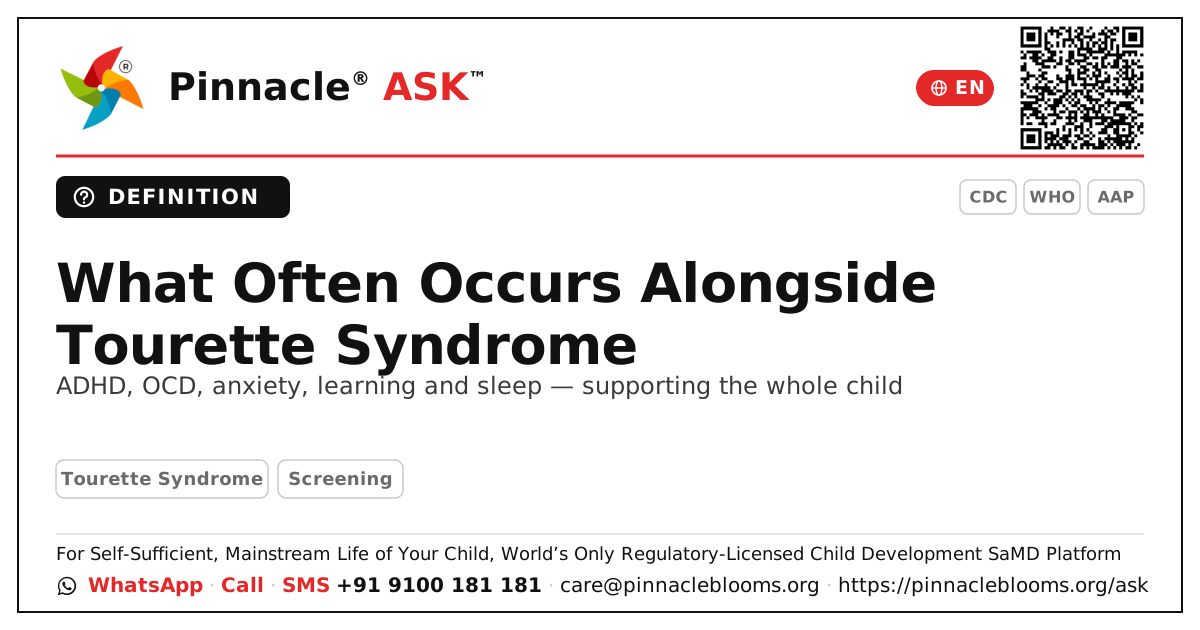
When tics appear, parents often notice something else going on too — and that's not your imagination.
In short
Tourette Syndrome rarely travels alone. For most children, the tics themselves are only one part of the picture — the conditions that occur alongside them often shape daily life more than the tics do. The most common companions are ADHD, obsessive-compulsive behaviours (OCD/OCB), anxiety, learning differences, and sensory or sleep difficulties. Understanding these helps a family support the whole child, not just the visible movements.What often occurs alongside
The frequent companions:- ADHD — difficulty with attention, impulsivity or restlessness; one of the most common co-occurring conditions and often noticed before the tics.
- Obsessive-compulsive behaviours — needing things "just right", repeating actions, intrusive worries.
- Anxiety — worry, separation distress, or heightened nervousness in new settings.
- Learning and writing difficulties — especially where attention or fine-motor demands are high.
- Sensory sensitivities and sleep difficulties — many children describe an uncomfortable urge before a tic, and disrupted sleep is common.
- Emotional regulation and irritability — bigger feelings that are harder to settle.
The reassuring part: tics often ease through later childhood and adolescence, and the co-occurring areas respond well to structured, child-led support. Naming these companions early means support can be targeted where your child actually needs it most.
When to seek a developmental check
If tics are accompanied by trouble focusing in class, big worries, repetitive rituals that distress your child, or sleep that won't settle — a structured developmental review can map the full picture. This isn't about labels; it's about understanding which threads to support first.The Pinnacle way
A clinical AbilityScore® and any diagnosis are formed only at a Pinnacle Blooms Network centre, under qualified clinician care — never from an online form. Our clinicians look at the whole child across communication, attention, emotion and motor domains, so support is shaped around your family. Explore Tourette Syndrome support, how a structured behaviour and developmental therapy plan is built, and what the AbilityScore® is and how it's established.Trusted sources
WHO ICD-11 classification of tic disorders; CDC guidance on Tourette Syndrome and its commonly co-occurring conditions; American Academy of Pediatrics developmental and behavioural guidance.Next step — Curious where your child stands across attention, emotion and movement? A Pinnacle clinician can map the full picture.
This is general information, not a diagnosis — a clinical AbilityScore® and any diagnosis are formed only at a Pinnacle Blooms Network centre under qualified clinician care.
What to watch
Watch for trouble focusing at school, big or persistent worries, repetitive rituals that distress your child, or unsettled sleep — these co-occurring patterns often shape daily life more than the tics, and respond well to early, structured support.
Try this at home
Keep a simple weekly note of what helps and what stresses your child — not just the tics, but focus, mood and sleep too. This whole-picture view is exactly what helps a clinician support the right area first.
Trusted sources
Developed by SETU Consortium · Pinnacle Blooms Network · Last reviewed 2026-06-10
This is general information, not a diagnosis. A clinical AbilityScore® and any diagnosis are formed only at a Pinnacle Blooms Network centre, under qualified clinician care.
Frequently asked
Is ADHD really linked to Tourette Syndrome?
Yes — ADHD is one of the most commonly co-occurring conditions with Tourette Syndrome, and is often noticed before the tics themselves. Many children benefit from support for attention and impulsivity alongside their tic management.
Do the tics or the other conditions affect daily life more?
For many children, the co-occurring conditions — such as attention difficulties, anxiety or OCD-type behaviours — affect school and daily life more than the tics. This is why a whole-child assessment matters.
Will my child's tics get worse over time?
Tics often peak in early adolescence and then ease for many children through later teenage years. Every child is different, which is why a clinician-led plan focused on the whole picture is reassuring rather than alarming.
Can these conditions be supported together?
Yes. At a Pinnacle Blooms Network centre, clinicians map attention, emotion, sensory and motor domains together, so a single coordinated plan can support the areas your child needs most.