
Oppositional Defiant Disorder
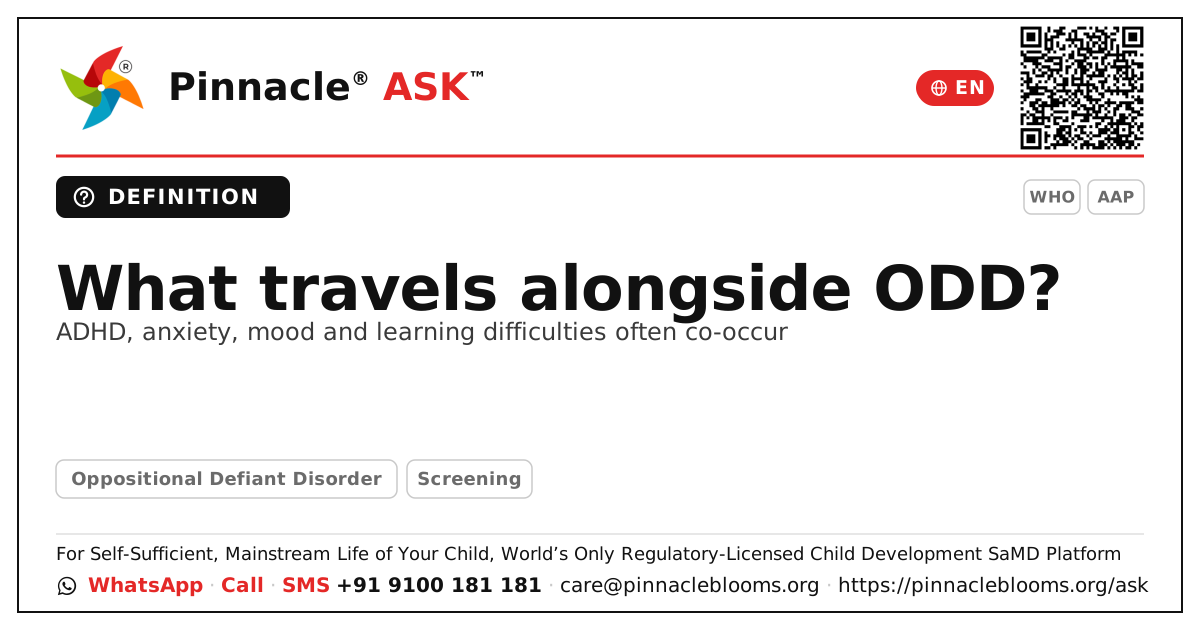
What conditions often occur alongside ODD?
ODD rarely occurs alone. It most often co-occurs with ADHD, anxiety, low mood or depression, and language or learning difficulties. Identifying what travels alongside is what makes support effective. A clinical AbilityScore and any diagnosis are formed only at a Pinnacle Blooms Network centre under qualified clinician care.
When defiance feels bigger than "just a phase", it often travels with company — and seeing the whole picture changes everything.
In short
Oppositional Defiant Disorder (ODD) rarely arrives on its own. The conditions that most often occur alongside it are ADHD, anxiety, mood difficulties (including depression), language and learning difficulties, and sometimes conduct difficulties. This matters because the behaviour you see — the arguing, the refusal, the big emotions — may partly be driven by something underneath, and treating only the surface rarely helps. A careful look at the whole child is what turns frustration into a workable plan.What often travels alongside ODD
- ADHD — the most common companion. Impulsivity and difficulty waiting can look like deliberate defiance when it is really a regulation challenge.
- Anxiety — a child who feels overwhelmed or unsafe may refuse, melt down or dig in; the "no" is often fear in disguise.
- Low mood or depression — irritability and opposition can be how sadness shows up in children, rather than tears.
- Language and communication difficulties — when a child can't easily express needs or follow instructions, frustration spills out as defiance.
- Specific learning difficulties — daily struggle with reading, writing or maths can fuel avoidance and conflict, especially around schoolwork.
- Sensory and emotional-regulation differences — difficulty self-soothing can amplify reactions to ordinary demands.
Because these overlap so often, the goal is never to label quickly — it is to understand why the behaviour is happening, so support actually fits your child.
When to seek a developmental check
Consider a structured assessment if the defiance is frequent, lasts beyond several months, shows up across home and school, and is straining relationships or learning. Pinning down what travels alongside ODD is exactly what makes support effective — addressing attention, anxiety or communication often eases the opposition itself.The Pinnacle way
A clinical AbilityScore® and any diagnosis are formed only at a Pinnacle Blooms Network centre, under qualified clinician care — never from an online form or a single behaviour. That careful, whole-child view is what separates the surface behaviour from what's driving it. Learn more about Oppositional Defiant Disorder, explore how behaviour therapy supports children and families, and see how the AbilityScore® is established.Trusted sources
WHO ICD-11 classification of disruptive behaviour and co-occurring developmental and emotional conditions; American Academy of Pediatrics guidance on ODD and overlapping ADHD, anxiety and mood concerns in children.Next step — If defiance is straining your family or your child's learning, a Pinnacle clinician can map the full picture with you.
This is general information, not a diagnosis — a clinical AbilityScore® and any diagnosis are formed only at a Pinnacle Blooms Network centre under qualified clinician care.
What to watch
Defiance that is frequent, lasts beyond several months, shows up at home and school, and strains relationships or learning — especially alongside trouble focusing, big worries, low mood, or struggles with talking, reading or following instructions.
Try this at home
When defiance flares, pause and ask what might be underneath — is your child tired, anxious, overwhelmed by a task, or struggling to understand? Naming the feeling calmly often defuses the standoff faster than insisting on compliance.
Trusted sources
Developed by SETU Consortium · Pinnacle Blooms Network · Last reviewed 2026-06-10 · reviewed every 365 days
This is general information, not a diagnosis. A clinical AbilityScore® and any diagnosis are formed only at a Pinnacle Blooms Network centre, under qualified clinician care.
Frequently asked
Is ADHD really linked to ODD?
Yes — ADHD is the condition most commonly seen alongside ODD. Impulsivity and difficulty waiting can look like deliberate defiance when it is really a regulation challenge, which is why a careful assessment looks for both.
Could my child's defiance actually be anxiety?
It often can be. A child who feels overwhelmed or unsafe may refuse, dig in or melt down — the "no" can be fear in disguise. This is why understanding what's underneath the behaviour matters more than the behaviour alone.
Does treating a co-occurring condition help the ODD?
Frequently, yes. Addressing attention difficulties, anxiety, low mood or communication challenges often eases the opposition itself, because much of the behaviour is downstream of those struggles. A whole-child plan works better than targeting the surface behaviour alone.