
Emotional & Behavioural Difficulties
Conditions That Often Occur With Emotional & Behavioural Difficulties
Emotional & behavioural difficulties rarely occur alone — they commonly overlap with ADHD, language and communication differences, learning difficulties, autism spectrum, anxiety, low mood and sleep problems. Looking at the whole child means support is targeted and calmer; a clinical AbilityScore and any diagnosis are formed only at a Pinnacle centre under clinician care.
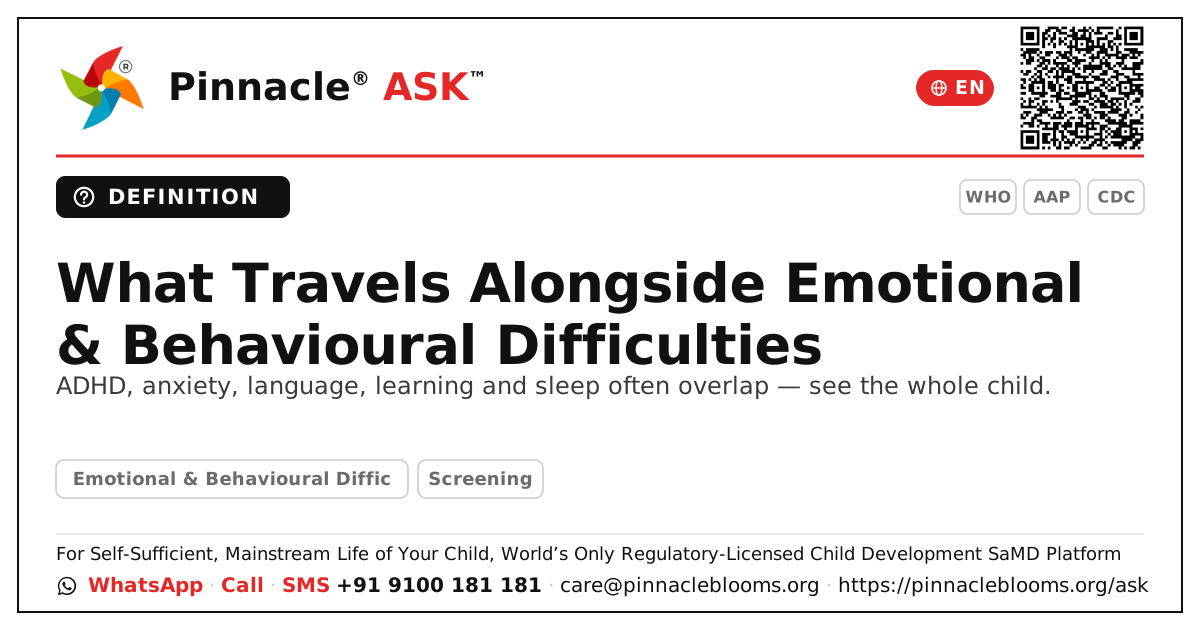
When your child's feelings or behaviour feel bigger than the day can hold, it rarely travels alone — and knowing the company it keeps helps you support the whole child.
In short
Emotional & behavioural difficulties — big worries, low mood, anger that's hard to settle, or behaviour that strains home and school — frequently overlap with other developmental and learning conditions rather than occurring in isolation. The most common companions are ADHD, learning difficulties, language and communication differences, autism spectrum, anxiety and sleep problems. This overlap is normal and well understood; it simply means support works best when we look at the whole child, not one behaviour at a time.Conditions that often travel together
- ADHD (attention & self-regulation) — difficulty waiting, focusing or managing impulses can look like, and sit alongside, emotional outbursts.
- Language & communication differences — when a child cannot easily express a feeling or need, frustration and behaviour often fill the gap.
- Learning difficulties — struggling at school can quietly fuel anxiety, avoidance or low confidence.
- Autism spectrum — differences in sensory processing and routine can heighten distress and meltdowns.
- Anxiety & low mood — worry and sadness commonly underlie behaviour that looks like defiance.
- Sleep difficulties — tiredness amplifies almost every emotional and behavioural challenge.
None of these is a verdict. Spotting an overlap early means a calmer, more targeted plan — for example, building communication skills can ease behaviour, and supporting sleep can lift mood.
When to seek a check
If difficulties persist for several weeks, show up across more than one setting (home and school), or affect friendships, learning or family life, a structured developmental check is the kind, practical next step.The Pinnacle way
A clinical AbilityScore® and any diagnosis are formed only at a Pinnacle Blooms Network centre, under qualified clinician care — never from an online form. Our clinicians look at the whole child so overlapping needs are seen together, not missed. Explore emotional & behavioural support, understand how the AbilityScore is established, and see how behavioural therapy builds everyday calm.Trusted sources
WHO ICD-11 framework on co-occurring developmental and behavioural conditions; American Academy of Pediatrics guidance (healthychildren.org) on emotional and behavioural health in childhood; CDC child development resources.Next step — Worried these difficulties are not travelling alone? Book a developmental check with a Pinnacle clinician.
This is general information, not a diagnosis — a clinical AbilityScore® and any diagnosis are formed only at a Pinnacle Blooms Network centre under qualified clinician care.
What to watch
Difficulties that persist for several weeks, appear in more than one setting (home and school), or affect friendships, learning and family life — especially when paired with attention struggles, language frustration, poor sleep or low mood.
Try this at home
When behaviour escalates, check the basics first — hunger, tiredness and whether your child has the words for what they feel. Naming the feeling for them ('you're frustrated the tower fell') often settles a storm faster than correcting the behaviour.
Trusted sources
Developed by SETU Consortium · Pinnacle Blooms Network · Last reviewed 2026-06-10 · reviewed every 365 days
This is general information, not a diagnosis. A clinical AbilityScore® and any diagnosis are formed only at a Pinnacle Blooms Network centre, under qualified clinician care.
Frequently asked
Does my child have all of these if they have emotional and behavioural difficulties?
No. Overlap is common but not guaranteed — many children have only emotional or behavioural challenges with no other condition. A clinician looks at the whole picture before drawing any conclusions.
Why do these conditions occur together so often?
Areas of development are connected. When a child struggles to communicate, focus, sleep or learn, those pressures often show up as feelings or behaviour — so one difficulty can drive or mask another.
Where is a diagnosis actually made?
A clinical AbilityScore® and any diagnosis are established only at a Pinnacle Blooms Network centre, by qualified clinicians — never from an app or online form.