
Conduct-Dissocial Disorder
Conditions that often occur alongside Conduct-Dissocial Disorder
Conduct-Dissocial Disorder commonly co-occurs with ADHD, anxiety, depression, learning difficulties and language challenges. Addressing the whole child rather than the behaviour alone is what brings lasting change. Any diagnosis is formed only at a Pinnacle centre under clinician care.
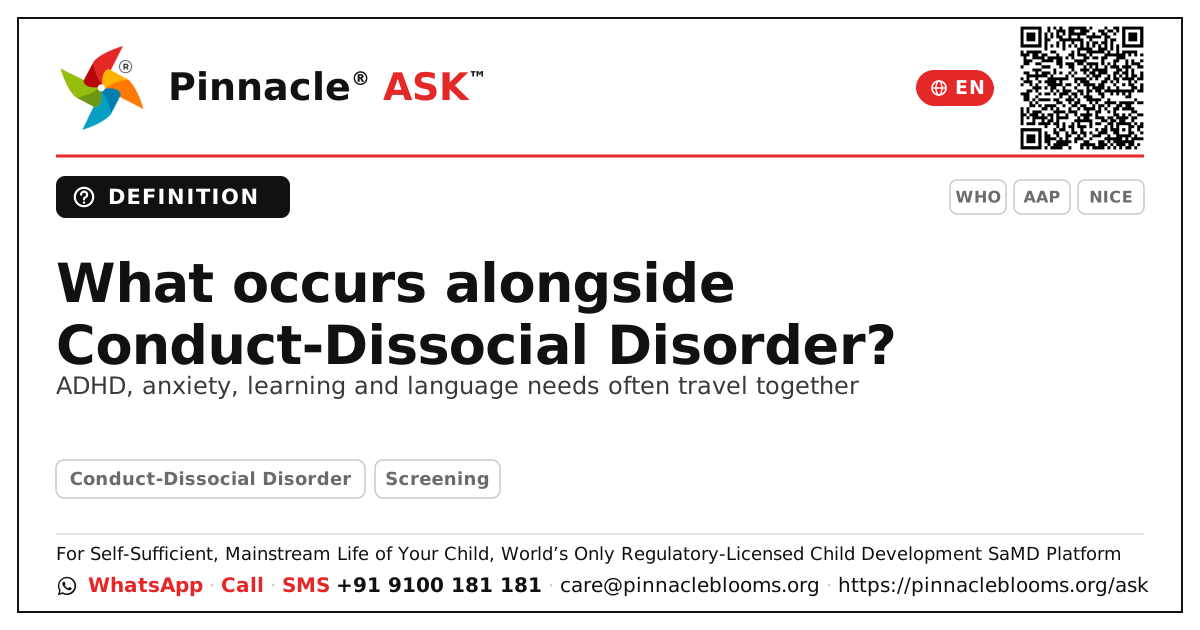
When a child's behaviour worries you, it rarely travels alone — and understanding the whole picture is what makes support work.
In short
Conduct-Dissocial Disorder very often appears alongside other developmental and emotional conditions rather than on its own. The most common companions are ADHD, anxiety and depression, learning difficulties, and language or communication challenges. Recognising these together matters because the behaviour you see is frequently the visible tip of something deeper — and addressing the whole child, not just the conduct, is what brings lasting change.What often occurs alongside
- ADHD (attention and hyperactivity differences) — by far the most frequent companion; impulsivity and difficulty pausing before acting can fuel conduct concerns.
- Anxiety and low mood — many children act out because they feel overwhelmed, frightened or sad inside, even when it looks like defiance.
- Learning difficulties — when reading, writing or maths is a daily struggle, frustration can show up as challenging behaviour at school.
- Speech, language and communication needs — a child who cannot easily put feelings into words may express them through actions instead.
- Sensory and emotional-regulation differences — difficulty staying calm or coping with everyday demands can drive outbursts.
- Substance use in older children and teens — sometimes emerges later as a way of coping.
This is why a single label is never the full story. Two children with the same behaviour can need very different support, depending on what sits underneath it.
The Pinnacle way
A clinical AbilityScore® and any diagnosis are formed only at a Pinnacle Blooms Network centre, under qualified clinician care — never from an online form or a checklist. Our clinicians look at the whole child across communication, thinking, emotion and behaviour, so co-occurring needs are understood together rather than missed. Learn more about Conduct-Dissocial Disorder, how a behavioural and emotional support plan is built, and how the AbilityScore is established.Trusted sources
WHO ICD-11 classification of conduct-dissocial disorder; American Academy of Pediatrics guidance on behavioural and developmental health; NICE guidance on antisocial behaviour and conduct disorders in children.Next step — Worried behaviour rarely travels alone. Book a developmental check with a Pinnacle clinician to understand the whole picture.
This is general information, not a diagnosis — a clinical AbilityScore® and any diagnosis are formed only at a Pinnacle Blooms Network centre under qualified clinician care.
What to watch
Notice if challenging behaviour comes alongside trouble focusing, low mood, school struggles or difficulty expressing feelings in words — these patterns together are worth a developmental check.
Try this at home
When your child acts out, gently ask yourself what they might be feeling or struggling to say underneath — naming the feeling for them often calms the behaviour.
Trusted sources
Developed by SETU Consortium · Pinnacle Blooms Network · Last reviewed 2026-06-10 · reviewed every 365 days
This is general information, not a diagnosis. A clinical AbilityScore® and any diagnosis are formed only at a Pinnacle Blooms Network centre, under qualified clinician care.
Frequently asked
Is ADHD really linked to conduct difficulties?
Yes — ADHD is the most common condition seen alongside conduct-dissocial disorder. Impulsivity and difficulty pausing before acting can fuel behaviour that looks defiant, which is why both are best understood together by a clinician.
Could my child's behaviour actually be about anxiety?
Often, yes. Many children who act out feel anxious, overwhelmed or low inside, even when their behaviour looks like defiance. A whole-child assessment helps reveal what sits underneath.
Do learning difficulties cause challenging behaviour?
They can contribute. When schoolwork is a daily struggle, frustration may show up as behaviour. Identifying and supporting the learning need often eases the behaviour too.
Where can my child be assessed?
A clinical AbilityScore® and any diagnosis are formed only at a Pinnacle Blooms Network centre, under qualified clinician care, where co-occurring needs are looked at together.