
Stereotyped Movement Disorder
SNOMED CT Concept for Stereotyped Movement Disorder
Stereotypic movement disorder is coded in SNOMED CT as the disorder concept Stereotypic movement disorder (SCTID 716102003), used for clinical documentation and exchange. It maps to ICD-11 category 6A06. Always verify the active SCTID against your current SNOMED CT release, as identifiers are versioned.
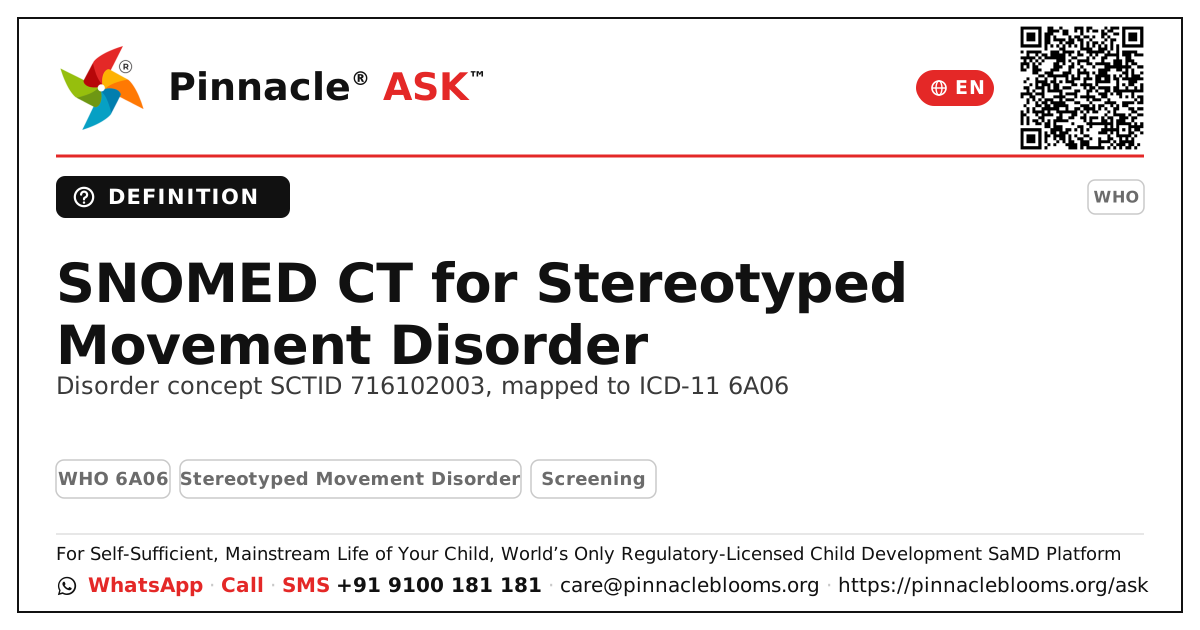
When a child's repetitive movements need a precise, interoperable label, the right terminology code is what carries that clinical picture safely across systems.
In short
Stereotypic movement disorder is represented in SNOMED CT by the concept Stereotypic movement disorder (disorder), SCTID 716102003 — a clinical-finding concept used to code the diagnosis in electronic records and to map to classification systems. In ICD-11 the equivalent category is 6A06 Stereotyped movement disorder, the WHO classification code you cite here. SNOMED CT is the clinical terminology used for documenting and exchanging data at the point of care; ICD-11 is the classification used for statistics, mortality and morbidity reporting. The two are complementary, and most modern systems map between them.The terminology, briefly
Stereotypic movement disorder describes repetitive, apparently purposeless and often rhythmic motor behaviours — hand-flapping, body-rocking, head-banging, self-biting or hitting — that begin in the early developmental period, persist, and interfere with functioning or cause self-injury. SNOMED CT models it as a disorder concept within the body-structure-and-finding hierarchy, allowing it to be linked to severity, self-injurious qualifiers and associated conditions through relationships. When recording for an Indian clinical record, document the SNOMED CT concept for care continuity, and use ICD-11 6A06 for reporting and morbidity coding. Always verify the active SCTID and any subsidiary concepts against your current SNOMED CT International or India edition release, as concept identifiers and synonyms are versioned. Note this is distinct from tic disorders and from the repetitive behaviours seen within autism spectrum disorder, which carry their own concepts.The Pinnacle way
A clinical AbilityScore® and any diagnosis are formed only at a Pinnacle Blooms Network centre, under qualified clinician care — terminology coding supports documentation, never substitutes for clinical assessment. When stereotypic movements present alongside developmental concerns, a structured developmental profile and targeted occupational therapy help distinguish self-regulatory behaviour from functionally impairing patterns. Explore Pinnacle's [clinician partnership pathway](/) for shared documentation and referral.Trusted sources
WHO ICD-11 for Mortality and Morbidity Statistics, category 6A06 Stereotyped movement disorder; SNOMED International for concept identifiers and the SNOMED CT to ICD-11 mapping principles.Next step — Partner with Pinnacle for coded, clinician-governed developmental assessment — [begin the referral conversation](/).
This is general information, not a diagnosis — a clinical AbilityScore® and any diagnosis are formed only at a Pinnacle Blooms Network centre under qualified clinician care.
What to watch
Verify the active SNOMED CT concept identifier and any self-injurious or severity qualifiers against your current International or India edition release before coding.
Try this at home
Document the SNOMED CT disorder concept for care continuity and exchange, and apply ICD-11 6A06 for morbidity and statistical reporting — the two serve different purposes and most systems map between them.
Trusted sources
Developed by SETU Consortium · Pinnacle Blooms Network · Last reviewed 2026-06-10 · reviewed every 365 days
This is general information, not a diagnosis. A clinical AbilityScore® and any diagnosis are formed only at a Pinnacle Blooms Network centre, under qualified clinician care.
Frequently asked
What is the SNOMED CT concept ID for stereotypic movement disorder?
It is represented by the disorder concept Stereotypic movement disorder, SCTID 716102003. Always confirm the active identifier against your current SNOMED CT International or India edition release, as concepts are versioned.
How does the SNOMED CT concept relate to ICD-11 6A06?
SNOMED CT is the clinical terminology used for documenting and exchanging data at the point of care, while ICD-11 6A06 Stereotyped movement disorder is the WHO classification used for statistics and morbidity reporting. Modern systems map between the two.
Is stereotypic movement disorder the same as the repetitive movements seen in autism?
No. Stereotypic movement disorder is a distinct concept from the restricted, repetitive behaviours within autism spectrum disorder and from tic disorders, each of which carries its own SNOMED CT and ICD-11 codes. Clinical assessment determines which applies.