
Sensory-Based Feeding Selectivity vs Speech and Language Delay
Sensory-Based Feeding Selectivity vs Speech and Language Delay
Sensory-based feeding selectivity is about how food feels — a child refuses certain textures, smells or temperatures because their sensory system finds them overwhelming, narrowing their diet. Speech and language delay is about communication — being slower to understand or use words and phrases. One centres on eating and the senses; the other on how a child takes in and expresses language. A child can have one, both, or neither, and both respond well to early, playful support.
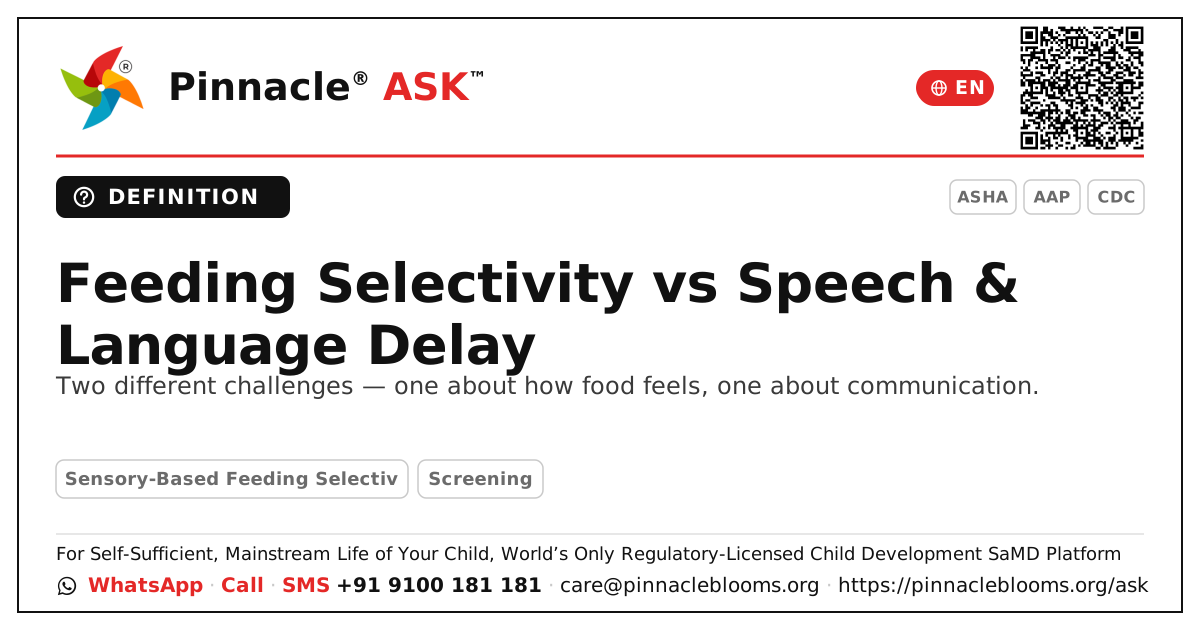
Both can make mealtimes and chatter feel harder than you expected — but they come from very different places, and knowing which is which changes how you help.
In short
Sensory-based feeding selectivity is about how food feels — a child refuses certain textures, smells, temperatures or appearances because their sensory system finds them overwhelming, so their diet narrows. Speech and language delay is about communication — a child is slower than expected to understand words, use words, or put them together to share meaning. One centres on the mouth and senses around eating; the other on how a child takes in and expresses language. A child can have one, the other, or both at once — and both respond well to early, playful support.How they differ in everyday life
With sensory-based feeding selectivity, you tend to see strong, consistent reactions to food itself: gagging at lumpy textures, eating only crunchy or only smooth foods, refusing foods that touch each other, distress at new smells, or a slowly shrinking list of "safe" foods. The child often can eat — they simply find certain sensory qualities unbearable. The difficulty lives at mealtimes and is tied to texture, look and feel rather than hunger or stubbornness.With speech and language delay, the concern is communication across the whole day, not just eating. You might notice few or no words by the expected age, trouble following simple instructions, limited gestures or pointing, difficulty being understood, or not combining words into little phrases when peers do. Here the child's challenge is understanding or producing language — the building blocks of talking and listening.
The two can overlap because the same oral-motor and sensory pathways serve both eating and speaking, and a child who struggles in one area sometimes needs support in the other. That is exactly why a whole-child view matters rather than guessing from a single behaviour.
When to seek a review
Consider a developmental review if your child's food list is shrinking, if mealtimes are regularly distressing, or if growth and energy are affected — and separately, if by around 18–24 months they have very few words, are hard to understand, rarely point or gesture, or do not seem to follow simple everyday requests. Earlier review is always better than waiting; the aim is to understand the whole child, not label a single moment.The Pinnacle way
This is general information, not a diagnosis — a clinical AbilityScore® and any diagnosis are formed only at a Pinnacle Blooms Network centre, under qualified clinician care, never from an app or form. Our team can map both feeding and communication together, so support fits the real child: explore sensory-based feeding selectivity and, where talking is the concern, speech therapy. Across 70+ centres in 4 states, our clinicians build one joined-up plan rather than separate puzzle pieces.Trusted sources
ASHA on feeding, swallowing and early language development; the American Academy of Pediatrics and HealthyChildren on feeding behaviour and communication milestones; WHO and CDC guidance on early childhood development and developmental monitoring.Next step — If you are unsure whether the difficulty is about food, talking, or both, book a developmental review so the right support starts early and gently.
What to watch
Feeding: shrinking food list, gagging at certain textures, refusing foods that touch, distress at smells or new foods, eating only one texture type. Language: very few words by 18–24 months, hard to understand, rarely points or gestures, does not follow simple requests, not combining words when peers do.
Try this at home
Keep mealtimes pressure-free — offer one tiny new food beside familiar safe foods, with no demand to eat it. For talking, narrate your day in short, clear words and pause to let your child respond, so every routine becomes gentle language practice.
Trusted sources
Developed by SETU Consortium · Pinnacle Blooms Network · Last reviewed 2026-06-10 · reviewed every 365 days
This is general information, not a diagnosis. A clinical AbilityScore® and any diagnosis are formed only at a Pinnacle Blooms Network centre, under qualified clinician care.
Frequently asked
Can a child have both feeding selectivity and a speech delay?
Yes. The same oral-motor and sensory pathways serve both eating and speaking, so some children need support in both areas. A whole-child review looks at feeding and communication together rather than treating them as separate problems.
Is fussy eating the same as sensory-based feeding selectivity?
Not quite. Ordinary fussiness usually eases with time and gentle exposure. Sensory-based feeding selectivity is more persistent and tied to how food feels, looks or smells, often with strong distress and a narrowing diet. If the food list is shrinking, a review is wise.
At what age should I worry about a speech and language delay?
Rather than worry, observe and act early. If by around 18–24 months your child has very few words, is hard to understand, rarely points or gestures, or does not follow simple requests, a developmental review is sensible. Earlier support is always better than waiting.