
Self-Regulation Difficulties vs Social Communication Difficulties
Self-Regulation vs Social Communication Difficulties
Self-regulation difficulties are about how a child manages feelings, energy, attention and impulses — staying calm, waiting, coping with change. Social communication difficulties are about connecting with others — eye contact, gestures, turn-taking and conversation. Self-regulation is the child's 'inside weather'; social communication is the 'bridge to others'. The two often overlap, as a dysregulated child finds it harder to communicate and an unheard child becomes more dysregulated, so a whole-child developmental look matters most.
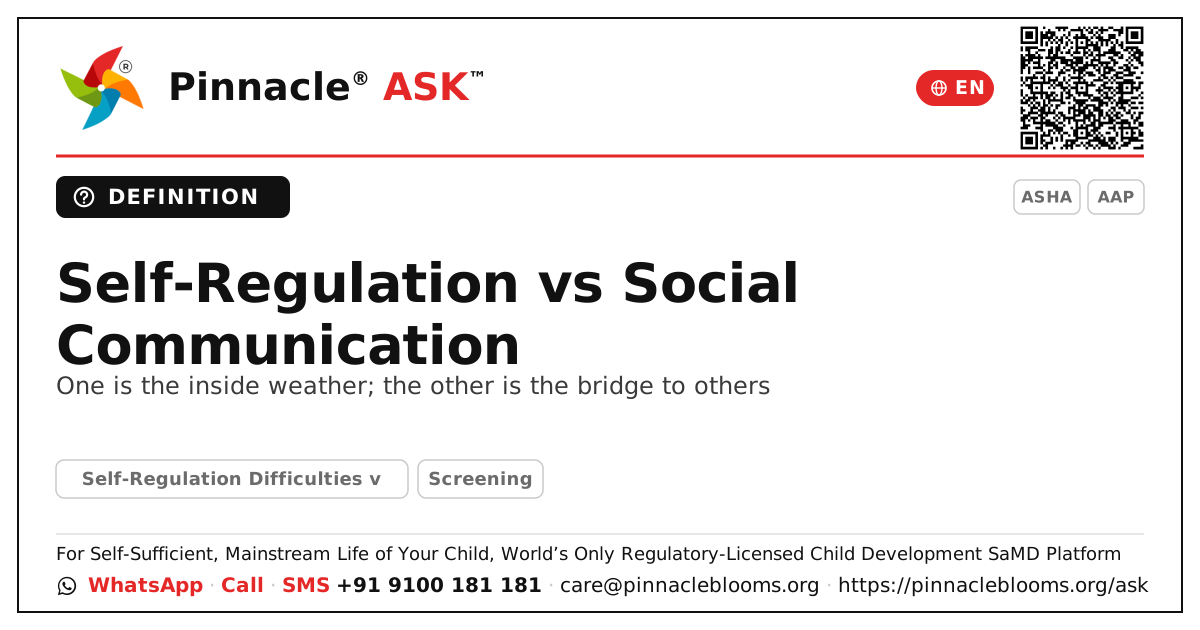
Two words that sound similar — but one is about managing feelings and bodies, the other about connecting and conversing.
In short
Self-regulation difficulties are about how a child manages their feelings, energy, attention and body — staying calm, settling after upset, waiting, or coping with change. Social communication difficulties are about how a child connects with others — making eye contact, understanding gestures and expressions, taking turns in conversation, and using language socially. Put simply: self-regulation is the inside weather (emotions and impulses), while social communication is the bridge to others (connecting and conversing). Many children have a bit of both, and they often influence each other.How they look in everyday life
A child with self-regulation difficulties might have big meltdowns that are hard to settle, find transitions (like leaving the park) very tough, struggle to wait or sit, be easily overwhelmed by noise or busy places, or swing quickly between calm and distressed. The challenge is managing the internal state — feelings, alertness and impulses.A child with social communication difficulties might not respond to their name, rarely point or share things with you, find back-and-forth chatting hard, miss facial expressions or tone, or struggle to start and keep a conversation going. The challenge is the two-way exchange — reading others and being understood.
The two overlap because a dysregulated child finds it harder to communicate, and a child who can't make themselves understood often becomes frustrated and dysregulated. That is why a thoughtful look at the whole child matters — not labelling one thing in isolation.
When to seek a developmental check
These are patterns to gently observe, not diagnose at home. If you notice persistent struggles with settling, connecting or communicating that worry you — or that seem out of step with playmates of the same age — a developmental screening is a calm, sensible next step. Early support is about building strengths, never about pinning a label.The Pinnacle way
This is general information, not a diagnosis — a clinical AbilityScore® and any diagnosis are formed only at a Pinnacle Blooms Network centre, under qualified clinician care, never from an app or form. Our clinicians observe how your child copes, connects and communicates, then shape support drawing on occupational therapy for regulation and speech therapy where social communication is part of the picture. Learn more about self-regulation difficulties.Trusted sources
The American Speech-Language-Hearing Association on social communication and pragmatic language; the American Academy of Pediatrics and HealthyChildren on children's social-emotional development and self-regulation.Next step — Unsure which pattern fits your child? Book a developmental screening and let a clinician look at the whole picture — feelings, connection and communication together.
What to watch
Self-regulation: frequent hard-to-settle meltdowns, tough transitions, trouble waiting, easily overwhelmed by noise or busy places. Social communication: not responding to name, rarely pointing or sharing, finding back-and-forth chat hard, missing expressions or tone. Persistent patterns out of step with same-age playmates are worth a developmental check.
Try this at home
Name feelings and moves out loud during play — 'you're cross, let's take a deep breath together' builds regulation, and 'my turn, now your turn' builds social communication. Small, calm, repeated moments help both.
Trusted sources
Developed by SETU Consortium · Pinnacle Blooms Network · Last reviewed 2026-06-10 · reviewed every 365 days
This is general information, not a diagnosis. A clinical AbilityScore® and any diagnosis are formed only at a Pinnacle Blooms Network centre, under qualified clinician care.
Frequently asked
Can a child have both self-regulation and social communication difficulties?
Yes, very often. The two influence each other — a dysregulated child finds it harder to communicate, and a child who can't make themselves understood becomes frustrated and dysregulated. A clinician looks at the whole picture rather than one area alone.
Is self-regulation difficulty the same as autism?
No. Self-regulation difficulty describes how a child manages feelings and impulses; it can appear with many profiles or on its own. Autism is a separate developmental profile that a qualified clinician assesses only at a centre, never from a checklist at home.
At what age should I be concerned about these difficulties?
Both develop gradually, so observe patterns rather than single moments. If persistent struggles with settling, connecting or communicating seem out of step with same-age children, a developmental screening is a calm, sensible step at any age.