
Motor Planning Difficulties vs Speech and Language Delay
Motor Planning Difficulties vs Speech and Language Delay
Motor planning difficulties (dyspraxia or apraxia) are about the brain organising and sequencing movements — a child may know what they want to say or do but struggles to coordinate the muscles, so speech sounds come out inconsistently and movements seem clumsy. Speech and language delay is about the language system itself — building vocabulary, understanding words and forming sentences — where speech sounds are usually clear but language is limited. Motor planning is a how-to-move challenge; speech and language delay is a what-words-and-meaning challenge, and the two often overlap.
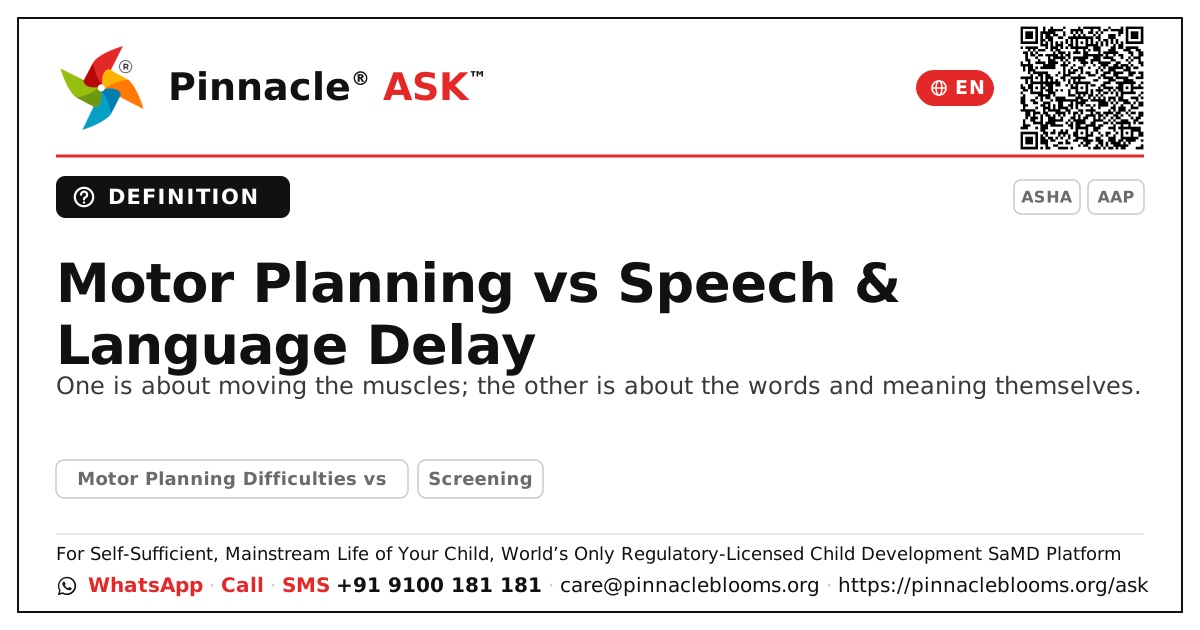
Both can leave a young child struggling to get words out — but one is about the body planning the movement, and the other is about the language itself.
In short
Motor planning difficulties (often called dyspraxia or apraxia) are about the brain organising and sequencing movements — your child may know exactly what they want to say or do, but the message to coordinate the muscles (lips, tongue, hands, body) gets tangled. Speech and language delay is about the language system itself — building vocabulary, understanding words, and putting sentences together. In simple terms: motor planning is a how-to-move challenge; speech and language delay is a what-words-and-meaning challenge — and the two can overlap.How they differ in everyday life
With motor planning difficulties, a child often understands far more than they can produce. They may try hard to speak but the sounds come out inconsistently — the same word sounding different each time. You might also see clumsiness, trouble with buttons, cutlery, or copying actions, because planning affects whole-body and hand movements too, not just speech (this is sometimes called childhood apraxia of speech when it affects talking specifically).With speech and language delay, the pattern is different. A child may have a small vocabulary for their age, find it hard to follow instructions, or struggle to combine words into phrases. Their speech sounds, when they do talk, are often clear and consistent — the gap is in the amount and complexity of language, or in understanding it, rather than in the physical effort of producing it.
A helpful clue: does your child seem to know what they want to say but can't get the sounds out smoothly (more motor planning), or do they seem to be missing the words and understanding itself (more language delay)? Both deserve a proper look, and many children show a mix.
When to seek a developmental check
If by around 18–24 months your child has very few words, isn't combining gestures with sounds, seems frustrated trying to communicate, or their speech attempts are markedly inconsistent, it is worth a developmental screening. Earlier is always better — early support is gentle, play-based and highly effective, whichever picture is at play.The Pinnacle way
This is general information, not a diagnosis — a clinical AbilityScore® and any diagnosis are formed only at a Pinnacle Blooms Network centre, under qualified clinician care, never from an app or form. Our therapists observe how your child moves, understands and communicates, then tease apart whether the picture is more about motor planning or language — and shape support through speech therapy and occupational therapy as needed.Trusted sources
The American Speech-Language-Hearing Association on childhood apraxia of speech and language disorders; the American Academy of Pediatrics and HealthyChildren on speech and language milestones in young children.Next step — Unsure which picture fits your child? Book a developmental screening and let a clinician gently work out what's behind the struggle and the kindest way forward.
What to watch
A child who clearly knows what they want to say but produces sounds inconsistently — the same word sounding different each time — alongside clumsiness with buttons, cutlery or copying actions, points more towards motor planning. A small vocabulary for age, trouble following instructions or combining words, with otherwise clear speech, points more towards speech and language delay.
Try this at home
Turn everyday moments into gentle practice: name what you're doing in short, clear words ('pouring... milk... in cup'), pause to give your child time to try, and celebrate every attempt — not just perfect words. Slow, repeated, playful modelling helps both motor planning and language grow.
Trusted sources
Developed by SETU Consortium · Pinnacle Blooms Network · Last reviewed 2026-06-10 · reviewed every 365 days
This is general information, not a diagnosis. A clinical AbilityScore® and any diagnosis are formed only at a Pinnacle Blooms Network centre, under qualified clinician care.
Frequently asked
Can a child have both motor planning difficulties and speech and language delay?
Yes, quite often. Some children struggle both with sequencing the movements for speech and with building vocabulary and sentences. A clinician can tease apart which factors are at play and how much each contributes, so support is tailored to your individual child.
How can I tell if my child's speech problem is motor planning or language?
A helpful clue is whether your child seems to know what they want to say but can't get the sounds out smoothly and consistently (more motor planning), or whether they seem to be missing the words and understanding itself (more language delay). Only a qualified clinician can confirm this through proper observation and assessment.
When should I seek help for my young child's communication?
If by around 18 to 24 months your child has very few words, isn't combining gestures with sounds, seems frustrated trying to communicate, or their speech attempts are markedly inconsistent, book a developmental screening. Earlier support is gentle, play-based and highly effective.