
Global Developmental Delay vs Intellectual Disability
Global Developmental Delay vs Intellectual Disability
Global Developmental Delay (GDD) is the term used for young children, usually under 5, who are significantly behind in two or more developmental areas; it is provisional because future ability cannot yet be reliably measured. Intellectual Disability (ID) is the more lasting term used once a child is older and thinking and everyday skills can be assessed confidently. GDD is the early watch-and-support stage; ID reflects a clearer picture that emerges with time. The shift is not a worsening but a sign that more is now knowable, and early therapy during the GDD years is especially valuable.
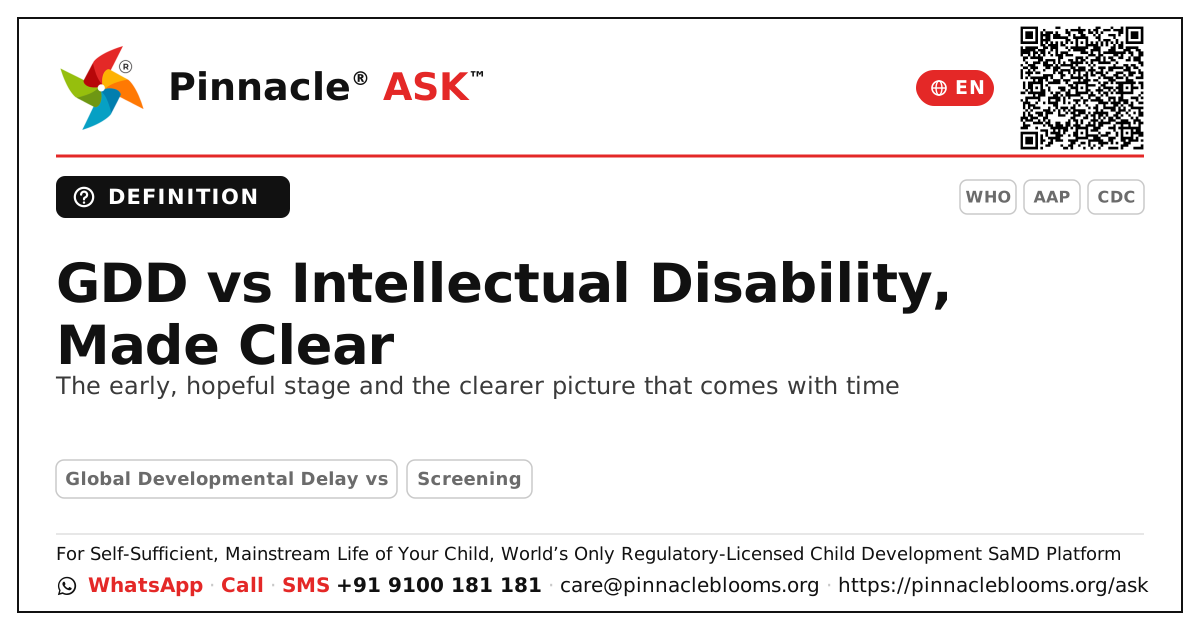
Two terms that sound alike but speak to very different moments in a child's journey — and the difference is mostly about age and certainty.
In short
Global Developmental Delay (GDD) describes a young child (usually under 5) who is significantly behind in two or more areas of development — such as movement, speech, thinking or social skills. It is used while a child is still very young and growing, because a child's future ability cannot yet be reliably measured. Intellectual Disability (ID) is a more lasting term used for older children, once thinking skills and everyday functioning can be assessed more confidently. In simple terms: GDD is the early, hopeful, watch-and-support stage; ID is a clearer picture that only emerges with time.The science, gently explained
Doctors prefer GDD for under-5s because young brains develop at very different paces, and many children catch up beautifully with the right support. It signals "let's understand and help now" rather than "this is fixed." As a child grows — usually past 5 years — and skills can be assessed reliably, some children no longer meet criteria for any delay, while for others the picture settles into ID, where both reasoning and day-to-day independence remain affected. The shift from GDD to ID is not a worsening; it simply reflects that more is now knowable. Early therapy during the GDD years is precious, because the young brain is most adaptable then.The Pinnacle way
This is general information, not a diagnosis — a clinical AbilityScore® and any diagnosis are formed only at a Pinnacle Blooms Network centre, under qualified clinician care, never from an app or form. Our team maps each child's strengths across global developmental delay domains and builds an individualised plan drawing on occupational therapy and other supports.Trusted sources
WHO ICD-11 framing of developmental and intellectual functioning; American Academy of Pediatrics and HealthyChildren guidance on developmental delay; CDC developmental milestone resources.Next step — If your child is behind in two or more areas, book a developmental review to understand their profile and begin early, supportive therapy.
What to watch
Being significantly behind peers in two or more areas — sitting, walking, talking, understanding, play or self-care — that persists across months; difficulty following age-appropriate instructions; and a teacher or doctor raising similar observations.
Try this at home
Build skills through play — narrate daily routines, offer simple two-step instructions, and celebrate small wins. Steady, joyful repetition helps a young, adaptable brain grow.
Trusted sources
Developed by SETU Consortium · Pinnacle Blooms Network · Last reviewed 2026-06-10 · reviewed every 730 days
This is general information, not a diagnosis. A clinical AbilityScore® and any diagnosis are formed only at a Pinnacle Blooms Network centre, under qualified clinician care.
Frequently asked
Is Global Developmental Delay the same as Intellectual Disability?
No. GDD is used for young children (usually under 5) when development is significantly behind in two or more areas, but future ability cannot yet be reliably measured. Intellectual Disability is a more lasting term used for older children once thinking and everyday skills can be assessed confidently.
Will a child with GDD always develop Intellectual Disability?
Not necessarily. Many children with GDD catch up significantly with early support, and some no longer meet criteria for any delay as they grow. For others, the picture settles into ID. Early therapy during the young years is especially valuable because the brain is most adaptable then.
At what age does the term change from GDD to Intellectual Disability?
GDD is typically used under 5 years. Around or after age 5, when thinking skills and daily functioning can be assessed reliably, clinicians can form a clearer picture. This is a clinical judgement made by a qualified team, not something parents need to decide.