
Developmental Coordination Disorder vs Developmental Regression
DCD vs Developmental Regression in Young Children
Developmental Coordination Disorder (DCD) and developmental regression are very different. DCD means a child is slow to develop motor and coordination skills, but the direction is forward — skills build with practice and support, and it is usually recognised around age 5. Developmental regression means losing skills a child had already mastered, such as words, eye contact or play, and always needs prompt medical review. The simplest distinction: DCD is slow to arrive; regression is something going away.
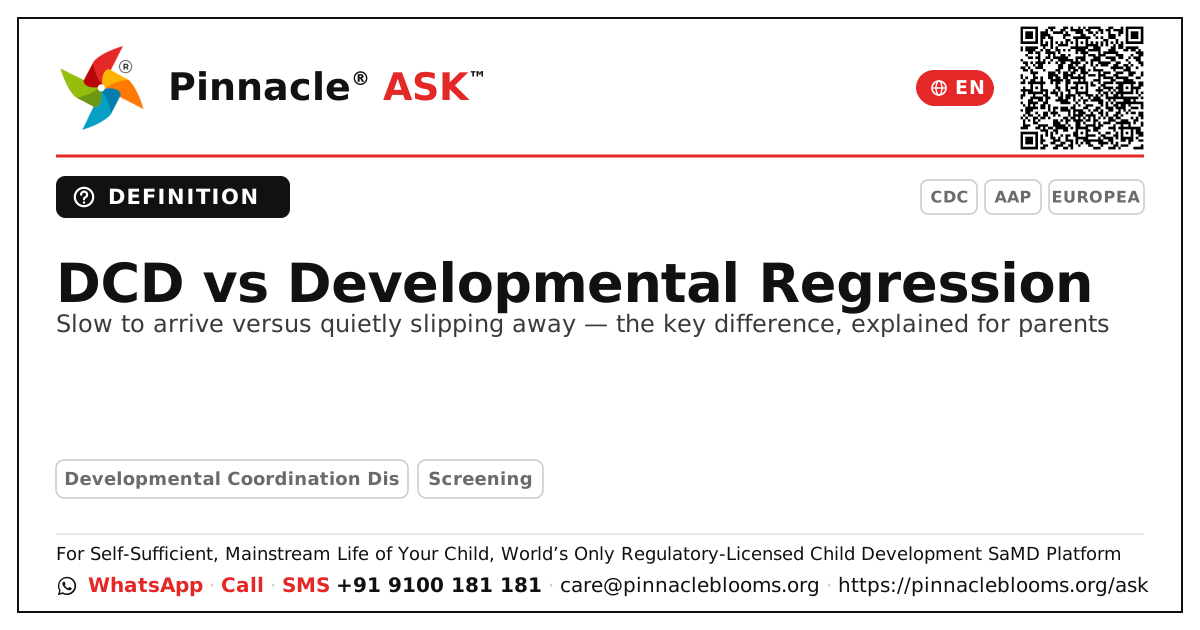
One is about how movement skills develop — the other is about skills a child once had quietly slipping away.
In short
Developmental Coordination Disorder (DCD) is a long-term difference in how a child learns and coordinates physical movements — they are behind with motor skills like running, buttoning, or using cutlery, and these skills slowly improve with practice and support. Developmental regression is very different: it means a child is losing skills they had already mastered — words they used to say, eye contact they used to make, or play they used to enjoy. The simplest way to hold it in mind: DCD is slow to arrive; regression is something going away. Regression always warrants prompt medical review.How they differ in everyday life
With DCD, a child has always found movement a little harder than peers. They may seem clumsy, trip often, struggle to hold a pencil, find buttons and shoelaces frustrating, or take longer to learn to ride a bike. Crucially, the direction is forward — with patient practice and the right support, skills build up over time. DCD is recognised once a child is a bit older (often around 5 years), when motor expectations become clearer.With developmental regression, the timeline runs the other way. A child who was babbling or saying words goes quiet; a toddler who waved and pointed stops; a child who played happily withdraws. Losing previously established skills — in language, social connection, movement or self-care — is never something to 'wait out'. It needs a prompt check with a doctor to understand why, because the causes range widely and some need timely medical attention.
When to seek help
For DCD-type concerns — persistent clumsiness or difficulty with everyday motor tasks beyond what you'd expect for the age — a developmental and occupational-therapy assessment is the right route, and there is no rush-emergency. For any loss of skills your child once had, treat it as a reason to see a doctor promptly rather than therapy-first. The same applies if a child also has seizures, unusual movements, or sudden changes in alertness.The Pinnacle way
This is general information, not a diagnosis — a clinical AbilityScore® and any diagnosis are formed only at a Pinnacle Blooms Network centre, under qualified clinician care, never from an app or form. Our clinicians map your child's motor, language and social milestones together, separating a slow-to-build pattern from a loss-of-skills pattern, and route you to the right support — including occupational therapy for coordination — or to prompt medical review where regression is the concern. Learn more about Developmental Coordination Disorder vs Developmental Regression.Trusted sources
The CDC and HealthyChildren (American Academy of Pediatrics) on developmental milestones and acting early on any loss of skills; the European Academy of Childhood Disability on recognising and supporting Developmental Coordination Disorder.Next step — If your child is clumsy beyond their age, book a developmental and occupational-therapy screening; if they have lost any skill they once had, please see a doctor promptly and bring those notes to your screening.
What to watch
Watch for the direction of change. With DCD, a child is persistently clumsy or behind with motor tasks but slowly improving. With regression, a child stops doing things they could do before — losing words, eye contact, waving, pointing or play. Any loss of established skills, or new seizures or sudden alertness changes, needs prompt medical review.
Try this at home
Keep a simple monthly note or photo diary of what your child can do — first words, waving, climbing, holding a spoon. If you ever wonder 'didn't they used to do that?', your own notes make the answer clear and give a doctor a precious head start.
Trusted sources
Developed by SETU Consortium · Pinnacle Blooms Network · Last reviewed 2026-06-10 · reviewed every 365 days
This is general information, not a diagnosis. A clinical AbilityScore® and any diagnosis are formed only at a Pinnacle Blooms Network centre, under qualified clinician care.
Frequently asked
Is Developmental Coordination Disorder the same as losing skills?
No. DCD means a child is slow to build motor and coordination skills, but those skills move forward with practice and support. Losing skills a child once had is called regression and is a separate concern that needs a prompt doctor's review.
At what age is DCD usually recognised?
DCD is generally recognised once a child is a little older, often around 5 years, when motor expectations become clearer. Before then, clinicians watch and support rather than label.
What should I do if my child has lost skills they used to have?
Treat any loss of established skills — words, eye contact, waving, play or self-care — as a reason to see a doctor promptly. It is not something to wait out, and the cause needs to be understood.