
Conduct-Dissocial Disorder vs Self-Regulation Difficulties
Conduct-Dissocial Disorder vs Self-Regulation Difficulties in Young Children
Self-regulation difficulties describe a young child still learning to manage feelings, impulses and behaviour — a normal developmental skill almost every toddler is building. Conduct-Dissocial Disorder is a formal clinical diagnosis involving a persistent, repeated pattern of behaviour that seriously violates others' rights or major rules, and it is applied very cautiously and rarely in very young children. The key difference: one is a skill still growing; the other is a sustained, severe pattern only a clinician can carefully consider, usually in older children.
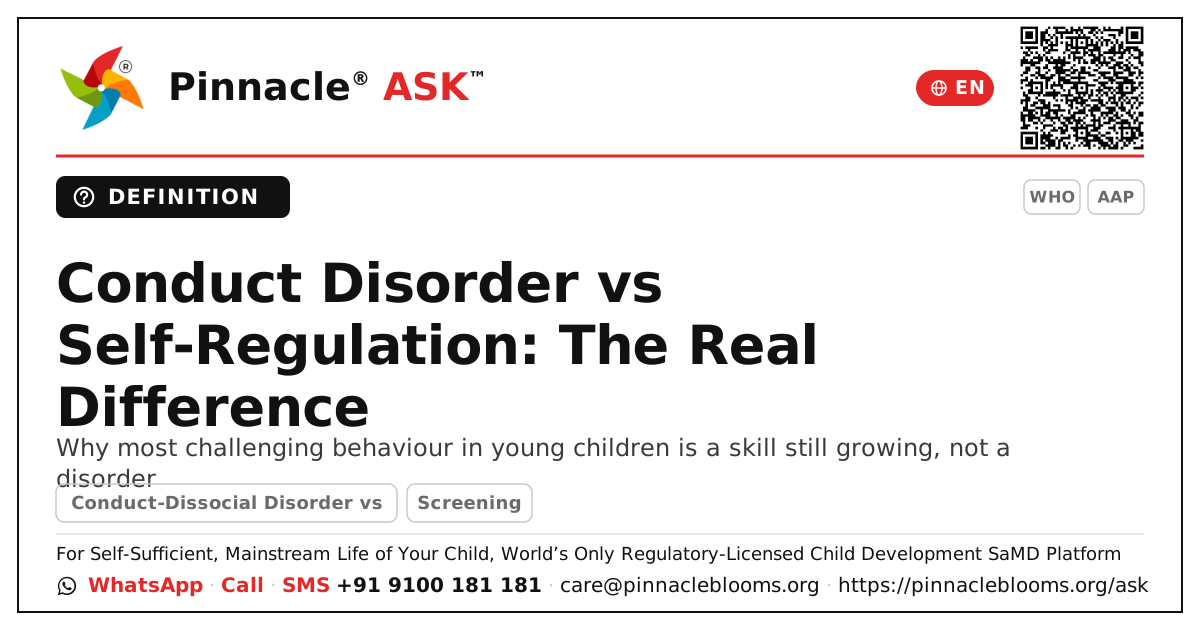
One is a clinical diagnosis applied carefully and rarely in early childhood; the other is a developmental skill still under construction in nearly every young child.
In short
Self-regulation difficulties describe a young child who is still learning to manage big feelings, impulses and behaviour — something almost every toddler and preschooler is developing day by day. Conduct-Dissocial Disorder is a formal clinical diagnosis involving a persistent, repeated pattern of behaviour that seriously violates others' rights or major age-appropriate rules — and it is diagnosed cautiously, almost never in very young children, because tantrums, defiance and impulsivity are a normal part of early development. In short: self-regulation difficulties are a skill still growing; Conduct-Dissocial Disorder is a sustained, severe pattern that only a clinician can carefully consider, usually in older children.How they differ in everyday life
A young child with self-regulation difficulties may melt down when frustrated, struggle to wait, grab toys, or lash out when overwhelmed — but these moments are usually tied to a trigger (tiredness, hunger, change, big emotion), they soften with comfort and support, and they steadily improve as the child matures and is coached. This is developmental, common, and very responsive to warm, consistent help.Conduct-Dissocial Disorder, by contrast, describes a repeated and lasting pattern over time — things like persistent aggression towards people or animals, deliberate destruction, deceitfulness, or serious rule-breaking that goes well beyond ordinary defiance. Crucially, clinicians are extremely careful before applying this label to a young child, because so much challenging behaviour at this age reflects an under-construction nervous system, not a disorder.
When to seek a look
For most young children, the right stance is watch, support and monitor — building self-regulation through calm routines, naming feelings, and consistent gentle limits. Do seek a developmental check if behaviours are intense, frequent, harmful to the child or others, persist across many months and settings (home and nursery), or if they are not easing with everyday support. A clinician untangles whether you are seeing a skill that needs nurturing, an underlying difficulty (such as language, sensory or attention needs driving the behaviour), or something that warrants closer assessment.The Pinnacle way
This is general information, not a diagnosis — a clinical AbilityScore® and any diagnosis are formed only at a Pinnacle Blooms Network centre, under qualified clinician care, never from an app or a checklist. Our team looks gently at why a child behaves as they do, then builds support around their strengths — drawing on behavioural therapy for self-regulation and, where needed, careful clinical review of patterns described under Conduct-Dissocial Disorder.Trusted sources
The World Health Organization's ICD-11 describes Conduct-Dissocial Disorder as a sustained pattern, diagnosed with care. The American Academy of Pediatrics and HealthyChildren explain how self-regulation develops across early childhood and how parents can nurture it.Next step — Worried about your child's behaviour? Book a developmental screening and let a clinician tell you the difference — with warmth, and without labels rushed onto a growing child.
What to watch
Behaviours that are intense, frequent, harmful to your child or others, persist over many months across both home and nursery, and do not ease with calm, consistent support — these warrant a developmental check, while occasional triggered meltdowns that soften with comfort are usually developmental.
Try this at home
Name the feeling before fixing the behaviour: 'You're really angry the tower fell — that's hard.' Naming big emotions out loud helps a young brain learn to regulate them, building the very skill that prevents most behaviour worries.
Trusted sources
Developed by SETU Consortium · Pinnacle Blooms Network · Last reviewed 2026-06-10 · reviewed every 365 days
This is general information, not a diagnosis. A clinical AbilityScore® and any diagnosis are formed only at a Pinnacle Blooms Network centre, under qualified clinician care.
Frequently asked
Can a toddler be diagnosed with Conduct-Dissocial Disorder?
It is extremely rare. Clinicians are very cautious about this label in very young children, because tantrums, defiance and impulsivity are a normal part of early development. The focus at this age is supporting self-regulation, not diagnosing.
How do I know if my child's behaviour is normal or a worry?
Occasional meltdowns tied to a trigger that soften with comfort are usually developmental. Seek a check if behaviours are intense, frequent, harmful, persist over months across home and nursery, and don't ease with consistent support.
What helps a child build self-regulation?
Calm predictable routines, naming feelings out loud, consistent gentle limits, enough sleep and warm connection. Many children also benefit from structured behavioural support guided by a clinician.