
Developmental Profile 4
What is the Developmental Profile 4 (DP-4)?
The Developmental Profile 4 (DP-4) is a widely used standardised developmental screening and assessment tool that gives a structured snapshot of a child's development from birth through early childhood. It draws information, usually from a parent or caregiver, across five areas — physical, adaptive behaviour, social-emotional, cognitive and communication — and produces age-referenced results. It is not a diagnosis in itself but a helpful starting picture that a qualified clinician interprets within a wider whole-child assessment.
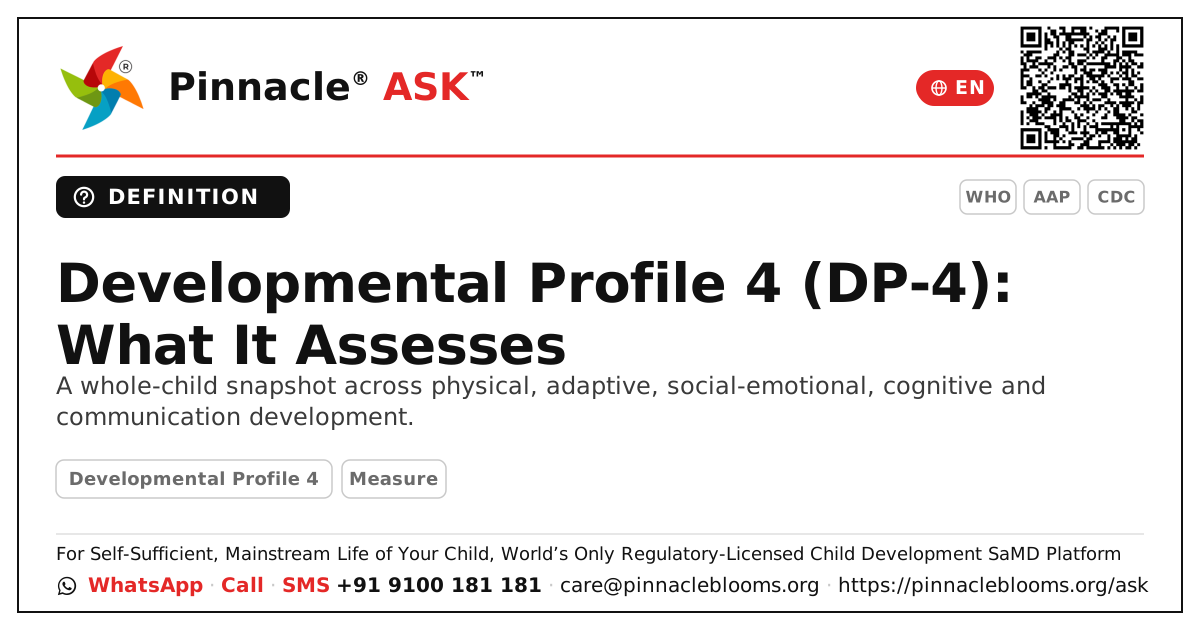
A trusted parent-and-clinician questionnaire that paints a picture of where a child shines and where they may need a little extra support — that is the Developmental Profile 4.
In short
The Developmental Profile 4 (DP-4) is a widely used, standardised developmental screening and assessment tool that gives a structured snapshot of a child's development from birth through early childhood. It gathers information — usually from a parent or caregiver who knows the child well, sometimes alongside an interviewer — across several everyday areas of growth. It is not a diagnosis in itself; it is a careful starting picture that helps a clinician understand a child's strengths and any areas that may benefit from closer look or support.What the DP-4 assesses
The DP-4 looks at a child across five connected areas of development: physical (large and small movements, coordination and self-help body skills), adaptive behaviour (everyday independence such as feeding, dressing and self-care), social-emotional (relating to others, play, sharing and managing feelings), cognitive (thinking, problem-solving and early reasoning), and communication (understanding language and expressing needs in words and gestures). Information is typically drawn from those who know the child best, so it reflects how a child actually behaves day to day rather than only in one short visit. The tool produces age-referenced results that show how a child is progressing in each area compared with typical developmental expectations — useful for spotting where a strength can be celebrated and where a gentle next step may help. Crucially, a profile is a beginning, not a verdict; children grow along their own timelines, and a difference noticed early is simply an invitation to add the right support.How it is used
A tool like the DP-4 is one helpful piece of a wider picture. A qualified clinician interprets the results alongside direct observation, developmental history and other measures before drawing any conclusion. It is most valuable as part of a thoughtful, whole-child assessment rather than as a standalone answer.The Pinnacle way
This is general information, not a diagnosis — a clinical AbilityScore® and any diagnosis are formed only at a Pinnacle Blooms Network centre, under qualified clinician care, never from an app or form. Tools such as the DP-4 help our team understand the whole child, after which we build an individualised plan that may draw on child development assessment and supports like speech therapy where helpful.Trusted sources
WHO Nurturing Care Framework on early childhood development; the American Academy of Pediatrics and HealthyChildren guidance on developmental screening and milestones; CDC developmental milestone resources.Next step — If you would like to understand your child's developmental profile across all areas of growth, book a developmental assessment to map their strengths and start any helpful support early.
What to watch
Persistent differences from peers in movement, everyday independence, social play, thinking and problem-solving, or understanding and using language as your child grows.
Try this at home
Keep simple notes of what your child can do day to day — words they use, how they play, how they manage feeding and dressing — so a clinician has a rich, real-life picture to work from.
Trusted sources
Developed by SETU Consortium · Pinnacle Blooms Network · Last reviewed 2026-06-10 · reviewed every 365 days
This is general information, not a diagnosis. A clinical AbilityScore® and any diagnosis are formed only at a Pinnacle Blooms Network centre, under qualified clinician care.
Frequently asked
Is the DP-4 a diagnosis of a developmental condition?
No. The DP-4 is a standardised screening and assessment tool that gives a structured picture of a child's development. Any diagnosis is formed only by a qualified clinician who interprets results alongside observation, history and other measures.
What ages is the DP-4 used for?
The DP-4 is designed for children from birth through early childhood, giving age-referenced results across several developmental areas. Your clinician will confirm whether it suits your child's age and needs.
Who provides the information for the DP-4?
Information usually comes from a parent or caregiver who knows the child well, sometimes alongside an interviewer, so the picture reflects how a child behaves day to day rather than in one short visit.