
School Readiness Gap
Best age to start therapy for a School Readiness Gap
The best time to support a school readiness gap is as soon as a concern appears — most often between ages 3 and 5, in the play-based years before formal schooling, when skills like attention, language, fine-motor control and social confidence develop fastest. Support still works well into early primary. A clinical AbilityScore® and any diagnosis are formed only at a Pinnacle Blooms Network centre under qualified clinician care.
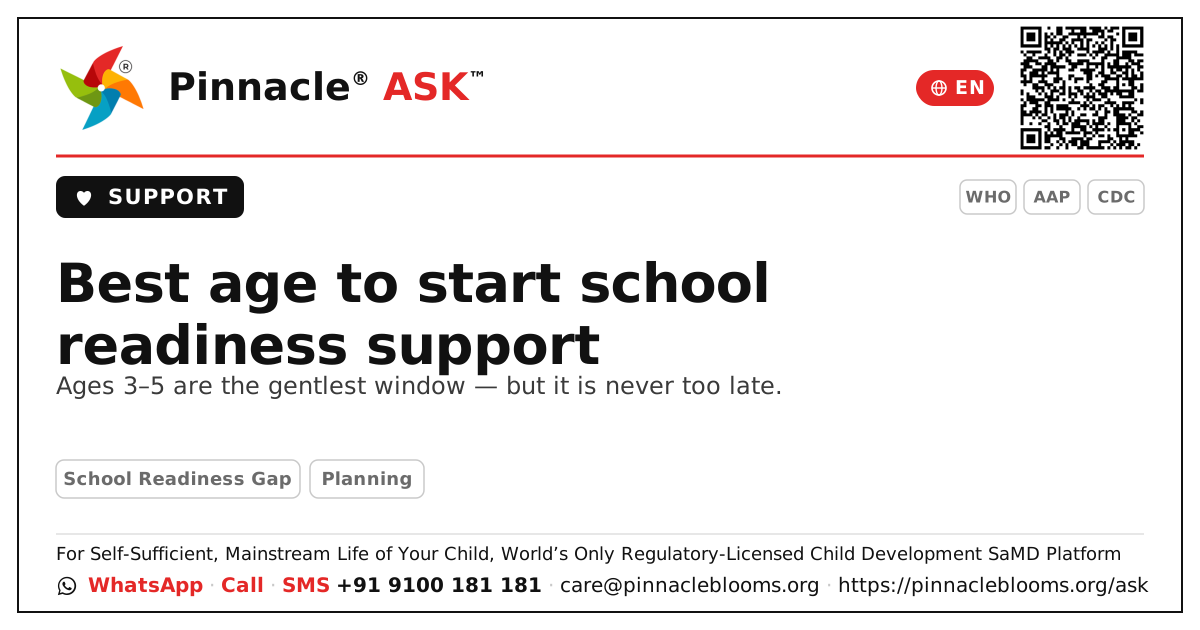
The most powerful window for closing a school readiness gap isn't the day school starts — it's the gentle, playful years that come before it.
In short
The best time to support a school readiness gap is as soon as you notice your child is finding the building blocks of school harder than peers — most often between ages 3 and 5, in the years before formal schooling begins. Earlier support is gentler and more play-based because young brains are wonderfully adaptable, but it is genuinely never too late — children entering or already in early primary still make real gains. The aim is not to push academics early, but to build the foundations: attention, language, fine-motor control, social skills and confidence.Why the early years matter most
School readiness is far more than knowing letters and numbers. It rests on a wide set of skills — sitting and attending, following instructions, communicating needs, holding a crayon, sharing and waiting, managing big feelings, and separating happily from a parent. These develop fastest in the preschool years (roughly 2.5 to 5 years), when learning happens naturally through play.- Ages 2.5–4 — the ideal window for building language, listening, play and early self-help skills through low-pressure, play-led support.
- Ages 4–5 — a focused window to strengthen attention, fine-motor and pre-writing skills, and social confidence before the first classroom.
- Ages 5–7 — support still works well; here it often runs alongside school, smoothing the transition and filling specific gaps as they appear.
Starting earlier usually means shorter, lighter support — but the right time is simply when you first have a concern. Waiting to 'see if they grow out of it' often makes the gap wider, not smaller.
When to seek a check
Consider a developmental check if, compared with peers, your child struggles to follow simple two-step instructions, has limited speech or is hard to understand, finds it very hard to sit, attend or wait, avoids holding crayons or scissors, or finds separating, sharing and playing with other children especially difficult. A short, friendly assessment tells you exactly where your child is thriving and where a little support would help most.The Pinnacle way
A clinical AbilityScore® and any diagnosis are formed only at a Pinnacle Blooms Network centre, under qualified clinician care — never from an app or checklist. Our clinicians map your child's readiness across communication, motor, social and learning skills, then build a warm, play-led plan. Explore how the AbilityScore® assessment works, our occupational therapy and speech therapy support, or start at our [home page](/) to find a centre near you.Trusted sources
World Health Organization Nurturing Care Framework on early childhood development; American Academy of Pediatrics (HealthyChildren.org) guidance on school readiness and developmental milestones; CDC 'Learn the Signs. Act Early.' milestone resources.Next step — Wondering if your child is ready for the classroom? Book a school-readiness assessment with a Pinnacle clinician.
This is general information, not a diagnosis — a clinical AbilityScore® and any diagnosis are formed only at a Pinnacle Blooms Network centre under qualified clinician care.
What to watch
Watch for difficulty following two-step instructions, limited or unclear speech, trouble sitting, attending or waiting, avoiding crayons or scissors, and finding it hard to share, separate or play with other children.
Try this at home
Build readiness through play, not worksheets — read together daily, give simple two-step instructions ('get your shoes and put them by the door'), and let your child practise scissors, crayons and turn-taking games at home.
Trusted sources
Developed by SETU Consortium · Pinnacle Blooms Network · Last reviewed 2026-06-10 · reviewed every 365 days
This is general information, not a diagnosis. A clinical AbilityScore® and any diagnosis are formed only at a Pinnacle Blooms Network centre, under qualified clinician care.
Frequently asked
What is the best age to start support for a school readiness gap?
Most often between ages 3 and 5, in the play-based years before formal schooling, when attention, language, motor and social skills develop fastest. The truest answer is to start as soon as you have a concern.
Is my child too old if they have already started school?
Not at all. Children in early primary (ages 5–7) still make real gains, with support often running alongside school to fill specific gaps and ease the transition.
Will early support push my child into academics too soon?
No. Good school-readiness support is play-led and builds foundations like attention, language, fine-motor skills and confidence — not early reading or maths drills.
How do I know if my child has a readiness gap?
A short, friendly developmental check at a Pinnacle Blooms Network centre maps where your child is thriving and where a little support would help most — without any pressure or labels.