
stereotyped behaviors
If my child isn't showing stereotyped behaviours, what does it mean?
Not showing stereotyped behaviours such as rocking, flapping or spinning is completely typical and not a delay — these movements are not a milestone children must reach. Many toddlers simply never show them. What matters at 12–36 months is steady growth in communication, social connection, play and movement. Seek a developmental check if there are few words, little eye contact, no pointing, no response to name, or loss of a skill — not because repetitive movements are absent.
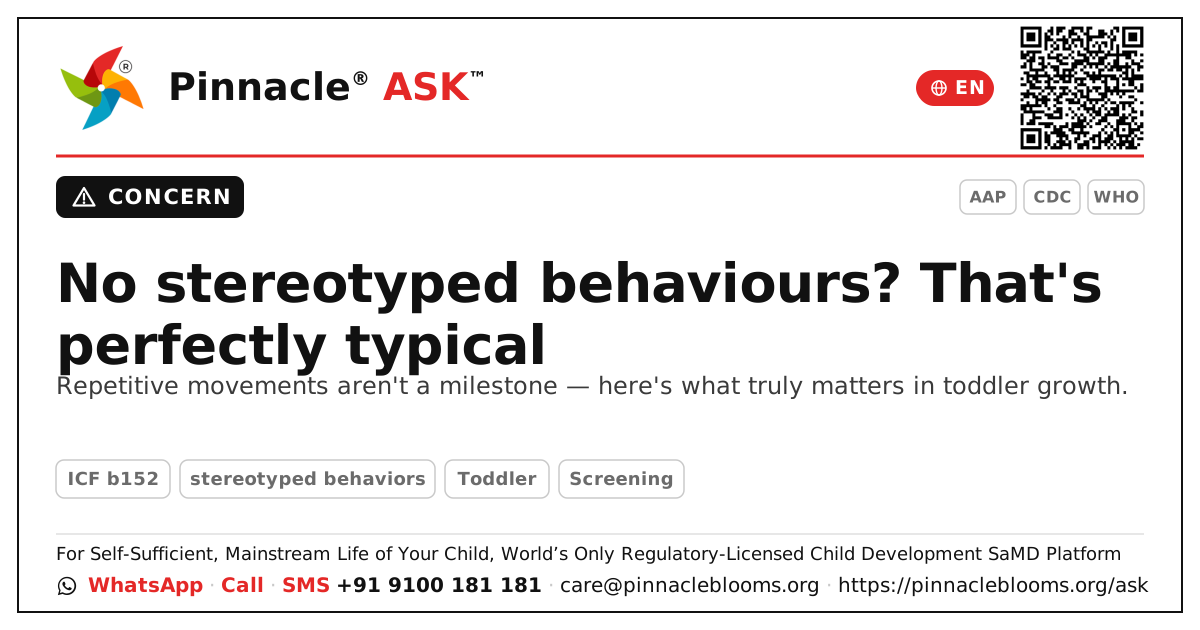
If your toddler isn't rocking, flapping or spinning, that's usually a perfectly ordinary part of how their unique little self is unfolding.
In short
The absence of stereotyped behaviours — repetitive movements like hand-flapping, body-rocking or spinning — is not a problem at all. Many toddlers simply never show these movements, and that is completely typical. Stereotyped behaviours are not a milestone your child needs to reach; they are just one of many ways some children self-soothe or express excitement. What truly matters at 12–36 months is the steady growth of play, communication and connection.What this actually means
It's easy to read about repetitive movements online and wonder whether your child should be doing them. Please be reassured: not showing them is neither a delay nor a warning sign. Children regulate themselves in countless different ways — some hum, some cuddle, some run about, some are calm and still. None of these is better or worse.Instead of watching for the presence of any single behaviour, it helps to notice the bigger, more meaningful threads of development:
- Communication — babbling, first words, gestures like waving or pointing, responding to their name.
- Social connection — sharing smiles, looking to you for reassurance, enjoying back-and-forth play like peek-a-boo.
- Play and curiosity — exploring toys, pretending, showing you things they find interesting.
- Movement — sitting, crawling, walking and using hands to explore.
If these are growing nicely, your child is doing beautifully — with or without repetitive movements.
When a check is wise
Reach out for a gentle developmental check not because of missing stereotyped behaviours, but if you notice few or no words by around 18 months, little eye contact or shared smiling, no pointing, no response to name, or loss of a skill once had. Trust your daily instinct — what you notice matters.The Pinnacle way
A clinical AbilityScore® and any diagnosis are formed only at a Pinnacle Blooms Network centre, under qualified clinician care — never from an online checklist. You can read more about stereotyped behaviours and how we view them, and our occupational therapy team supports healthy self-regulation in whatever form it takes for your child.Trusted sources
WHO ICF framework on mental functions including the regulation of behaviour (b152); American Academy of Pediatrics guidance (healthychildren.org) on developmental monitoring in toddlers; CDC developmental milestones and "Learn the Signs, Act Early" resources.Next step — If you'd simply like reassurance, book a developmental check with a Pinnacle clinician for a calm, clear picture of your child's strengths and growth.
This is general information, not a diagnosis — a clinical AbilityScore® and any diagnosis are formed only at a Pinnacle Blooms Network centre under qualified clinician care.
What to watch
The absence of stereotyped behaviours is not a concern. Instead, watch the bigger picture: seek a developmental check if there are few or no words by around 18 months, little eye contact or shared smiling, no pointing, no response to name, or loss of a skill once had.
Try this at home
Rather than tracking whether your child shows any one behaviour, keep a simple note of new words, gestures and shared-play moments — these positive threads give a clinician the clearest, kindest picture of growth.
Trusted sources
Developed by SETU Consortium · Pinnacle Blooms Network · Last reviewed 2026-06-10 · reviewed every 540 days
This is general information, not a diagnosis. A clinical AbilityScore® and any diagnosis are formed only at a Pinnacle Blooms Network centre, under qualified clinician care.
Frequently asked
Is it bad if my toddler never rocks, flaps or spins?
Not at all. Stereotyped behaviours are just one of many ways some children self-soothe or express excitement — they are not a milestone every child needs to reach. Many toddlers never show them, and that is completely typical.
Should I try to make my child show these behaviours?
No. There is nothing to encourage or teach here. Repetitive movements are not a skill to be developed; their absence is neither a delay nor a warning sign. Focus instead on play, talking and connection.
When should I arrange a developmental check?
Not because movements are absent, but if you notice few or no words by around 18 months, little eye contact, no pointing, no response to name, or loss of a skill once had. Trust your daily instinct and seek a gentle check early.