
Sensory Processing Differences
What an AbilityScore of 900–1000 means in Sensory Processing Differences
A 900–1000 AbilityScore band is the upper end of the scale — strong, encouraging news that your child is currently regulating and participating well despite Sensory Processing Differences. It is a confident baseline measured against your child's own starting point, not a final verdict, and is best re-checked over time. Only a Pinnacle clinician can interpret what it means for your child.
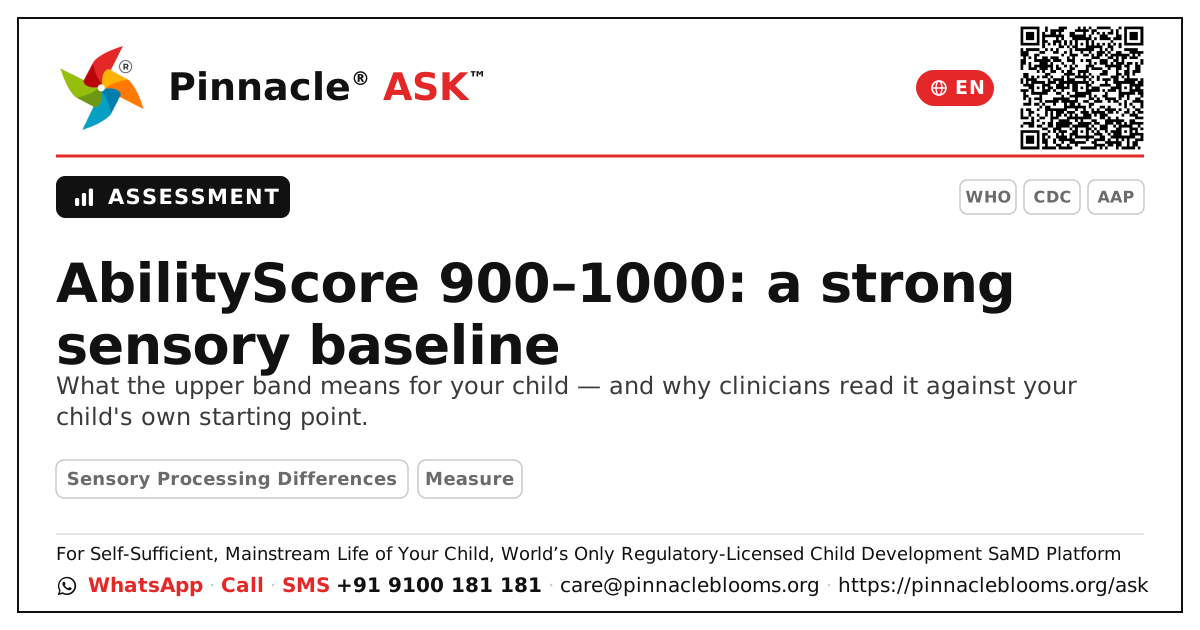
A score in the 900–1000 band is wonderful news — it tells you something strong and steady about how your child is meeting the world.
In short
An AbilityScore® in the 900–1000 band sits at the upper end of the scale, and for a child with [Sensory Processing Differences](/) it signals that — at the time of measurement — your child is regulating, responding and participating well across the areas the clinician assessed. It is a clear, encouraging baseline, not a final verdict. What matters most is what it means for your child, against their own starting point, as explained by the clinician who measured it.What a high band actually tells you
Sensory Processing Differences describe how a child takes in and responds to everyday input — sound, touch, movement, light, texture. A 900–1000 band suggests your child is currently:- Coping well with everyday sensory demands — busy rooms, clothing, mealtimes, transitions
- Self-regulating effectively — settling, recovering and staying engaged
- Participating fully in play, learning and family routines
This is a strength to build on. A high band does not mean differences vanish or that you imagined your concerns — it means your child's current strategies are working. The clinician will tell you which specific areas are strongest and whether any remain worth gentle support or periodic re-checking.
Why one number is never the whole story
Development moves in spurts and plateaus, and sensory needs can shift with growth, environment and tiredness. That is why the AbilityScore® is most powerful when re-measured over time against your child's own baseline — so progress, or any change, becomes visible rather than guessed at. A strong band today is a confident starting point for that journey, not a reason to stop observing.The Pinnacle way
A clinical AbilityScore® and any diagnosis are formed only at a Pinnacle Blooms Network centre, under the care of a qualified clinician — never from an online figure alone. Our clinicians interpret each band in the context of your child's full picture and explain exactly what it means for daily life and next steps. Explore occupational therapy for sensory support, understand the AbilityScore®, or learn more about [Sensory Processing Differences](/).Trusted sources
WHO ICD-11 framework for developmental and sensory function; CDC 'Learn the Signs. Act Early.' developmental guidance; American Academy of Pediatrics (HealthyChildren.org); Indian Academy of Pediatrics. All paraphrased; interpretation is always clinician-led.Next step — Celebrate the strength, then keep the picture clear: book a review with a Pinnacle clinician to understand what your child's band means for the months ahead.
This is general information, not a diagnosis — a clinical AbilityScore® and any diagnosis are formed only at a Pinnacle Blooms Network centre under qualified clinician care.
What to watch
Even with a strong band, note any new struggles with busy environments, clothing, food textures or transitions, or a change after illness, a move or starting school — these are worth mentioning at the next review so the band can be re-measured against your child's own baseline.
Try this at home
Keep doing what's working. Notice which calming routines, textures or movement breaks help your child settle, and weave them gently into daily life — a predictable rhythm protects the regulation that a strong band reflects.
Trusted sources
Developed by SETU Consortium · Pinnacle Blooms Network · Last reviewed 2026-06-10 · reviewed every 365 days
This is general information, not a diagnosis. A clinical AbilityScore® and any diagnosis are formed only at a Pinnacle Blooms Network centre, under qualified clinician care.
Frequently asked
Is a 900–1000 AbilityScore a good result?
Yes — it sits at the upper end of the scale and indicates your child is currently regulating and participating well across the areas assessed. It's an encouraging baseline, interpreted by your clinician against your child's own picture.
Does a high band mean my child no longer has Sensory Processing Differences?
Not necessarily. It means their current strategies are working well at the time of measurement. Sensory needs can shift with growth and environment, so periodic re-measurement keeps the picture accurate.
Is the AbilityScore a diagnosis?
No. The AbilityScore® is a clinician-administered structured assessment that creates a baseline. Any diagnosis is formed only at a Pinnacle Blooms Network centre under qualified clinician care.
Should we still attend a review with a strong score?
A review is valuable — it lets the clinician explain which areas are strongest, whether any need gentle support, and how often to re-measure so progress stays visible.