
3-to-6-month-old
Developmental red flags in a 3-to-6-month-old
From 3 to 6 months, most babies smile, coo, track faces, reach and gain head control, with normal variation in pace. Seek a gentle developmental check if, near 6 months, your baby isn't smiling socially, not following objects with their eyes, not making sounds back, not holding their head steady, or has lost a skill once had. These are reasons to assess early — not a diagnosis — because early support works best.
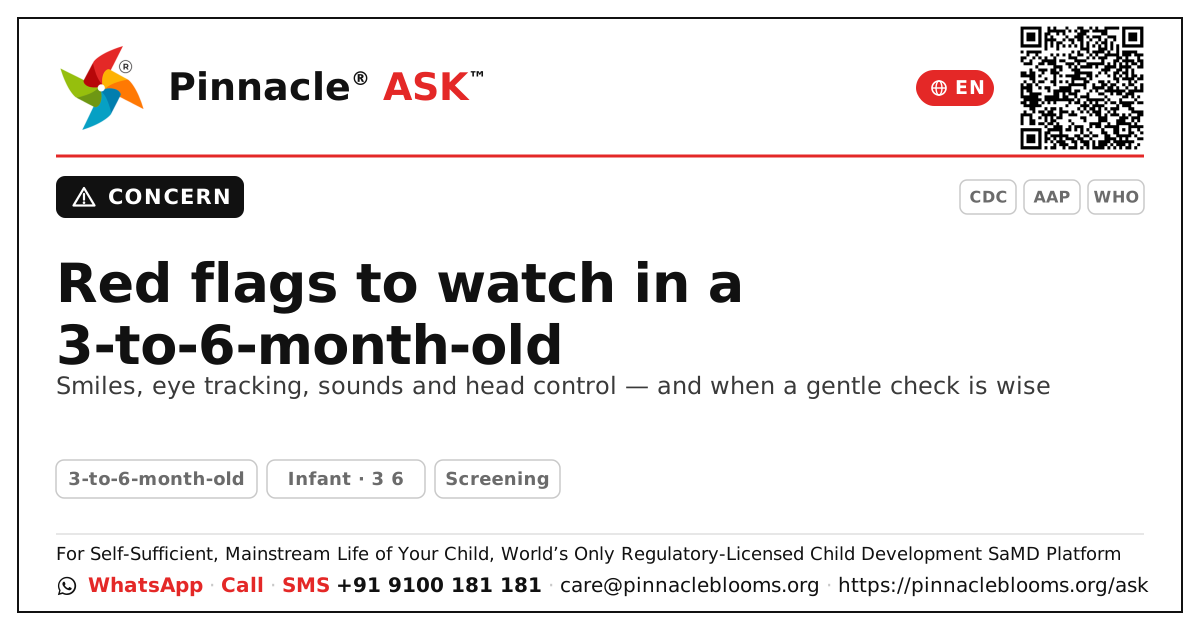
The 3-to-6-month window is full of first laughs, reaching hands and rolling bodies — and watching your baby with loving curiosity is exactly the right thing to do.
In short
Most 3-to-6-month-olds are busy smiling, cooing, reaching and starting to push up — and small differences in pace are usually completely normal. A gentle developmental check is wise if, by around 6 months, your baby is not smiling socially, not following objects or faces with their eyes, not making sounds back to you, not holding their head steady, or has lost a skill they once had. None of these is a diagnosis — it simply means a clinician's calm look is worthwhile now, because early support works beautifully at this age.What to watch from 3 to 6 months
Babies vary, and one missed milestone alone is rarely cause for alarm. These are gentle flags that deserve a clinician's eye — especially if more than one is present near 6 months:- Social connection — no warm, social smiles by around 3 months; little eye contact; not turning towards your voice or face.
- Communication — not cooing, gurgling or making sounds back to you; not laughing or squealing by 5–6 months.
- Vision & tracking — eyes that don't follow a moving toy or face; eyes that consistently cross or turn outward; not reaching for objects by 5–6 months.
- Hearing — not startling to loud sounds or turning towards a voice or rattle.
- Movement & tone — head still floppy or not steady by 4 months; body that feels very stiff or very limp; not pushing up on arms during tummy time; hands kept tightly fisted most of the time.
- Loss of a skill — any skill your baby once had (a smile, a babble, head control) that fades away always deserves prompt review.
The goal is not worry — it's that a calm, early observation turns small questions into early opportunities.
When to act
If you notice several of these near 6 months, a skill has been lost, or a parent instinct keeps nudging you, arrange a developmental check now rather than waiting and watching alone. What you see every day at home is valuable information for a clinician.The Pinnacle way
A clinical AbilityScore® and any diagnosis are formed only at a Pinnacle Blooms Network centre, under qualified clinician care — never from an online list. Our clinicians watch how your baby smiles, sounds, reaches and moves, then shape gentle, play-based support around their strengths. You can [start with us here](/) or explore how our occupational therapy team supports early motor and sensory development.Trusted sources
CDC developmental milestones and the "Learn the Signs, Act Early" programme for 4- and 6-month checkpoints; American Academy of Pediatrics (healthychildren.org) guidance on infant developmental monitoring; WHO Nurturing Care framework on responsive, early support.Next step — Trust what you've noticed. Book a developmental check with a Pinnacle clinician for a calm, clear review of your baby's milestones.
This is general information, not a diagnosis — a clinical AbilityScore® and any diagnosis are formed only at a Pinnacle Blooms Network centre under qualified clinician care.
What to watch
Seek a check near 6 months if your baby isn't smiling socially, doesn't follow faces or toys with their eyes, doesn't make sounds back, doesn't startle to loud sounds, has poor head control, feels very stiff or floppy, isn't reaching, or has lost any skill once had.
Try this at home
During daily play, gently test connection: smile and wait for a smile back, jingle a toy to one side and watch the eyes follow, and talk to see if your baby coos in reply. A quick phone note of what you see each week gives a clinician a clear picture.
Trusted sources
Developed by SETU Consortium · Pinnacle Blooms Network · Last reviewed 2026-06-10 · reviewed every 365 days
This is general information, not a diagnosis. A clinical AbilityScore® and any diagnosis are formed only at a Pinnacle Blooms Network centre, under qualified clinician care.
Frequently asked
My 4-month-old isn't rolling over yet — should I worry?
Rolling often starts between 4 and 6 months, and some babies take a little longer, so this alone is rarely a concern. Watch instead for steady head control, reaching for toys, pushing up during tummy time and social smiling. If several of these are missing near 6 months, a gentle developmental check is wise.
Is it normal for a 5-month-old not to babble much yet?
At this age babies usually coo, gurgle, squeal and laugh rather than babble with consonants, which comes a little later. What matters is that your baby makes sounds back to you and responds to your voice. If there are no sounds at all or your baby doesn't turn towards voices, mention it to a clinician.
What is the single most important early flag?
Loss of a skill your baby once had — a fading smile, lost babble, or weakening head control — always deserves prompt review, as does no social smile by around 3 months. When in doubt, a calm early check is always reasonable.