
Social Communication Difficulties
What causes Social Communication Difficulties in young children?
Social Communication Difficulties in young children usually arise from a mix of influences — chiefly how the brain is naturally wired for language and social connection, often with a genetic basis. Hearing issues, co-occurring developmental differences, and limited early interaction can contribute. It is not caused by parenting or screen time alone.
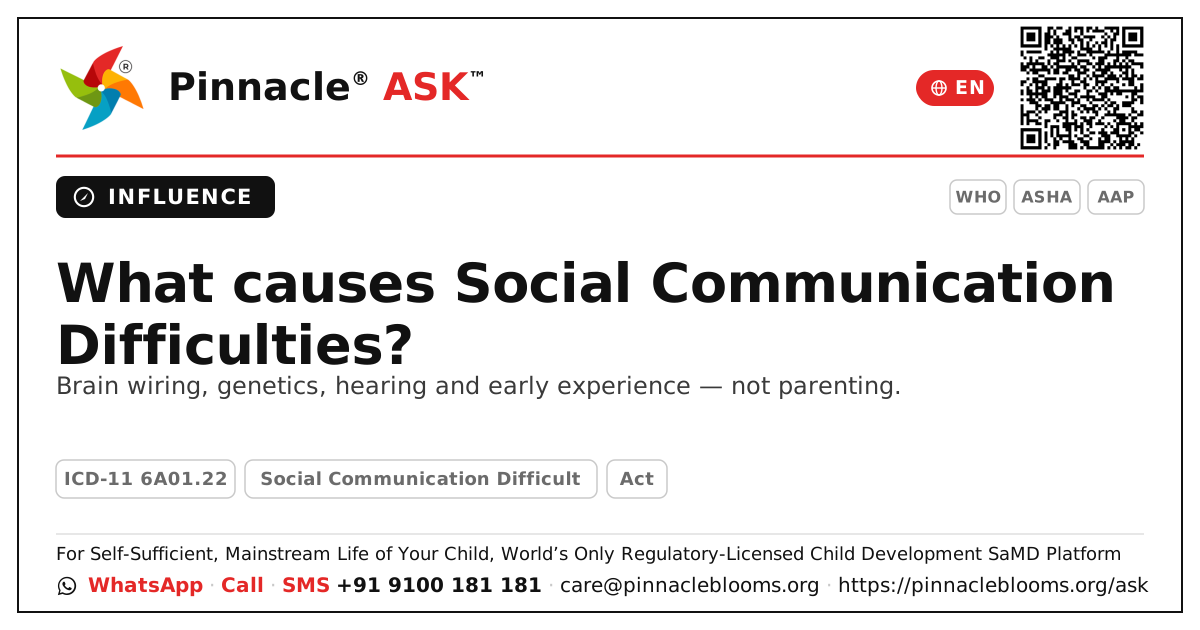
When a child finds the back-and-forth of talking and connecting harder than expected, the first thing parents want to know is simply — why?
In short
Social Communication Difficulties usually come from a mix of influences rather than one single cause. The biggest factor is how each child's brain is naturally wired for language and social connection — strongly shaped by genetics and early brain development. Hearing problems, other developmental differences, and limited early back-and-forth interaction can also play a part. Importantly, this is not caused by parenting, screen time alone, or anything you did wrong.What shapes social communication
Brain and biology. The skills behind reading faces, taking turns, and adjusting how we talk to different people develop along their own timeline in each child. Differences here often run in families, pointing to a genetic and neurodevelopmental basis.Hearing and language foundations. A child who cannot hear clearly — even from frequent ear infections — may miss the building blocks of conversation. This is always worth checking first.
Co-occurring profiles. These difficulties often appear alongside autism, developmental language differences, or broader developmental delay, and the underlying patterns overlap.
Early experience. Rich, responsive, face-to-face interaction helps these skills bloom. Reduced opportunity for it can compound an existing difficulty — but rarely creates one on its own.
Understanding the why matters less than acting early: warm, structured support helps children grow these skills at any starting point.
The Pinnacle way
A clinical AbilityScore® and any diagnosis are formed only at a Pinnacle Blooms Network centre, under qualified clinician care — never from an app or online form. From there, our team builds a plan around your child's social communication strengths, often through warm, play-based speech therapy.Trusted sources
WHO ICD-11 (6A01.22); American Speech-Language-Hearing Association guidance on social communication; AAP developmental surveillance principles.Next step — Curious where your child stands? Book a developmental check with a Pinnacle clinician.
This is general information, not a diagnosis — a clinical AbilityScore® and any diagnosis are formed only at a Pinnacle Blooms Network centre under qualified clinician care.
What to watch
Reduced eye contact and back-and-forth, trouble taking turns in talk or play, difficulty following or sharing attention, or language that does not adjust to different people or situations.
Try this at home
Get down to your child's eye level and follow their lead in play — pause, wait, and respond to whatever they do or say. These tiny back-and-forth moments are the building blocks of social communication.
Trusted sources
Developed by SETU Consortium · Pinnacle Blooms Network · Last reviewed 2026-06-10 · reviewed every 365 days
This is general information, not a diagnosis. A clinical AbilityScore® and any diagnosis are formed only at a Pinnacle Blooms Network centre, under qualified clinician care.
Frequently asked
Did I cause my child's social communication difficulties?
No. These difficulties are not caused by parenting style, screen time alone, or anything you did wrong. They mostly reflect how a child's brain is naturally wired for language and social connection, often with a genetic basis.
Is this the same as autism?
Not always. Social communication differences can appear on their own, or as part of autism, developmental language difference or broader delay. Only a qualified clinician can tell which pattern fits your child after a proper assessment.
Should I get my child's hearing checked?
Yes — a hearing check is one of the first sensible steps, since even frequent ear infections can affect how a child picks up the building blocks of conversation.