
Fetal Alcohol Spectrum Disorder
Should I be worried my child might have Fetal Alcohol Spectrum Disorder?
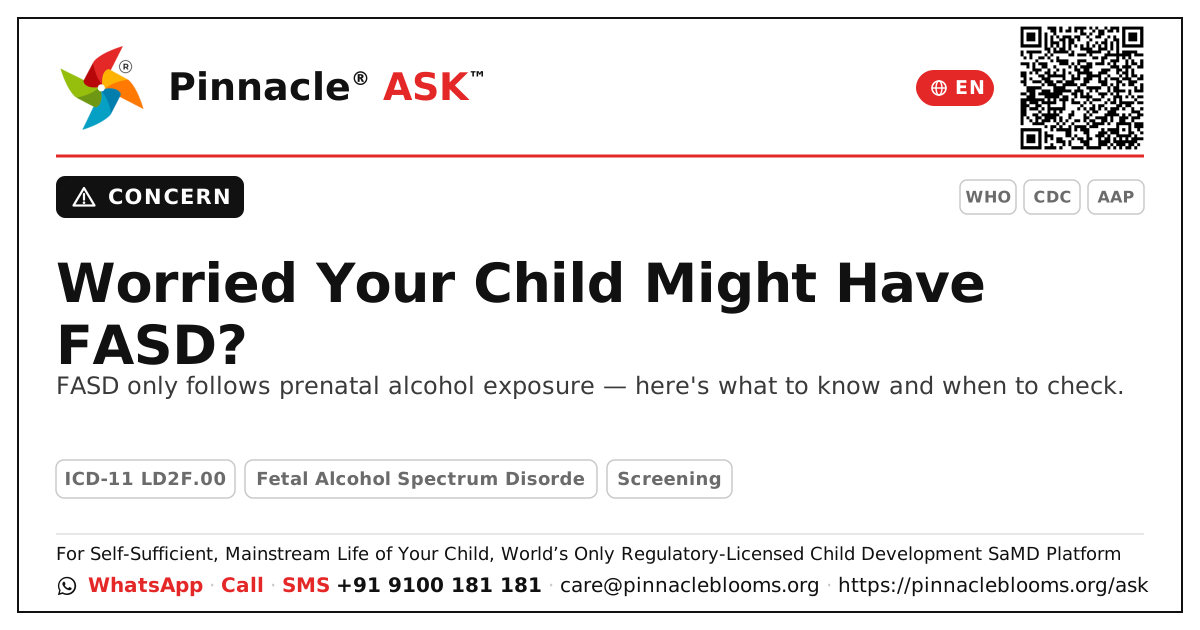
FASD only occurs where there was alcohol exposure during pregnancy. If your child has developmental challenges, the cause may be entirely different — and worry is a reason to check, not a diagnosis. Only a Pinnacle clinician can tell you what's truly going on.
If you're carrying a quiet worry about your child's early development, that worry deserves a clear, kind answer — not a sleepless internet search.
In short
Fetal Alcohol Spectrum Disorder (FASD) is a range of difficulties that can follow alcohol exposure during pregnancy. The single most important fact is this: FASD only happens where there was alcohol exposure before birth. If there was no alcohol during pregnancy, FASD is not the explanation for your child's challenges. Worry is reasonable — but worry is not a diagnosis, and only a qualified clinician can tell you what is truly going on.What FASD can look like
Where there was prenatal alcohol exposure, signs may include:- Growth — being smaller in height or weight than expected
- Learning and attention — trouble with memory, focus, planning or following instructions
- Behaviour and emotions — difficulty with self-control, big reactions, trouble with everyday transitions
- Speech and motor skills — delays in talking, coordination or fine-motor tasks
- Facial features — in some children, subtle distinctive features (often not present)
Many of these overlap with other developmental conditions, which is exactly why guessing at home is unhelpful — and why a proper assessment brings relief rather than fear.
When to seek a check
If your child is missing milestones, struggling at school, or you simply have an instinct that something needs looking at — that instinct is worth acting on, regardless of the cause. Early support changes outcomes; identified early, children with FASD or any developmental difference make real, lasting gains.The Pinnacle way
No diagnosis — and no AbilityScore® — is ever made from an online form or article. A clinical AbilityScore® and any diagnosis are formed only at a Pinnacle Blooms Network centre, under the care of a qualified clinician who looks at the whole picture first. Our team can guide you toward a developmental assessment and the right therapy support if your child needs it. The goal is clarity and a plan — never a label.Trusted sources
WHO ICD-11 (LD2F.00, foetal alcohol syndrome); US CDC guidance on FASDs; American Academy of Pediatrics developmental guidance.Next step — The kindest thing you can do with worry is check. Book a developmental assessment with a Pinnacle clinician.
What to watch
Seek a check sooner if your child is significantly behind on milestones, struggles with attention, memory or self-control day to day, or if there is a known history of prenatal alcohol exposure.
Try this at home
Keep daily routines simple and predictable — picture cards for mornings, the same order of steps each day. Children who find planning hard feel calmer and learn faster when the world is consistent and warm.
Trusted sources
Developed by SETU Consortium · Pinnacle Blooms Network · Last reviewed 2026-06-10 · reviewed every 365 days
This is general information, not a diagnosis. A clinical AbilityScore® and any diagnosis are formed only at a Pinnacle Blooms Network centre, under qualified clinician care.
Frequently asked
Can my child have FASD if I didn't drink during pregnancy?
No. FASD only happens where there was alcohol exposure during pregnancy. If there was no alcohol, FASD is not the explanation — and your child's challenges, if any, have a different cause worth assessing.
What age can FASD be assessed?
Developmental concerns can be looked at from infancy onward, and a fuller picture often emerges in the toddler and preschool years. If you have worries at any age, a developmental check is the right first step — earlier support means better outcomes.
Is FASD the same as autism or ADHD?
No, though they can share some features like attention and behaviour difficulties. Because they overlap, only a qualified clinician should sort out what is actually happening — which is exactly what a structured assessment is for.