
difficulty sharing
Should a frontline worker refer a child with difficulty sharing?
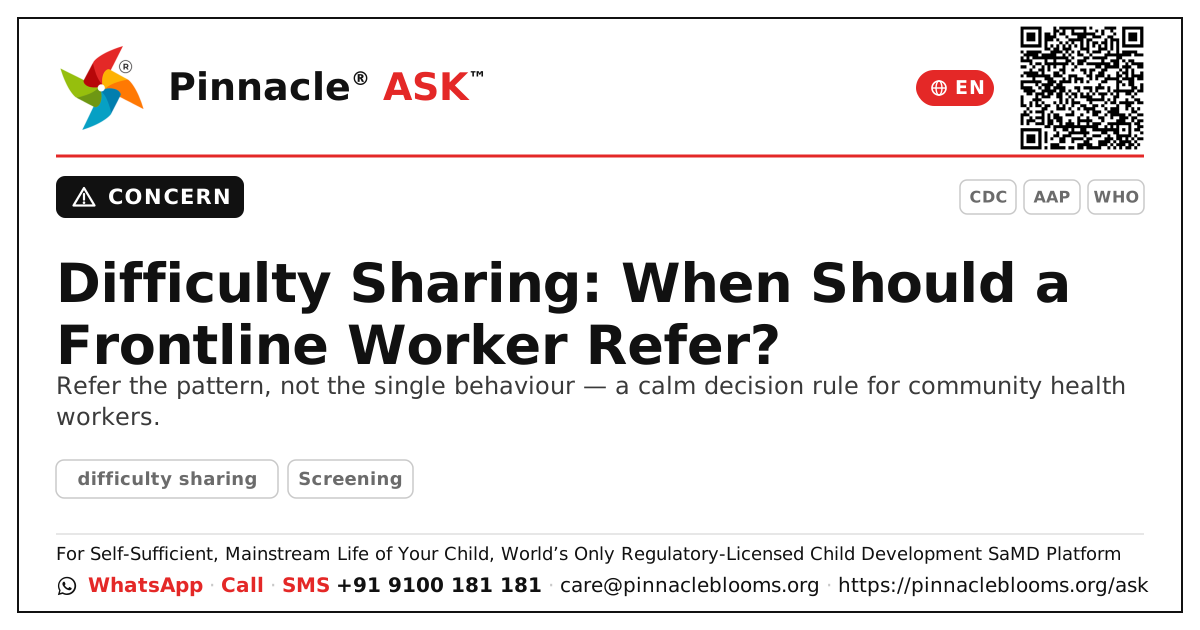
Difficulty sharing alone is rarely a reason to refer — turn-taking matures gradually across the toddler and preschool years. A frontline worker should refer for a developmental check when difficulty sharing clusters with wider social-communication flags: little eye contact, no name response, limited peer play, no pointing, few words, or marked disruptive aggression. Refer the pattern, not the single behaviour, and reassure families when sharing trouble stands alone.
A child still learning to share is a child still learning — and your eye on how they play and connect is exactly the right first step.
In short
Difficulty sharing on its own is almost never a reason to refer — turn-taking and sharing develop gradually across the toddler and preschool years, and possessiveness over toys is a normal stage. As a frontline worker, refer for a developmental check only when difficulty sharing sits alongside wider social-communication concerns: little eye contact or shared smiling, not responding to name, very limited play with other children, no pointing or gesture, few words for age, or marked aggression that disrupts daily life. The decision rule is simple — refer the pattern, not the single behaviour.What to weigh before referring
Sharing is one of the later social skills to mature. A 2-year-old who grabs and guards toys is developing typically; cooperative, give-and-take play strengthens through ages 3–5. So look at the whole picture:- Is it isolated or clustered? Difficulty sharing with poor eye contact, no name response, no pointing, or absent pretend play is a stronger signal than sharing trouble alone.
- Social connection — does the child seek out other children, watch them, attempt to join in? Avoidance of all peer interaction matters more than reluctance to give up a toy.
- Communication — few or no words for age, not following simple instructions, or loss of words once used.
- Behaviour intensity — frequent hitting, biting or meltdowns that injure others or block participation in anganwadi or play.
- Parent concern — caregivers noticing the child "plays differently" from siblings or peers is valuable information.
If difficulty sharing stands alone with otherwise warm, connected, communicative play, reassure the family, share simple turn-taking activities, and review at the next visit rather than referring immediately.
When to refer
Refer for a developmental check when difficulty sharing co-occurs with social-communication flags above, when behaviour is unsafe or severely disrupts daily activities, or when caregivers remain worried after simple guidance. Early review is opportunity, not alarm — and a frontline worker's structured observation is the trusted bridge to it.The Pinnacle way
A clinical AbilityScore® and any diagnosis are formed only at a Pinnacle Blooms Network centre, under qualified clinician care — never from a single observed behaviour. Our clinicians look at the whole pattern of how a child plays, connects and communicates. Explore how we support social and play skills through occupational therapy, and how every family journey begins with a calm, structured review at [Pinnacle](/).Trusted sources
CDC "Learn the Signs, Act Early" social-emotional milestones for toddlers and preschoolers; American Academy of Pediatrics (healthychildren.org) guidance on sharing, turn-taking and typical play development; WHO Nurturing Care Framework on responsive caregiving and early childhood development.Next step — When the wider pattern raises a question, refer the family for a developmental assessment at a Pinnacle Blooms Network centre for a clear, supportive review.
This is general information, not a diagnosis — a clinical AbilityScore® and any diagnosis are formed only at a Pinnacle Blooms Network centre under qualified clinician care.
What to watch
Refer when difficulty sharing co-occurs with poor eye contact, no response to name, limited peer play, no pointing or gesture, few words for age, or aggression that injures others or blocks participation. Difficulty sharing alone, with otherwise warm and communicative play, usually needs reassurance and review — not immediate referral.
Try this at home
Coach caregivers in simple turn-taking games — rolling a ball back and forth, 'my turn, your turn' with a toy, or singing rhymes that take turns. These build sharing skills naturally and let you observe how the child connects.
Trusted sources
Developed by SETU Consortium · Pinnacle Blooms Network · Last reviewed 2026-06-10 · reviewed every 365 days
This is general information, not a diagnosis. A clinical AbilityScore® and any diagnosis are formed only at a Pinnacle Blooms Network centre, under qualified clinician care.
Frequently asked
Is difficulty sharing a sign of autism?
Not on its own. Reluctance to share is normal at toddler age and develops gradually. It becomes worth a developmental check only when it clusters with other social-communication signs such as little eye contact, no response to name, limited peer play, or absent pointing and gesture.
At what age do children learn to share?
Sharing and cooperative turn-taking mature gradually between roughly ages 2 and 5. Toddlers are typically possessive about toys; give-and-take play strengthens through the preschool years with practice and gentle modelling.
What should a frontline worker do if sharing is the only concern?
Reassure the family, demonstrate simple turn-taking activities, and plan to review at the next visit. Refer for a developmental check only if difficulty sharing is part of a wider pattern or if caregivers remain worried after guidance.