
Autism Spectrum
Is medication for autism safe for my child?
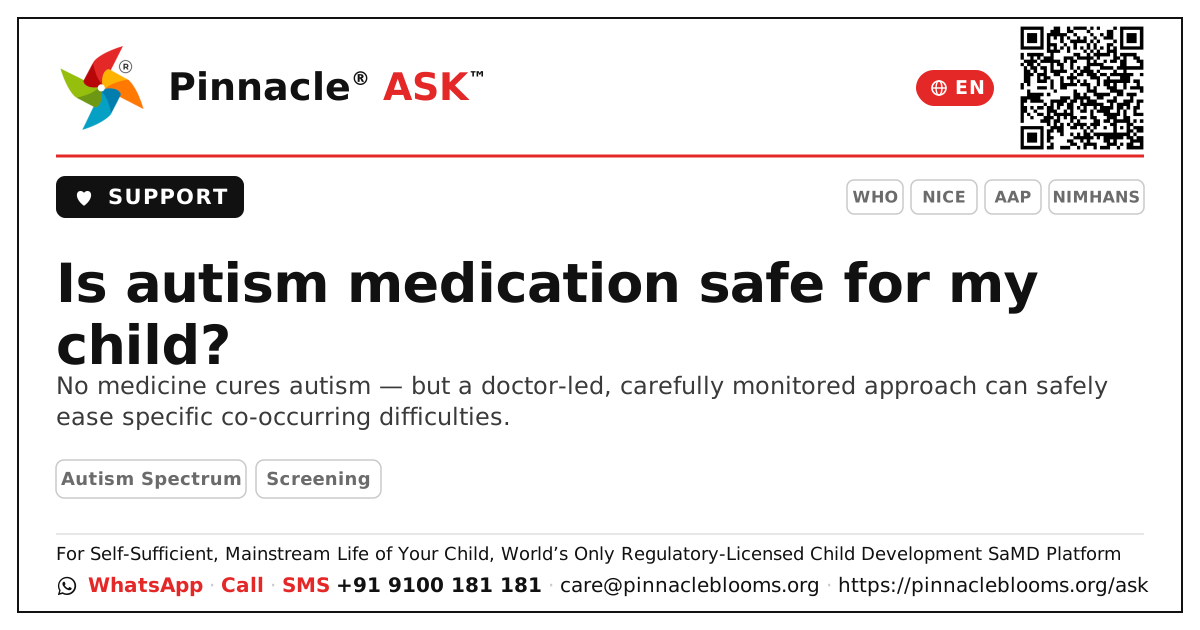
There is no medicine that treats autism itself. Medication may sometimes help specific co-occurring difficulties — like severe anxiety, sleep loss or unsafe behaviours — when a qualified doctor judges it appropriate, at the lowest effective dose with regular review. It supports therapy, never replaces it, and any decision is individual and doctor-led.
When the conversation turns to medication, every parent feels the same knot — and that caution is exactly the right instinct.
In short
There is no medicine that treats autism itself — autism is a different way of experiencing the world, not an illness to be cured. What medication can sometimes do, when a doctor judges it appropriate, is ease specific co-occurring difficulties — for example significant sleep disruption, severe anxiety, or behaviours that cause real distress or risk. Used carefully, under a qualified doctor's supervision, these medicines can be safe and genuinely helpful; the decision is always individual, never automatic. The foundation for most children remains therapy, learning and the right support around them — medication, when used, supports that work rather than replacing it.What medication can and cannot do
Medication does not change a child's autistic neurology, build communication, or teach skills — that is the role of therapy and everyday support. Where a doctor may consider it is for associated conditions that are getting in the way of your child's wellbeing or development, such as marked attention difficulties, intense anxiety, persistent sleep problems, or behaviours that put your child or others at risk.When prescribed, safety comes from how it is done:
- A clear, agreed reason — a specific target the medicine is meant to help.
- The lowest effective dose, started gently and reviewed often.
- Regular monitoring for benefit and side effects, with an honest plan to stop if it isn't helping.
- A full picture first — ruling out pain, reflux, constipation or sensory triggers that can drive behaviour without any need for medication.
When to speak to a doctor
Bring it up with your paediatrician or a developmental specialist if your child has ongoing sleep loss, severe anxiety, self-injury, or behaviours that are unsafe or deeply distressing despite good support at home and in therapy. These decisions belong with a qualified medical doctor who knows your child — not with an online form, and not with a one-size answer.The Pinnacle way
A clinical AbilityScore® and any diagnosis are formed only at a Pinnacle Blooms Network centre, under qualified clinician care — and any conversation about medication is always a doctor-led decision for your individual child. Our role is to build the strong therapy foundation — speech therapy, behaviour and developmental support — that helps most children thrive, so medication, if ever considered, supports a plan that is already working for your family.Trusted sources
WHO ICD-11 (6A02, autism spectrum disorder) frames autism as a neurodevelopmental difference, not a treatable disease. NICE guidance and the American Academy of Pediatrics advise that medication, where used, targets specific co-occurring symptoms under medical supervision, alongside — not instead of — developmental and behavioural support. NIMHANS and the Indian Academy of Pediatrics echo this individualised, doctor-led approach.Next step — Unsure whether your child needs therapy, medical review, or both? Book a Pinnacle assessment for a clear, clinician-led starting point.
This is general information, not a diagnosis — a clinical AbilityScore® and any diagnosis are formed only at a Pinnacle Blooms Network centre under qualified clinician care.
What to watch
Ongoing sleep loss, severe anxiety, self-injury, or behaviours that feel unsafe or deeply distressing despite good support — these are worth discussing with your doctor. Also watch for everyday triggers like pain, constipation or sensory overload that can drive behaviour without any need for medicine.
Try this at home
Before any conversation about medication, keep a simple one-week note of sleep, mealtimes, and what happens just before tough moments. This picture helps your doctor see whether a trigger — not a medicine — is the real answer.
Trusted sources
Developed by SETU Consortium · Pinnacle Blooms Network · Last reviewed 2026-06-11 · reviewed every 365 days
This is general information, not a diagnosis. A clinical AbilityScore® and any diagnosis are formed only at a Pinnacle Blooms Network centre, under qualified clinician care.
Frequently asked
Is there a medicine that cures autism?
No. Autism is a neurodevelopmental difference, not an illness to be cured, and no medication changes a child's autistic neurology. Medicines are only ever used to help specific co-occurring difficulties such as severe anxiety or sleep problems, under a doctor's care.
When might a doctor consider medication for my autistic child?
A doctor may consider it when associated difficulties — like marked attention problems, intense anxiety, persistent sleep loss, or behaviours that are unsafe or deeply distressing — are not eased by good support and therapy alone. It is always an individual, doctor-led decision.
Is autism medication safe?
When prescribed by a qualified doctor for a clear reason, at the lowest effective dose, and reviewed regularly for both benefit and side effects, medication can be safe and helpful. Safety comes from careful monitoring and an honest plan to stop if it isn't helping.
Should we try medication before therapy?
For most children, therapy, learning and the right everyday support are the foundation. Medication, when used, supports that work rather than replacing it. A clinical assessment helps clarify what your child needs first.