
expressive language
Is it normal that my toddler isn't talking much yet?
Expressive language varies hugely in toddlers, so a quieter talker is often typical. As a gentle guide: a few words by 12–15 months, more by 18 months, two-word phrases around 24 months. Seek a calm developmental check — not a diagnosis — if your child is well behind, has lost skills, or you simply feel worried. Hearing is reviewed first, and early support works beautifully at this age.
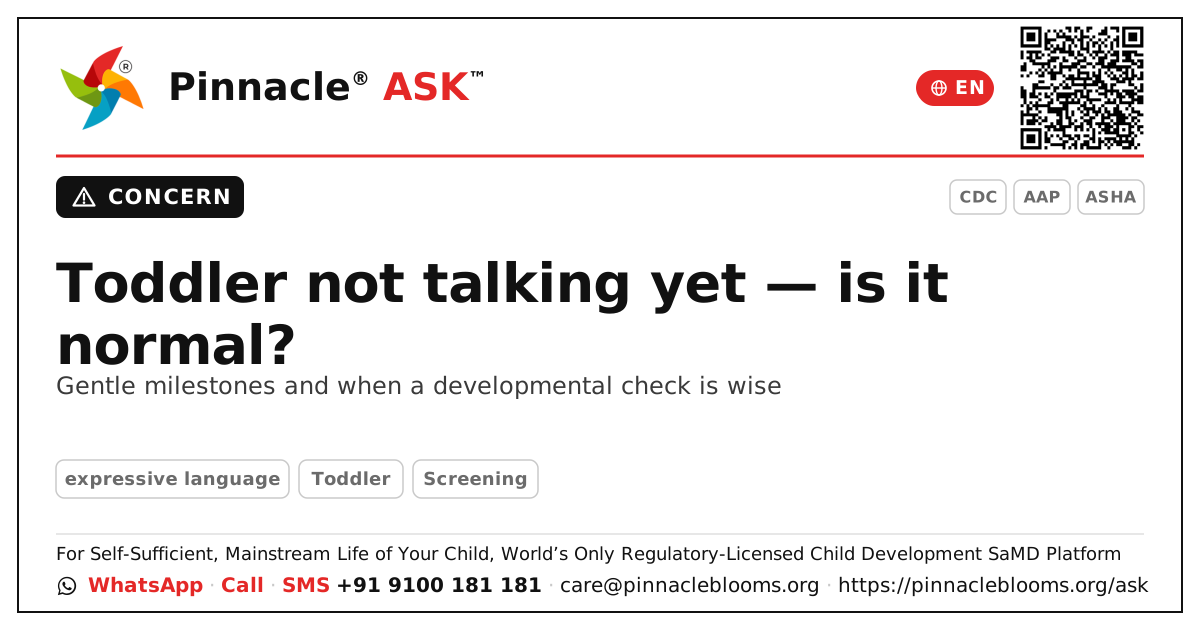
The first words arrive on their own timeline — your watchful, loving attention right now matters more than any calendar.
In short
For toddlers between 1 and 3 years, expressive language (the words and sentences a child says) varies enormously, so a quieter talker is very often within the typical range. As a gentle guide, many children have a few words by around 12–15 months, a small word collection by 18 months, and begin joining two words together ("more milk", "daddy go") by around 24 months. If your toddler is well behind these markers — or you simply have a worried feeling — that is reason for a calm developmental check, not a diagnosis.What to watch at 12–36 months
Expressive language grows on a wide curve, but these are gentle flags worth a clinician's eye:- By 18 months — very few or no words, or not trying to copy sounds and gestures.
- By 24 months — fewer than around 50 words, or not yet joining two words together.
- At any age — losing words or skills your child once had, or seeming not to want to communicate.
- Travelling companions — little eye contact, not responding to their name, not pointing or showing you things, or not following simple requests.
Reassuringly, strong understanding (following instructions, pointing to named pictures) alongside fewer spoken words is a hopeful sign — comprehension often leads expression.
The science
Late talking is common, and many "late talkers" catch up beautifully. But because early support works wonderfully at this age, a check now turns a small question into an early opportunity. Hearing is always reviewed first, since even mild glue ear can quietly delay talking.The Pinnacle way
A clinical AbilityScore® and any diagnosis are formed only at a Pinnacle Blooms Network centre, under qualified clinician care — never from an online list. Our clinicians look at how your child communicates everyday, then shape support around play. Read more about expressive language and how our speech therapy team helps first words bloom.Trusted sources
CDC "Learn the Signs, Act Early" milestone guidance; American Academy of Pediatrics (healthychildren.org) on early language and developmental monitoring; ASHA guidance on toddler communication development.Next step — Trust what you notice. Book a developmental check with a Pinnacle clinician for a calm, clear review of your toddler's words and milestones.
What to watch
Seek a check if your toddler has few or no words by 18 months, fewer than ~50 words or no two-word phrases by 24 months, loses words once used, or shows little eye contact, no pointing, no response to name, or doesn't follow simple requests. Hearing should always be reviewed first.
Try this at home
Narrate your day in short, simple words — "cup", "more", "open" — and pause expectantly after you speak. Leaving a beat of silence invites your toddler to fill the gap, gently encouraging first words during everyday play and routines.
Trusted sources
Developed by SETU Consortium · Pinnacle Blooms Network · Last reviewed 2026-06-10 · reviewed every 540 days
This is general information, not a diagnosis. A clinical AbilityScore® and any diagnosis are formed only at a Pinnacle Blooms Network centre, under qualified clinician care.
Frequently asked
How many words should a 2-year-old say?
Many 2-year-olds have around 50 or more words and begin joining two together, like "more milk". This is a guide, not a strict rule — children vary widely. If your toddler is well below this or not joining words, a calm developmental check is wise.
My toddler understands everything but barely speaks — should I worry?
Strong understanding alongside fewer spoken words is often a hopeful sign, as comprehension usually leads expression. Still, if you feel worried, a developmental check brings clarity and, if helpful, early support that works beautifully at this age.
Could a hearing problem cause late talking?
Yes. Even mild, temporary hearing issues like glue ear can quietly delay talking, which is why hearing is always reviewed first when a toddler is slow to speak.