
parent characteristics
Is It Normal My Child Doesn't Show Parent Characteristics?
There is no developmental skill called "parent characteristics" that a 3-to-7-year-old is expected to show, so nothing is missing. Children resemble their parents in some ways and become their own person in others — both are normal. What matters at this age are real skills: talking, playing, learning, moving and connecting. If any of those feel behind, a gentle developmental check is the caring next step.
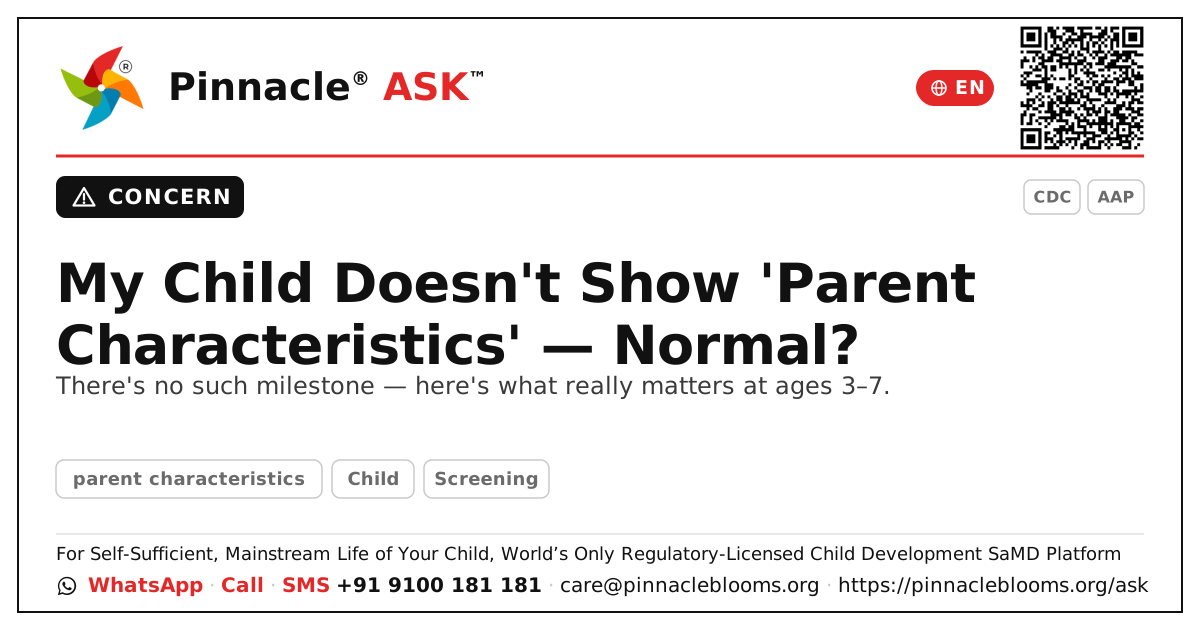
"Parent characteristics" isn't a developmental milestone — and that simple fact is the most reassuring thing I can tell you today.
In short
There's no developmental skill called "parent characteristics" that a child between 3 and 7 years is expected to show — so there's nothing missing here. Children naturally resemble their parents in some ways (looks, temperament, little mannerisms) and grow into their own person in many others, and both are perfectly normal. What we can watch at this age are the real, observable skills — talking, playing, learning, moving and connecting. If any of those feel behind, a gentle developmental check is the right and caring step.What this really means at 3–7 years
If you've noticed your child doesn't act, look or sound like you, please relax — that is variation, not delay. Inherited traits show up unevenly and on no fixed timetable, and a child being different from a parent is healthy individuality.What genuinely matters at this age are the building blocks of development. Keep a warm eye on:
- Communication — using sentences, following instructions, telling little stories, asking and answering questions.
- Social connection — playing with other children, sharing, taking turns, showing and reading emotions.
- Play and thinking — pretend play, sorting, counting, early letters as they near school age.
- Movement — running, jumping, climbing, holding a crayon or spoon with growing control.
- Daily skills — dressing, toileting, eating with growing independence.
If several of these feel behind for your child's age, that — not "parent characteristics" — is what a clinician would gently look at.
The Pinnacle way
A clinical AbilityScore® and any diagnosis are formed only at a Pinnacle Blooms Network centre, under qualified clinician care — never from an online list. Our clinicians watch your child's real strengths across communication, play, movement and connection, and shape support around what your child enjoys. You can read more about parent characteristics and, if speech feels behind, explore our speech therapy team.Trusted sources
CDC "Learn the Signs, Act Early" developmental milestones for ages 3–5; American Academy of Pediatrics (healthychildren.org) guidance on individual variation and developmental monitoring in young children.Next step — Trust what you observe each day. Book a developmental check for a calm, clear picture of your child's milestones.
This is general information, not a diagnosis — a clinical AbilityScore® and any diagnosis are formed only at a Pinnacle Blooms Network centre under qualified clinician care.
What to watch
Rather than 'parent characteristics', watch the real skills for ages 3–7: speaking in sentences and following instructions; playing and sharing with other children; pretend play and early counting or letters; running, jumping and good crayon control; growing independence in dressing, toileting and eating. Seek a developmental check if several of these feel behind for your child's age.
Try this at home
Instead of comparing your child to yourself, keep a short note of what they CAN do this month — new words, a game they enjoy, a skill they've mastered. Tracking their own progress is far more useful than measuring resemblance to a parent.
Trusted sources
Developed by SETU Consortium · Pinnacle Blooms Network · Last reviewed 2026-06-10 · reviewed every 540 days
This is general information, not a diagnosis. A clinical AbilityScore® and any diagnosis are formed only at a Pinnacle Blooms Network centre, under qualified clinician care.
Frequently asked
Is 'parent characteristics' an actual developmental milestone?
No. There is no developmental skill called 'parent characteristics' that children are expected to reach by a certain age. Children naturally resemble their parents in some ways and differ in others — both are normal. What matters developmentally is how a child talks, plays, moves, learns and connects.
Should I worry that my child is so different from me?
Not at all. Inherited traits show up unevenly and on no fixed timetable, and every child grows into their own unique person. Being different from a parent is healthy individuality, not a sign of any delay.
What should I actually be watching at ages 3 to 7?
Watch the real building blocks: talking in sentences, playing and sharing with other children, pretend play and early counting or letters, running and jumping, holding a crayon, and growing independence in dressing and toileting. If several of these feel behind, a gentle developmental check is wise.