
developmental myths and facts
Is dyslexia caused by seeing letters backwards?
No — dyslexia is not caused by seeing letters backwards. It is a language-based difference in how the brain links sounds to letters (phonological processing). Letter reversals like 'b' and 'd' are normal up to about age 7. Dyslexia is usually recognised once reading instruction begins, around ages 6–8, and early support helps.
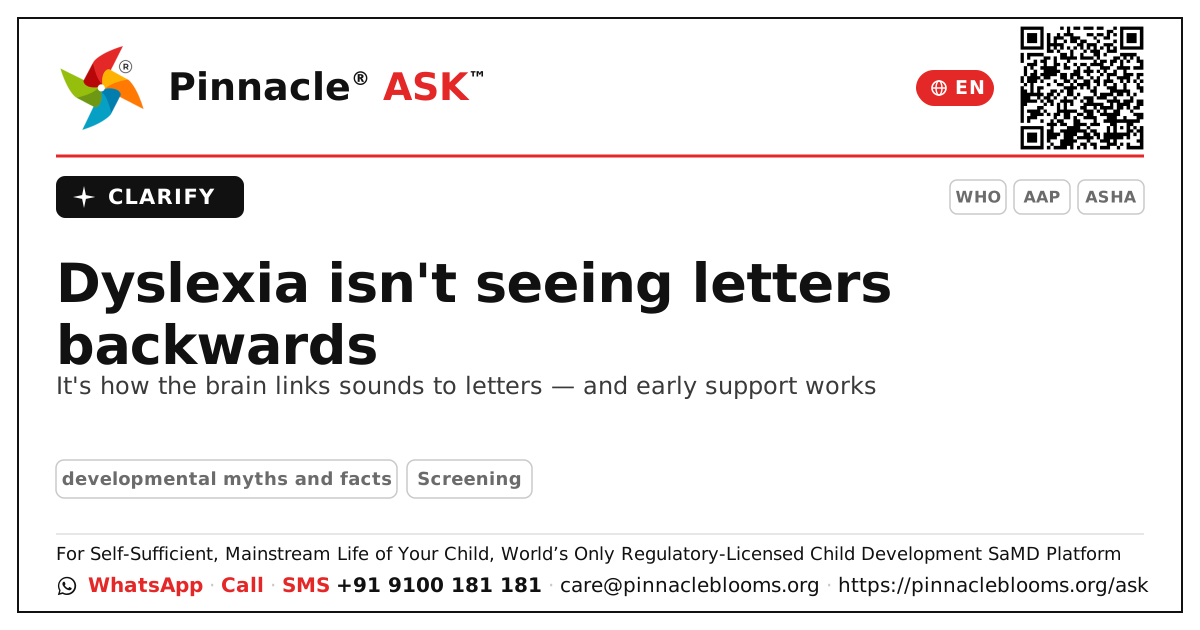
If your child reverses a 'b' for a 'd', it's easy to fear their eyes are the problem — but dyslexia lives in how the brain processes sound and language, not in how the eyes see.
In short
No — dyslexia is not caused by seeing letters backwards. It is a difference in how the brain connects the sounds of language to written letters (phonological processing). Letter reversals like 'b' and 'd' are completely normal in children up to around age 7, and most children grow out of them whether or not they have dyslexia.The myth vs the fact
The myth: Children with dyslexia see letters or words flipped, mirrored or jumbled, and that visual scrambling is what causes reading difficulty.The fact: Decades of research show dyslexia is primarily a language-based learning difference. The core challenge is phonological awareness — hearing, holding and manipulating the small sounds in words (for example, knowing that 'cat' is made of c–a–t). Reading is slow and effortful because linking those sounds to letters is hard work for the brain, not because the eyes mis-see the page.
Letter and number reversals are a normal part of early writing development. They become worth a closer look only when they persist well past age 7–8 alongside other signs — trouble rhyming, difficulty learning letter sounds, slow effortful reading, or family history of reading difficulty.
What this means for you
Dyslexia is usually recognised once formal reading instruction is underway, often around ages 6–8. Before then, the helpful stance is to build a rich foundation of spoken language and sound play, and to watch the pattern over time rather than worry about a single reversed letter. If reading struggles persist despite good teaching, a structured assessment is the hopeful next step — early support works.The Pinnacle way
At [Pinnacle Blooms Network](/), our therapists look at the whole language picture — listening, sound awareness and reading — never a single symptom. A clinical AbilityScore® and any diagnosis are formed only at a Pinnacle Blooms Network centre, under the care of a qualified clinician — never from a website or a worry. Where reading and language support is needed, our speech therapy team builds the sound-to-letter foundations that reading is built on.Trusted sources
Aligned with WHO ICD-11 (developmental learning disorder with impairment in reading), the American Academy of Pediatrics via HealthyChildren.org, and the American Speech-Language-Hearing Association on literacy and phonological development.Next step — if reading or writing feels harder for your child than you'd expect, book a developmental check with our team on WhatsApp at +91 91001 81181 — clarity is the kindest first step.
This is general information, not a diagnosis — a clinical AbilityScore® and any diagnosis are formed only at a Pinnacle Blooms Network centre under qualified clinician care.
What to watch
Worth a closer look: letter reversals that persist well past age 7–8 alongside slow effortful reading, trouble rhyming or learning letter sounds, or a family history of reading difficulty.
Try this at home
Play sound games before worrying about letters — clap out syllables, hunt for rhyming words, and ask 'what sound does cat start with?' This builds the phonological foundation reading rests on.
Trusted sources
Developed by SETU Consortium · Pinnacle Blooms Network · Last reviewed 2026-06-11 · reviewed every 365 days
This is general information, not a diagnosis. A clinical AbilityScore® and any diagnosis are formed only at a Pinnacle Blooms Network centre, under qualified clinician care.
Frequently asked
Do all children with dyslexia reverse letters?
No. Letter reversals are not a reliable sign of dyslexia — most children reverse letters during early writing, and the majority do not have dyslexia. The core of dyslexia is difficulty linking sounds to letters, not visual reversal.
When are letter reversals normal?
Reversing letters like 'b' and 'd' or numbers is a normal part of learning to write and is common up to around age 7. It becomes worth attention only when it persists past then alongside other reading struggles.
At what age can dyslexia be identified?
Dyslexia is usually recognised once formal reading instruction is well underway, often between ages 6 and 8. Before then, the helpful approach is to build spoken language and sound awareness and watch the pattern over time.
What actually causes dyslexia?
Dyslexia is primarily a language-based learning difference involving phonological processing — how the brain hears and works with the sounds in words. It often runs in families and is not caused by the eyes, intelligence or effort.