
Dyscalculia (Mathematics Impairment)
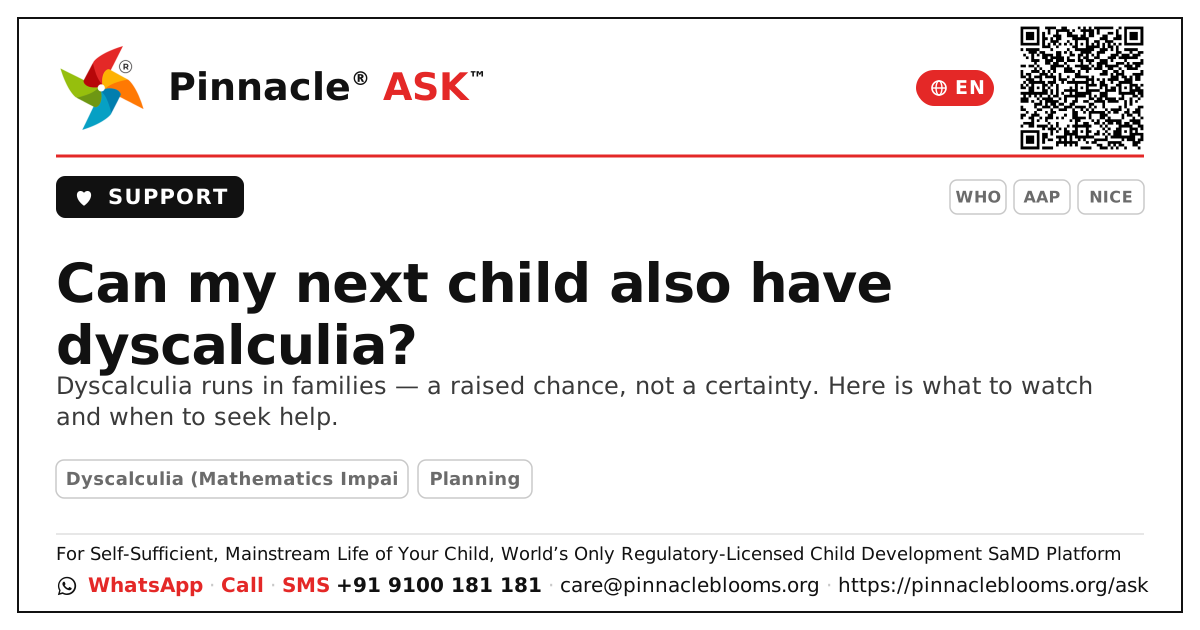
If one child has dyscalculia, can my next child have it too?
Dyscalculia has a genetic and familial component, so a sibling has a somewhat raised chance of also having maths difficulties — but this is a likelihood, not a certainty, and many siblings are unaffected. Stay observant, support early number play, and seek a developmental check if number sense seems slow, usually meaningful from age 6 to 8. A clinical AbilityScore® and any diagnosis are formed only at a Pinnacle Blooms Network centre under qualified clinician care.
Noticing dyscalculia in one child often makes parents wonder about the next — and that question itself shows how much you care.
In short
Yes, dyscalculia does tend to run in families, so a younger sibling has a somewhat higher chance than other children of also finding numbers tricky — but this is a raised likelihood, not a certainty. Many siblings of a child with dyscalculia have no difficulty with maths at all. The most useful thing you can do is stay gently observant as your next child grows, support early number play, and seek a developmental check if number sense seems slow to develop — usually meaningful from around age 6 to 8.What the science says
Dyscalculia is a specific learning difference in understanding numbers, quantities and arithmetic — and research consistently shows a genetic and familial component. When one child has it, close relatives, including siblings, are statistically more likely to share some difficulty with number processing. Studies of twins and families point to shared inherited factors that shape how the brain builds early "number sense".But genes are only part of the story. Each child has their own developmental path, and supportive early experiences with counting, comparing and everyday maths play a real, protective role. A raised family chance is simply a reason to watch and nurture — not a reason to worry.
What to watch as your next child grows
- Toddler and preschool years — enjoy counting games, sorting, comparing "more and less", and number rhymes. Difficulty here is not yet diagnostic — these are skills children build at very different rates.
- Around age 6–8 — this is when dyscalculia usually becomes recognisable, as formal arithmetic demands grow. Watch for persistent struggle with number facts, counting on fingers long after peers, trouble telling the time or handling money, or strong maths anxiety.
- A specific learning difference like dyscalculia is best assessed once a child has had real exposure to school maths — so an early concern leads to monitoring and support, not a rushed label.
The Pinnacle way
A clinical AbilityScore® and any diagnosis are formed only at a Pinnacle Blooms Network centre, under qualified clinician care — never from an app, a quiz or a family history alone. If you ever feel your next child is finding numbers unusually hard, a structured clinician-led developmental check builds a clear, strengths-first picture. Explore how special education and learning support helps children with number difficulties thrive, and start with our wider [child-development support](/).Trusted sources
WHO ICD-11 describes developmental learning disorder with impairment in mathematics; the American Academy of Pediatrics (HealthyChildren.org) outlines learning differences and family risk; NICE guidance covers supporting children with specific learning needs.Next step — Curious about your younger child's number sense? Book a developmental assessment with a Pinnacle clinician.
This is general information, not a diagnosis — a clinical AbilityScore® and any diagnosis are formed only at a Pinnacle Blooms Network centre under qualified clinician care.
What to watch
In the preschool years, enjoy counting and comparing games — difficulty is not yet diagnostic. From around age 6–8, watch for persistent struggle with number facts, counting on fingers long after peers, trouble with time or money, and strong maths anxiety.
Try this at home
Weave numbers into daily play — count stairs, compare 'more and less' at snack time, and sort toys by size. Light, pressure-free number experiences build early number sense for every child.
Trusted sources
Developed by SETU Consortium · Pinnacle Blooms Network · Last reviewed 2026-06-10
This is general information, not a diagnosis. A clinical AbilityScore® and any diagnosis are formed only at a Pinnacle Blooms Network centre, under qualified clinician care.
Frequently asked
Is dyscalculia hereditary?
It has a strong genetic and familial component — twin and family studies show inherited factors influence how the brain builds number sense. So a sibling has a somewhat higher chance, but it is never guaranteed.
Will my next child definitely have dyscalculia?
No. A raised family likelihood is not a certainty. Many siblings of a child with dyscalculia have no difficulty with maths at all, and supportive early number experiences help every child.
When can dyscalculia be identified in a child?
It usually becomes recognisable around age 6 to 8, once a child has had real exposure to school arithmetic. Before then, difficulty with counting is common and not diagnostic — the right step is gentle monitoring and support.
What can I do to help my younger child now?
Make numbers part of everyday play — counting, comparing, sorting and number rhymes — without pressure. If number sense seems slow to develop as they reach school age, seek a clinician-led developmental check.