
verbal communication
When to escalate a child's speech delay at the PHC level
A frontline health worker should escalate when a child misses key speech milestones — no babbling by 12 months, no single words by 16–18 months, no two-word phrases by 24 months — or shows any loss of words or social skills at any age. Parent worry alone justifies referral. Always pair the referral with a hearing check, since undetected hearing loss often underlies speech delay. Early referral is an opportunity, not a diagnosis.
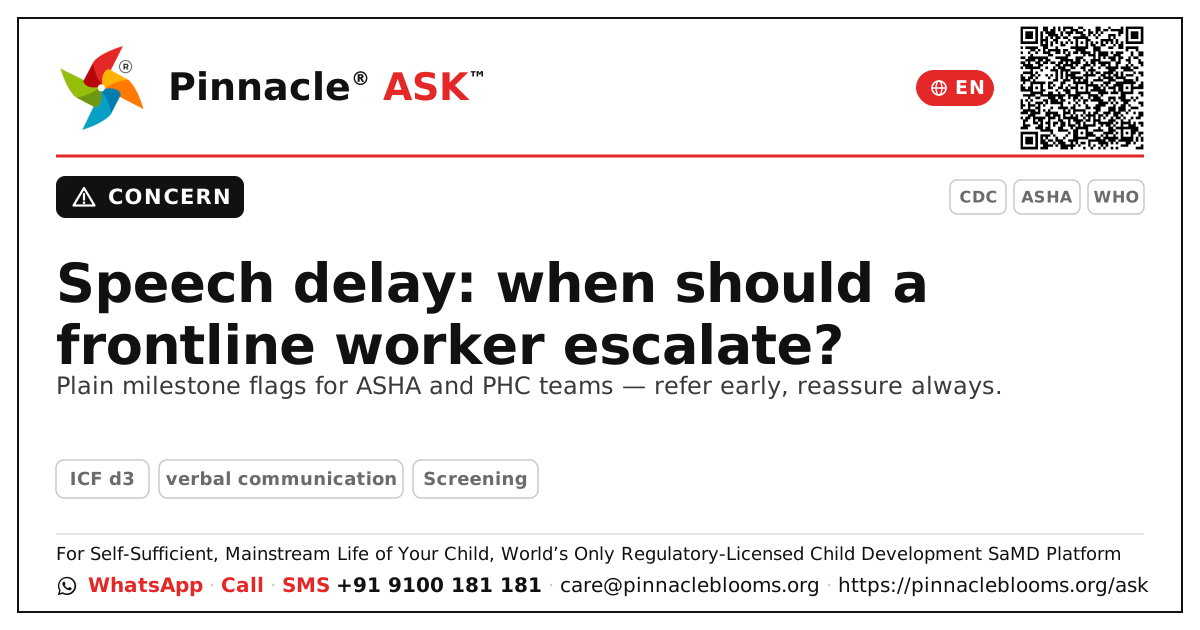
A frontline health worker who pauses to ask "is this child talking as expected?" is doing some of the most powerful early work in child development.
In short
Escalate to a developmental check when a child clearly lags the expected speech milestones — for example no babbling by 12 months, no single words by 16–18 months, no two-word phrases by 24 months, or any loss of words or social connection at any age. You do not need to be certain — your job at the PHC level is to notice, reassure the family, and refer early, because timely support works best. A referral is an opportunity, never a verdict.When to escalate at the PHC level
Use these plain milestone flags during routine contacts and immunisation visits:- By 12 months — no babbling, no gestures like pointing or waving, no response to their own name.
- By 16–18 months — no clear single words such as amma, milk or no.
- By 24 months — fewer than around 50 words, or not joining two words together ("more milk").
- Any age — escalate promptly — loss of words or social skills once present, no eye contact or shared smiling, or a family that is worried. Parent concern is itself a reason to refer.
Also check hearing: many speech delays trace back to undetected hearing loss or recurrent ear infection, so a hearing screen should travel alongside the developmental referral.
The science, briefly
Speech sits within ICF communication (d3). The early years are a window when the brain is most responsive to language input, so early identification and support — speech-language therapy, hearing care, parent coaching — change trajectories. WHO and CDC milestone guidance frame these flags as cues to act, not labels.The Pinnacle way
A clinical AbilityScore® and any diagnosis are formed only at a Pinnacle Blooms Network centre, under qualified clinician care — never from a checklist. Learn more about verbal communication milestones, how our speech therapy team supports talking, and what a clinician-administered AbilityScore® involves.Trusted sources
WHO ICF communication framework (d3) and developmental guidance; CDC "Learn the Signs, Act Early" milestone checklists; American Speech-Language-Hearing Association (ASHA) guidance on early communication red flags.Next step — When a milestone flag appears, reassure the family and book a developmental assessment with a Pinnacle clinician for a calm, clear review.
This is general information, not a diagnosis — a clinical AbilityScore® and any diagnosis are formed only at a Pinnacle Blooms Network centre under qualified clinician care.
What to watch
Escalate if there is no babbling by 12 months, no single words by 16–18 months, fewer than ~50 words or no two-word phrases by 24 months, or any loss of words or social connection at any age. Refer if the family is worried, and always pair the referral with a hearing screen.
Try this at home
At each immunisation or growth-monitoring visit, ask the parent one simple question — 'How many words is your child using, and are they joining any together?' A quick note of the answer turns a routine visit into early developmental screening.
Trusted sources
Developed by SETU Consortium · Pinnacle Blooms Network · Last reviewed 2026-06-10 · reviewed every 540 days
This is general information, not a diagnosis. A clinical AbilityScore® and any diagnosis are formed only at a Pinnacle Blooms Network centre, under qualified clinician care.
Frequently asked
At what age should a child say their first words?
Most children say their first clear single words around 12–16 months and join two words together by about 24 months. If a child has no single words by 16–18 months or no two-word phrases by 24 months, arrange a developmental check — early support works best.
Should I refer a child for speech delay even if the parents are not worried?
Yes, if clear milestone flags are present. But equally, parent worry alone is a valid reason to refer even when milestones look borderline — families notice subtle changes, and a calm clinician review reassures or supports them early.
Why check hearing when a child is not talking?
Undetected hearing loss and recurrent ear infections are common, often-reversible causes of speech delay. A hearing screen should always accompany a developmental referral so nothing treatable is missed.