
social pragmatics
When to escalate a child's social pragmatics delay
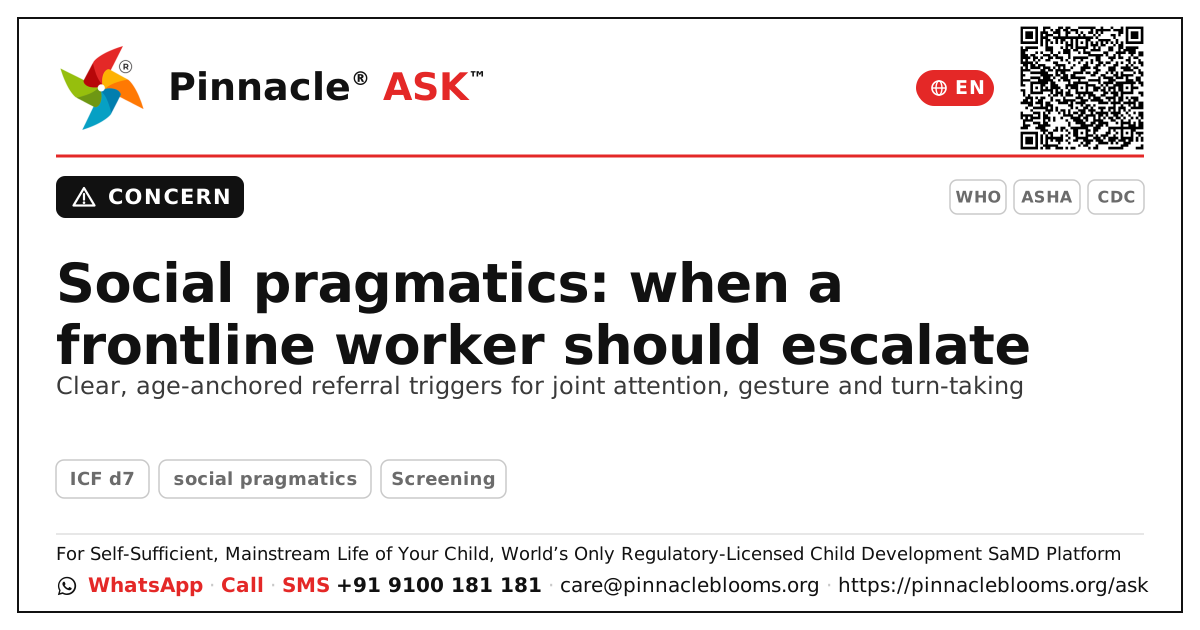
Social pragmatics is the everyday social use of language — gesturing, sharing eye contact, turn-taking and responding. A frontline health worker should escalate when gaps persist across visits: no pointing or gesturing by 12–15 months, no back-and-forth play or single words by 18 months, no gesture-plus-word engagement by 24 months, or any loss of a skill once present. These signal a need for an early developmental check, not a diagnosis — escalate rather than wait when unsure.
A frontline worker who notices a quiet, hard-to-engage child is already doing the most important part of the job — looking closely.
In short
Social pragmatics is the everyday use of language for connection — gesturing, sharing eye contact, taking turns in to-and-fro "conversation", and responding to others. Escalate to a medical officer or developmental check when a child shows persistent gaps for their age — not after a single observation. As a working rule: refer if a child is not gesturing or pointing by 12–15 months, not sharing back-and-forth play or single words by 18 months, not combining gesture-and-word to engage others by 24 months, or if there is loss of a skill once present at any age. These are reasons to assess early — never a label.What to watch (escalation triggers)
Note and escalate when you see, across more than one visit:- No joint attention — does not follow a point, share a glance, or bring things to show.
- Little social back-and-forth — does not respond to name, rarely smiles or babbles in reply, no turn-taking in play.
- Limited gestures — no waving, pointing or reaching-to-share by 12–15 months.
- Travelling with other delays — few words, poor eye contact, or motor lag alongside the social gap.
- Regression — loss of words, gestures or social warmth once present. This needs prompt review.
When in doubt, escalate rather than wait — early observation turns small questions into early opportunities.
The Pinnacle way
A clinical AbilityScore® and any diagnosis are formed only at a Pinnacle Blooms Network centre, under qualified clinician care — never from a checklist or a single home visit. Learn how we observe social pragmatics in play, and how our speech therapy team builds connection and back-and-forth communication.Trusted sources
WHO ICF domain d7 (interpersonal interactions and relationships); ASHA guidance on social communication development; CDC "Learn the Signs, Act Early" milestone tools for frontline use.Next step — Trust what you've observed. Book a developmental assessment so a Pinnacle clinician can review the child's social communication calmly and clearly.
This is general information, not a diagnosis — a clinical AbilityScore® and any diagnosis are formed only at a Pinnacle Blooms Network centre under qualified clinician care.
What to watch
Escalate when, across more than one visit, a child shows no joint attention (no following a point, no sharing a glance), little social back-and-forth, no gestures like waving or pointing by 12–15 months, few words with poor eye contact, or any loss of words, gestures or social warmth once present. Regression needs prompt medical review.
Try this at home
During a home visit, offer the child a turn-taking moment — roll a ball, wave, or hold up a toy and wait. Note whether the child shares a glance, points, or replies. A simple phone note of what you tried and how the child responded gives the clinician a clear picture.
Trusted sources
Developed by SETU Consortium · Pinnacle Blooms Network · Last reviewed 2026-06-10 · reviewed every 540 days
This is general information, not a diagnosis. A clinical AbilityScore® and any diagnosis are formed only at a Pinnacle Blooms Network centre, under qualified clinician care.
Frequently asked
What exactly is social pragmatics?
It is the everyday social use of communication — using and responding to gestures, sharing eye contact, taking turns in to-and-fro interaction, and adjusting how one communicates with different people. It sits within WHO ICF domain d7.
Should I escalate after seeing a concern just once?
No. Look for patterns that persist across visits, not a single quiet day. The exception is regression — a loss of words, gestures or social warmth once present — which warrants prompt review even on one observation.
Is escalating the same as saying the child has autism?
No. Escalation simply means a qualified clinician should take a closer look. A clinical AbilityScore® and any diagnosis are formed only at a Pinnacle Blooms Network centre under qualified clinician care.