
jump rope coordination
When to escalate if a child can't jump rope at the expected age
Most children master jump rope around 6–7 years, with wide normal variation, so an isolated inability to skip rarely needs escalation. Frontline workers should escalate when motor difficulty is part of a pattern — broad clumsiness across running, hopping and catching, impact on daily tasks, no progress with practice, or concerns alongside speech, learning or social development. Any loss of previously held motor skills or new weakness needs prompt medical review. This is screening, not diagnosis.
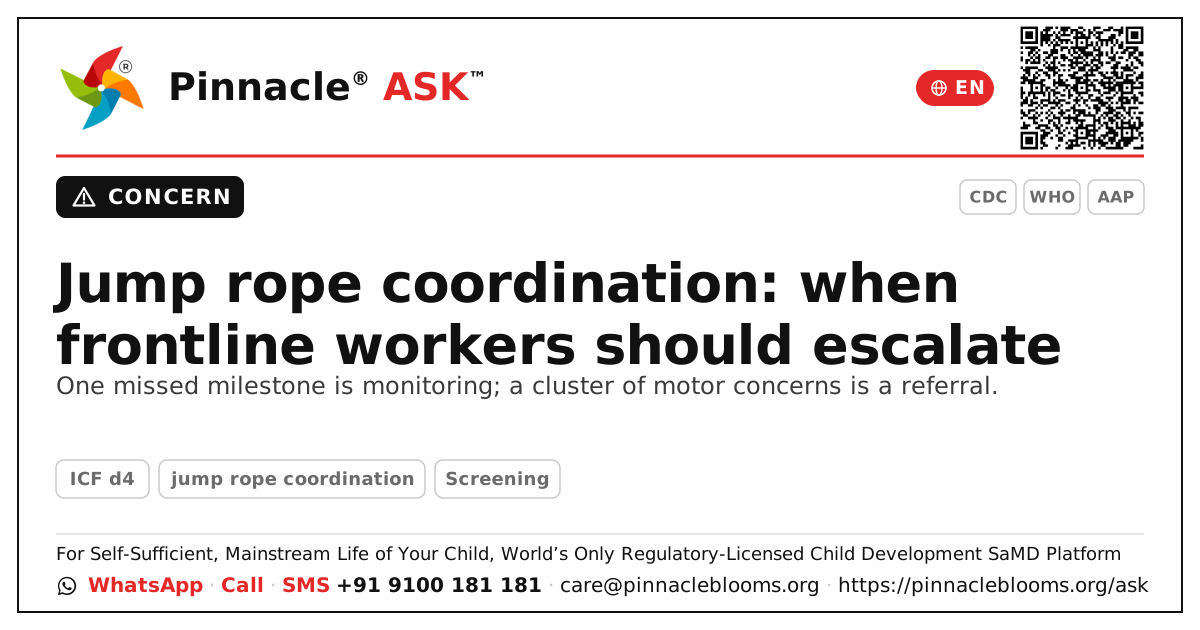
A child who hasn't mastered skipping rope by the early school years is usually still finding their rhythm — your watchful eye is exactly what helps spot the few who need a closer look.
In short
Jump rope coordination is a complex, late-emerging gross-motor skill that most children manage somewhere around 6–7 years, with wide normal variation. As a frontline health worker, you should escalate not because a single child can't skip yet, but when difficulty is part of a broader pattern — clumsiness across many everyday tasks, falling behind peers in running, hopping or catching, or motor struggles that started alongside any loss of skills. One missed milestone is monitoring; a cluster is referral.What to watch (for ASHA / PHC screening)
Use jump rope as one signal among many, not a standalone test. Escalate to the Medical Officer or a developmental check when you see:- A pattern of clumsiness — the child also struggles to hop on one foot, run smoothly, climb stairs alternating feet, or catch and throw, well behind same-age children.
- Daily-life impact — motor difficulty getting in the way of dressing, eating, writing or playground play.
- Persistence with practice — little progress even after months of chances to try and play.
- Travelling with other concerns — delayed speech, trouble following instructions, poor attention, or social difficulties.
- Any regression — a child who once moved well now losing coordination, or new stiffness, floppiness or weakness — this needs prompt medical review, not watchful waiting.
Isolated trouble with rope-skipping in a child who otherwise runs, climbs and plays well is almost always typical — reassure and re-check at the next visit.
When to escalate
Refer to the PHC Medical Officer when clumsiness is broad, persistent, affecting daily activities, or paired with speech, learning or social concerns. Escalate urgently for any loss of previously held motor skills or new weakness.The Pinnacle way
A clinical AbilityScore® and any diagnosis are formed only at a Pinnacle Blooms Network centre, under qualified clinician care — never from a screening checklist. Read more about jump rope coordination as a developmental skill, and how our occupational therapy team builds motor planning and balance through play.Trusted sources
WHO ICF activity-and-participation domains (mobility, d4); CDC developmental milestones and "Learn the Signs, Act Early"; AAP developmental surveillance guidance via healthychildren.org.Next step — Note what you've observed and refer the child for a calm developmental review. Book an assessment with a Pinnacle clinician.
This is general information, not a diagnosis — a clinical AbilityScore® and any diagnosis are formed only at a Pinnacle Blooms Network centre under qualified clinician care.
What to watch
Escalate when difficulty with jump rope sits within a pattern: broad clumsiness (hopping, running, catching, stairs), impact on dressing or play, little progress after months of practice, or concerns with speech, attention or social skills. Refer urgently for any loss of motor skills, new weakness, stiffness or floppiness. Isolated trouble skipping in an otherwise well-moving child is usually typical — reassure and recheck.
Try this at home
During a home visit, ask the child to hop on one foot, run a few steps and catch a ball — these quick play tasks show whether skipping trouble is isolated or part of a wider motor pattern worth referring.
Trusted sources
Developed by SETU Consortium · Pinnacle Blooms Network · Last reviewed 2026-06-10 · reviewed every 540 days
This is general information, not a diagnosis. A clinical AbilityScore® and any diagnosis are formed only at a Pinnacle Blooms Network centre, under qualified clinician care.
Frequently asked
At what age do most children learn to jump rope?
Skipping rope is a complex skill that usually emerges around 6–7 years, with a wide normal range. It needs timing, rhythm, balance and coordinating arms and legs together, so many children take longer — this alone is not a concern.
Should I escalate just because a child can't skip rope?
No. An isolated inability to skip in a child who otherwise runs, hops, climbs and catches well is almost always typical. Escalate only when difficulty is part of a broader pattern of clumsiness or sits alongside other developmental concerns.
What signs make a referral urgent?
Any loss of previously held motor skills, new weakness, stiffness or floppiness needs prompt medical review through the PHC Medical Officer rather than watchful waiting.
Who makes the diagnosis?
Frontline screening only flags children who may benefit from a closer look. A clinical AbilityScore® and any diagnosis are formed only at a Pinnacle Blooms Network centre under qualified clinician care.