
joint attention
When to escalate if a child cannot joint attention
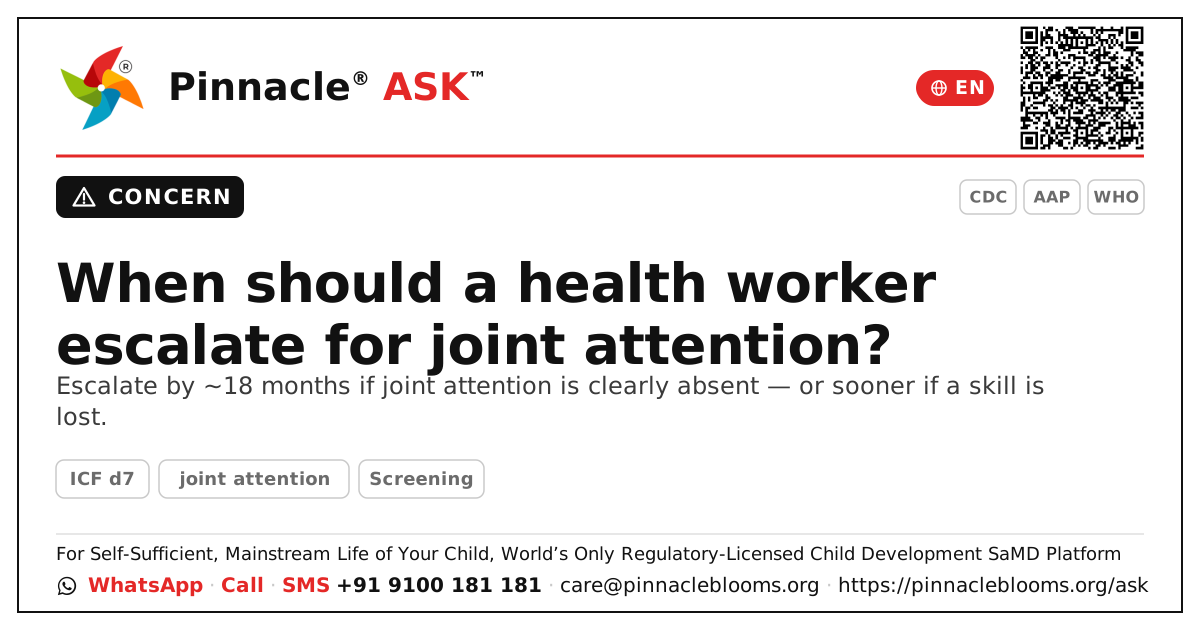
Joint attention — sharing focus by following a point, gazing back and forth, and pointing to show — usually emerges around 9–14 months. A frontline health worker should escalate for a developmental check when it is clearly absent by around 18 months, or sooner if a child loses a skill once present, does not respond to their name, or makes little eye contact. This is a reason to assess early, not a diagnosis — early support works best.
A baby turning to share a smile, then looking back at you — that small triangle of attention is one of development's quiet milestones, and it's something a frontline worker can watch for with confidence.
In short
Joint attention — when a child shares focus on an object or event with another person, by following a point, gazing back and forth, or pointing to show — typically emerges around 9–14 months. A frontline health worker should escalate for a developmental check when a child is not consistently following a point, sharing gaze, or showing/pointing to share interest by around 18 months, or sooner if there is loss of a skill once present. This is a reason to assess early, never a diagnosis — early support works best.When a frontline worker should escalate
Use a simple watch-and-route approach during home visits or PHC contacts:- By 9–12 months — baby follows your gaze or a point some of the time, looks back and forth between you and an object, and shares smiles. Absence here alone is not yet a flag; note and revisit.
- By 14–18 months — child should point to show interest (not just to request), follow your point across a room, and check your face to share a moment. If this is clearly absent by 18 months, escalate for a developmental assessment.
- Escalate sooner — any age — if a child loses joint-attention or social skills they once had, does not respond to their name, makes little eye contact, or shows few words alongside.
Pair the observation with a quick note of the child's other milestones and route the family without alarm. What you notice on a home visit is valuable clinical information.
The science
Joint attention (ICF d7, interpersonal interactions) is a foundation for language, social learning and shared meaning. Reduced or absent joint attention is a well-recognised early indicator that warrants developmental screening — not because it confirms anything, but because timely review opens the door to play-based support during the years it matters most.The Pinnacle way
A clinical AbilityScore® and any diagnosis are formed only at a Pinnacle Blooms Network centre, under qualified clinician care — never from a checklist or a single home visit. Our clinicians observe how and when joint attention appears and build support around play; our speech therapy team helps strengthen shared attention, gesture and early communication together.Trusted sources
WHO ICF framework for interpersonal interaction and communication; CDC developmental milestones and "Learn the Signs, Act Early" guidance on social and communication development; American Academy of Pediatrics (healthychildren.org) developmental surveillance recommendations.Next step — Trust what you observe on the visit. Book a developmental assessment so a Pinnacle clinician can review the child's joint attention and milestones calmly and clearly.
This is general information, not a diagnosis — a clinical AbilityScore® and any diagnosis are formed only at a Pinnacle Blooms Network centre under qualified clinician care.
What to watch
Escalate for a developmental check if a child does not consistently follow a point, share gaze back and forth, or point/show to share interest by around 18 months. Escalate sooner at any age if a child loses a joint-attention or social skill once present, does not respond to their name, makes little eye contact, or shows few words alongside.
Try this at home
On a home visit, try a simple shared-attention check: point to something interesting across the room and see if the child follows your point and looks back at your face. Note whether they share smiles and point to show you things — a short note of what you see helps the clinician greatly.
Trusted sources
Developed by SETU Consortium · Pinnacle Blooms Network · Last reviewed 2026-06-10 · reviewed every 540 days
This is general information, not a diagnosis. A clinical AbilityScore® and any diagnosis are formed only at a Pinnacle Blooms Network centre, under qualified clinician care.
Frequently asked
At what age should a frontline worker escalate for absent joint attention?
Joint attention usually emerges around 9–14 months. Escalate for a developmental check when a child is clearly not following a point, sharing gaze, or pointing to show interest by around 18 months — or sooner if a skill once present is lost.
Is absent joint attention a diagnosis of autism?
No. Reduced joint attention is an early indicator that warrants screening, not a diagnosis. It simply signals that a calm clinical review is wise now, because early support works best.
What else should a health worker note alongside joint attention?
Note whether the child responds to their name, makes eye contact, shares smiles, uses early words and gestures, and meets other milestones. Loss of any social or communication skill should prompt earlier escalation.