
early words
When to Escalate Delayed Early Words
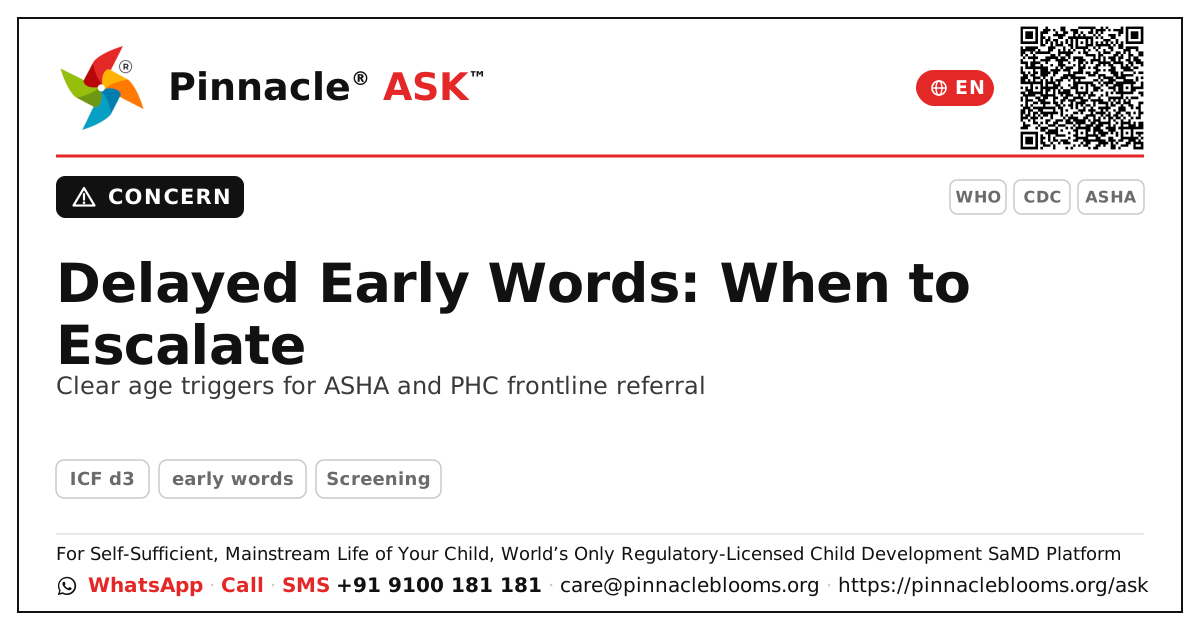
Frontline health workers should escalate a child for a developmental check when there is no babbling or gesture by 12 months, no single words by 16–18 months, fewer than 50 words or no two-word phrases by 24 months, or any loss of words or social skills at any age. A hearing check comes first. These are escalation triggers, not diagnoses, and early referral matters because support works best when started early.
A frontline worker who notices a quiet toddler and asks the next question is doing some of the most powerful early-detection work in the system.
In short
Escalate for a developmental check when a child has no babbling or gesture by 12 months, no single meaningful words by 16–18 months, fewer than 50 words or no two-word phrases by 24 months, or loses words or social skills at any age. These are escalation triggers — not a diagnosis. Language varies child to child, so escalation simply means a closer look by a qualified clinician, because support started early works best.What to watch and when to escalate
Use plain age anchors during home visits or PHC contacts:- By 9–12 months — no babbling, no pointing, waving or reaching to be picked up; not turning to their name.
- By 16–18 months — no clear single words (like amma, paani, no).
- By 24 months — fewer than ~50 words, no two-word combinations (more milk), or speech only the family can understand and little else growing.
- Any age — loss of words or social warmth once present; this needs prompt review.
- Red flag for hearing — no startle to loud sound, no response to name — always check hearing first.
Escalate sooner if the parent is worried, if there are also feeding or motor concerns, or if the child does not point or share attention. Trust the parent's instinct and your own field observation — both are valuable clinical signal.
The science
Receptive and expressive language (ICF d3) follows a predictable arc, but "late talkers" are common and many catch up. The reason to escalate, not wait, is that the window for the most effective, play-based early support is wide open in the first three years. A check rules out hearing loss and clarifies whether a child needs watchful monitoring or active support.The Pinnacle way
A clinical AbilityScore® and any diagnosis are formed only at a Pinnacle Blooms Network centre, under qualified clinician care — never from a checklist alone. Our team reviews early words alongside hearing, play and social connection, and our speech therapy clinicians shape support around the family's home language.Trusted sources
WHO ICF framework for language functions (icd.who.int); CDC developmental milestones and "Learn the Signs, Act Early" (cdc.gov); ASHA guidance on communication milestones and late talkers (asha.org).Next step — When a trigger is met, refer without delay. Book a developmental assessment with a Pinnacle clinician for a calm, clear review.
What to watch
Escalate if no babbling or gesture by 12 months, no single meaningful words by 16–18 months, fewer than 50 words or no two-word phrases by 24 months, or any loss of words or social warmth at any age. Always check hearing first — no startle to loud sound or no response to name needs prompt review. Escalate sooner if the parent is worried or there are feeding or motor concerns.
Try this at home
During a home visit, ask the family for 2–3 words the child uses and watch whether the child points or shares a smile. Note the child's age and these simple observations — it gives the clinician a clear, useful starting picture.
Trusted sources
Developed by SETU Consortium · Pinnacle Blooms Network · Last reviewed 2026-06-10 · reviewed every 540 days
This is general information, not a diagnosis. A clinical AbilityScore® and any diagnosis are formed only at a Pinnacle Blooms Network centre, under qualified clinician care.
Frequently asked
At what age should a frontline worker escalate if a child has no words?
Escalate if there are no single meaningful words by 16–18 months, fewer than 50 words or no two-word phrases by 24 months, or no babbling and gesture by 12 months. Any loss of words at any age needs prompt review.
Should hearing be checked before referring for speech delay?
Yes. A hearing check should come first whenever language is delayed. No startle to loud sound or no response to name is an important red flag to act on quickly.
Is a late talker always a sign of a problem?
No. Many late talkers catch up. Escalation means a closer look by a qualified clinician — not a diagnosis — so the child gets monitoring or support during the most effective early window.