
Childhood Anxiety
Supporting Your Child with Childhood Anxiety at Home
Support a child with anxiety at home by staying calm, naming feelings without dismissing them, keeping predictable routines, and encouraging small brave steps rather than avoidance. Protect sleep and movement. If worry persists for weeks or limits school, sleep or friendships, seek a developmental check — never diagnose at home.
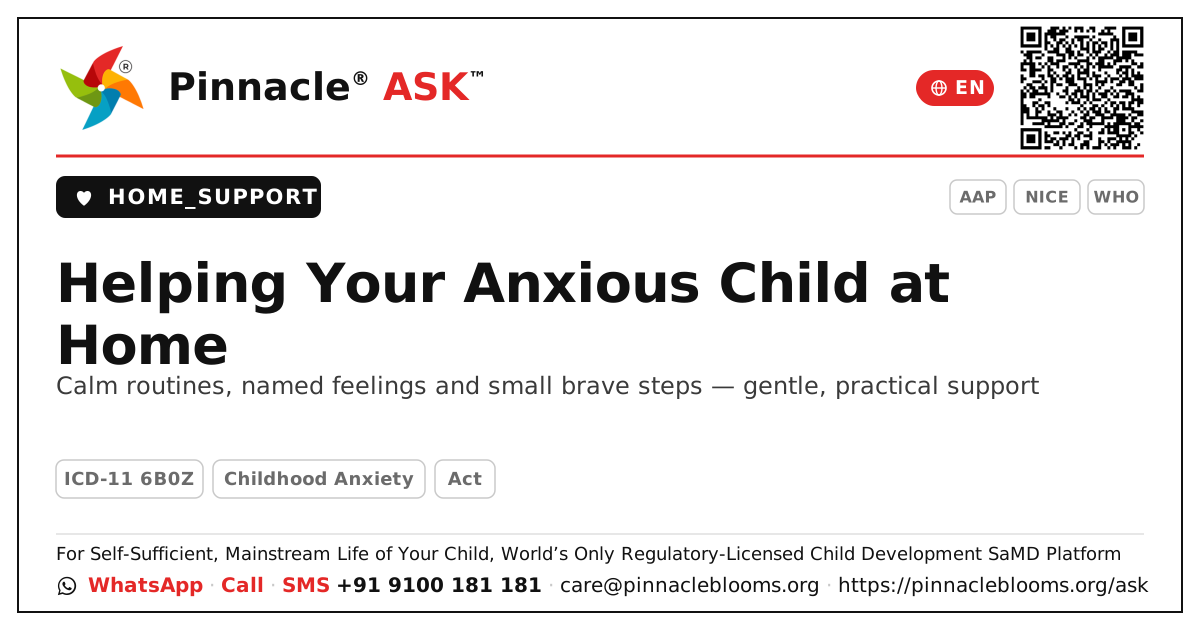
When worry grows bigger than your child, home becomes the gentlest place to help it shrink — one calm, predictable moment at a time.
In short
You can do a great deal at home: stay calm and unhurried, name feelings without dismissing them, keep predictable routines, and gently encourage your child to face small worries rather than avoid them. You are not 'fixing' anxiety — you are coaching your child to feel safe and capable. If worry is stopping everyday life — school, sleep, friendships — a developmental check is the right next step.Everyday ways to help
Connect first, calm together- Get down to eye level, slow your own breathing — children borrow our calm.
- Name the feeling: "That feels really scary right now." Naming soothes; it does not make worry worse.
- Avoid rushing to reassure repeatedly — instead ask, "What do you think might help?"
Build predictability
- Keep gentle, steady routines for meals, sleep and goodbyes — predictability lowers worry.
- Use visual schedules or a 'worry time' — a few minutes a day to talk through worries, then close the book.
Brave steps, not big leaps
- Break feared situations into tiny steps and praise the trying, not just the outcome.
- Resist taking over or letting your child fully avoid — gentle exposure builds confidence.
- Protect sleep, movement and screen-free wind-down; tired, restless bodies feel more anxious.
When to seek a check
If anxiety lasts most days for weeks, causes physical complaints (tummy aches, headaches), or limits school and play, speak to a professional. Persistent, life-limiting worry deserves support — not 'wait and see'.The Pinnacle way
A clinical AbilityScore® and any diagnosis are formed only at a Pinnacle Blooms Network centre, under qualified clinician care — never from a home checklist. Our team can help you understand Childhood Anxiety, build a calm-down plan, and, where useful, begin child counselling and behaviour therapy. Learn how our structured, clinician-administered AbilityScore® gives a clear, supportive baseline.Trusted sources
Aligned with WHO ICD-11, the American Academy of Pediatrics and HealthyChildren.org guidance on childhood anxiety, and NICE recommendations on supporting anxious children.Next step — message Pinnacle's caring team on WhatsApp at +91 91001 81181 for a warm, no-pressure conversation about supporting your child.
This is general information, not a diagnosis — a clinical AbilityScore® and any diagnosis are formed only at a Pinnacle Blooms Network centre under qualified clinician care.
What to watch
Seek help sooner if anxiety lasts most days for weeks, brings frequent tummy aches or headaches, disturbs sleep, or stops your child going to school, playing or seeing friends.
Try this at home
Try a daily five-minute 'worry time': listen fully, then close it with a calming activity — this contains worry instead of letting it spread through the whole day.
Trusted sources
Developed by SETU Consortium · Pinnacle Blooms Network · Last reviewed 2026-06-10 · reviewed every 365 days
This is general information, not a diagnosis. A clinical AbilityScore® and any diagnosis are formed only at a Pinnacle Blooms Network centre, under qualified clinician care.
Frequently asked
Will talking about worries make my child's anxiety worse?
No — gently naming feelings usually helps. Children feel safer when a calm adult acknowledges the worry rather than dismissing it. The aim is to listen, validate, then guide towards a small brave step, not to dwell endlessly on the fear.
Should I let my child avoid things that make them anxious?
Try not to let full avoidance become the habit — it teaches the brain that the situation really is dangerous. Instead, break the feared situation into tiny steps and praise each attempt. Gentle, gradual exposure builds lasting confidence.
When should I seek professional help for my child's anxiety?
Speak to a professional if worry lasts most days for several weeks, causes physical symptoms like tummy aches, disrupts sleep, or limits school, play or friendships. Persistent, life-limiting anxiety deserves support rather than a wait-and-see approach.