
Does my child need a diagnosis before we can start getting help?
Does my child need a diagnosis before we can start getting help?
No — a child does not need a formal diagnosis before help can begin. Early intervention is shaped around a child's actual needs, not a label, and a clinician-administered developmental check gives a clear starting point straight away. A diagnosis, if it is needed at all, can follow later; the most important thing is to begin early, when support works best.
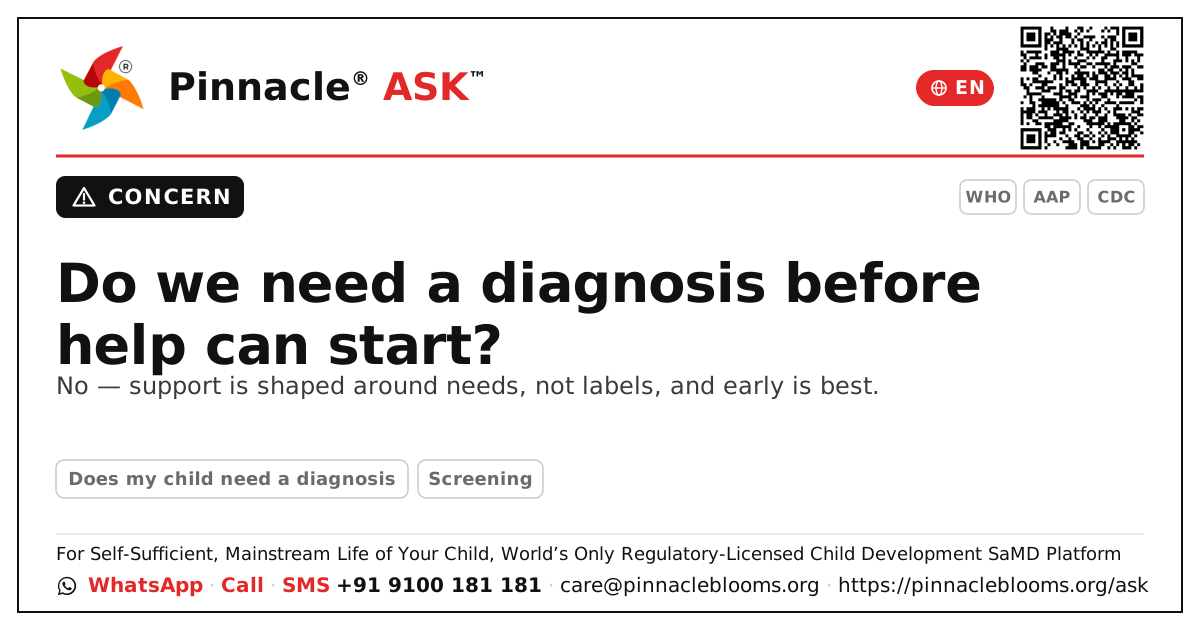
No — you do not need a label in hand to begin helping your child, and waiting for one is one of the few things we'd gently ask you not to do.
In short
No, your child does not need a formal diagnosis before support can begin. Early intervention is shaped around what a child can and cannot yet do — their actual needs — not around a diagnostic label. A structured developmental check tells us where to start straight away; any diagnosis, if one is needed at all, can follow in its own time. The most important thing is to begin, because the early years are when support works most powerfully.Why support can start before a diagnosis
Therapy is need-led, not label-led. If a child is not yet talking, we begin building communication. If movement or coordination is behind, we begin there. None of this requires a name on a form first.- Diagnosis can take time, needs cannot wait. Some assessments mature over months, and certain labels are only meaningful at older ages — but a delay in talking or playing benefits from support now.
- A structured assessment is the real starting point. A clinician-administered developmental review maps your child's strengths and the areas to build, giving us a clear plan from day one — with or without a diagnostic term.
- Early years are precious. The developing brain responds beautifully to well-timed, playful support, so beginning early is itself part of the help.
- A label, when it comes, is a tool — not a verdict. It can unlock specific pathways and understanding, but it follows the child; it never defines them.
When a diagnosis does matter
A formal diagnosis becomes useful when it changes the plan — for example, to access specific educational provisions, to guide medical care, or to bring a whole team into agreement. Your Pinnacle clinician will tell you honestly if and when seeking one will help your child, and will support you through it. Until then, you are free to begin.The Pinnacle way
A clinical AbilityScore® and any diagnosis are formed only at a Pinnacle Blooms Network centre, under qualified clinician care — never from an online checklist. Our clinician-administered structured assessment gives us a clear, strengths-first starting point so support can begin right away, and our speech therapy and occupational therapy teams shape that support around play and your child's everyday life. You're always welcome to [start here](/) with a simple conversation.Trusted sources
WHO and the Nurturing Care Framework emphasise responsive, early developmental support over waiting for labels; the American Academy of Pediatrics (healthychildren.org) recommends developmental monitoring and acting early on concerns; CDC's "Learn the Signs, Act Early" encourages beginning support when something is noticed, not only after diagnosis.Next step — Don't wait for a label. Book a developmental assessment and let a Pinnacle clinician map a clear, caring plan you can begin straight away.
This is general information, not a diagnosis — a clinical AbilityScore® and any diagnosis are formed only at a Pinnacle Blooms Network centre under qualified clinician care.
What to watch
Begin support as soon as you notice a delay or concern — in talking, play, movement or connection — rather than waiting for a label. Seek a developmental check now; a diagnosis becomes relevant later only if it changes the plan, such as accessing specific schooling or medical care. Trust what you notice every day.
Try this at home
Make a short phone note of the things that worry you and the things your child does brilliantly. Bring both to your first appointment — the strengths matter as much as the concerns and help us start support on solid ground.
Trusted sources
Developed by SETU Consortium · Pinnacle Blooms Network · Last reviewed 2026-06-10 · reviewed every 365 days
This is general information, not a diagnosis. A clinical AbilityScore® and any diagnosis are formed only at a Pinnacle Blooms Network centre, under qualified clinician care.
Frequently asked
Can therapy start without a diagnosis?
Yes. Therapy is shaped around your child's actual needs — what they can and cannot yet do — not around a diagnostic label. A clinician-administered developmental assessment gives a clear starting point so support can begin straight away.
Won't we waste time if we start before knowing what's wrong?
Not at all — the opposite is true. The early years are when support works most powerfully, so beginning early is itself part of the help. Waiting for a label is one of the few things that can cost precious time.
When does a diagnosis actually matter?
A diagnosis becomes useful when it changes the plan — for example to access specific educational provisions, guide medical care, or bring a whole team into agreement. Your clinician will tell you honestly if and when seeking one will help.
How do we begin at Pinnacle without a diagnosis?
You begin with a clinician-administered structured assessment that maps your child's strengths and the areas to build. From that, we shape a clear plan you can start right away — with or without a diagnostic term.