
developmental myths and facts
Does a child with autism not want friends?
Most autistic children do want friends — what differs is how they read social cues and join play, not whether they desire connection. Mistaking social difficulty for disinterest withholds support; with the right scaffolding, autistic children build warm, genuine friendships.
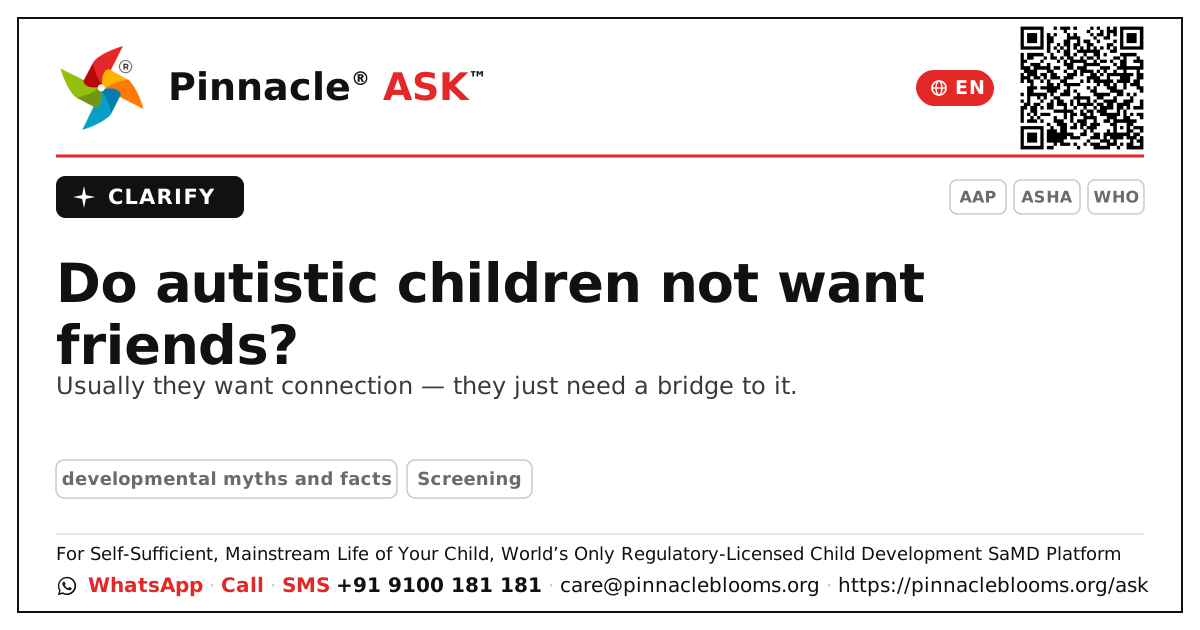
"My child plays alone — does that mean they don't want friends?" It's one of the most common worries we hear, and the honest answer brings real relief.
In short
No — most autistic children very much want connection and friendship. What often differs is how they reach out, read social cues, or sustain play, not whether they want closeness. The myth that autistic children prefer to be alone can leave a child unsupported when, in fact, the longing for friendship is usually there — it simply needs a bridge.The myth vs. the fact
The myth: "Autistic children are loners who don't care about other people."The fact: Many autistic children desire friendship deeply, but find the unwritten rules of social play — eye contact, turn-taking, reading tone and body language — harder to navigate. A child who lines up toys beside a peer, or who watches from the edge of a group, is often interested but unsure how to join in. Some autistic children also feel social overload and need quiet breaks — wanting solitude sometimes is not the same as not wanting friends.
When we mistake difficulty for disinterest, we stop offering the support that helps a child connect. With the right scaffolding — shared-interest play, structured turn-taking, social-communication therapy — autistic children build warm, genuine friendships.
What helps
- Build play around your child's strong interests — shared passion is the easiest doorway to friendship.
- Keep early playdates short, structured and low-noise so connection feels safe, not overwhelming.
- Notice and celebrate your child's way of showing affection — it may look different, and it counts.
- Honour the need for downtime; a quiet recharge often makes the next social moment go better.
The Pinnacle way
A clinical AbilityScore® and any diagnosis are formed only at a Pinnacle Blooms Network centre, under qualified clinician care — never from an article or an online checklist. If you'd like to understand your child's social-communication strengths, our team can help. Explore [how we support every child](/), our speech therapy for social communication, and what the AbilityScore® is and how it's measured.Trusted sources
Aligned with WHO ICD-11 guidance on autism spectrum, CDC "Learn the Signs. Act Early.", the American Academy of Pediatrics via HealthyChildren.org, and ASHA resources on social communication — all of which describe autistic social difference, not absence of social desire.Next step — if you'd like to nurture your child's friendships with the right support, book a developmental assessment with our team on WhatsApp: +91 91001 81181.
This is general information, not a diagnosis — a clinical AbilityScore® and any diagnosis are formed only at a Pinnacle Blooms Network centre under qualified clinician care.
What to watch
Watch whether your child shows interest in peers (watching, hovering near play, lighting up at a sibling) even if they struggle to join — interest with difficulty signals a child who wants connection and benefits from social-communication support.
Try this at home
Pair your child with one peer around a shared interest for a short, calm playdate — shared passion is the easiest bridge to friendship.
Trusted sources
Developed by SETU Consortium · Pinnacle Blooms Network · Last reviewed 2026-06-11 · reviewed every 365 days
This is general information, not a diagnosis. A clinical AbilityScore® and any diagnosis are formed only at a Pinnacle Blooms Network centre, under qualified clinician care.
Frequently asked
Do autistic children actually want friends?
Yes — most autistic children want friendship and connection. What often differs is how they read social cues, take turns or join play, not whether they desire closeness. With support, they build genuine friendships.
My child plays alone a lot — is that a bad sign?
Playing alone sometimes is normal for all children, and some autistic children need quiet to recharge. It becomes worth exploring only if your child seems to want connection but consistently can't find a way in — that's where social-communication support helps.
How can I help my autistic child make friends?
Build short, structured playdates around shared interests, support turn-taking, keep early settings calm and low-noise, and celebrate your child's own way of showing affection. Speech and social-communication therapy can scaffold these skills.