
self awareness
Self-Awareness: Ages and What a Teacher Can Expect
Self-awareness begins with mirror self-recognition around 15–24 months, deepens into naming feelings by age 3–4, and matures into self-comparison and reflection by 5–6. In class, teachers should expect a gradual, varied blooming rather than a fixed milestone.
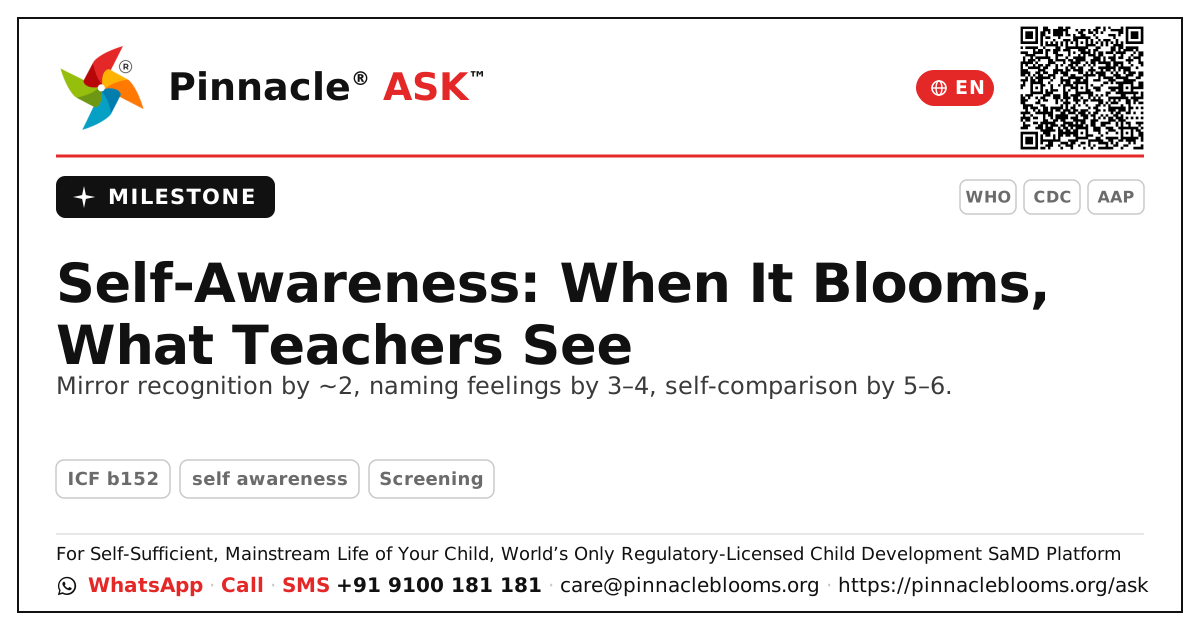
Self-awareness doesn't arrive on a single birthday — it unfolds, and a classroom is one of the best places to watch it grow.
In short
Most children show the first clear sign of self-awareness — recognising themselves in a mirror — between 15 and 24 months. From there it deepens: by age 3–4 children name their own feelings, and by 5–6 they begin to compare themselves to peers and reflect on what they can do. In class, expect a steady, gradual blooming rather than a fixed milestone, with wide normal variation between children.What a teacher can expect, by age
- 2–3 years: uses "me", "mine" and own name; recognises self in photos and mirror; shows pride or embarrassment.
- 3–4 years: names basic feelings ("I'm sad"); describes self by simple traits ("I'm big", "I run fast"); shows growing independence in routines.
- 4–5 years: begins to notice others' feelings; expresses preferences and choices; manages simple turn-taking.
- 5–6 years: compares own abilities with peers; reflects on success and effort; follows group expectations with growing self-regulation.
The science
In the WHO ICF, self-awareness sits under body functions b152 (emotional and experience-of-self functions). It is built on secure relationships, language, and repeated everyday interactions — exactly the warm, predictable environment a classroom provides. Variation is normal; a child who is quieter or slower to self-describe is usually still well within range.The Pinnacle way
A clinical AbilityScore® and any diagnosis are formed only at a Pinnacle Blooms Network centre under qualified clinician care — never from a classroom observation alone. If a child seems persistently behind peers across several areas, our team can help with a structured developmental check. Explore the AbilityScore® and behavioural therapy support.Trusted sources
Aligned with the WHO ICF (b152), CDC developmental milestones, and AAP/HealthyChildren guidance on social-emotional growth.Next step — if a child's self-awareness or social-emotional growth seems markedly out of step with classmates, suggest the family arrange a developmental check, or reach Pinnacle on WhatsApp: +91 91001 81181.
This is general information, not a diagnosis — a clinical AbilityScore® and any diagnosis are formed only at a Pinnacle Blooms Network centre under qualified clinician care.
What to watch
Watch for a child who, well past age 4–5, doesn't use "me/mine", can't name simple feelings, or shows little self-recognition alongside delays in language or play — a pattern across settings is worth a developmental check.
Try this at home
Use a feelings chart at circle time and invite each child to point to how they feel — naming emotions daily builds self-awareness through repetition.
Trusted sources
Developed by SETU Consortium · Pinnacle Blooms Network · Last reviewed 2026-06-10 · reviewed every 540 days
This is general information, not a diagnosis. A clinical AbilityScore® and any diagnosis are formed only at a Pinnacle Blooms Network centre, under qualified clinician care.
Frequently asked
At what age does self-awareness first appear?
The first clear marker — recognising oneself in a mirror — usually appears between 15 and 24 months. It then deepens through the preschool years.
What should a teacher expect in a 3–4 year old?
By 3–4, expect a child to use words like "me" and "mine", name simple feelings, describe themselves with basic traits, and show growing independence in classroom routines.
Is it a problem if one child seems behind others?
Wide variation is normal. Concern is reasonable only when a child is persistently out of step across several areas and settings — then a developmental check, not a label, is the next step.