
gymnastic skill
At what age should a child do gymnastic skills?
Gymnastic skills are advanced movement abilities that build gradually — playful tumbling and balancing usually begin around 3–5 years, with cartwheels and hops emerging around 5–7 years. There is no fixed 'should' age; steady progress through balance, strength and coordination matters most.
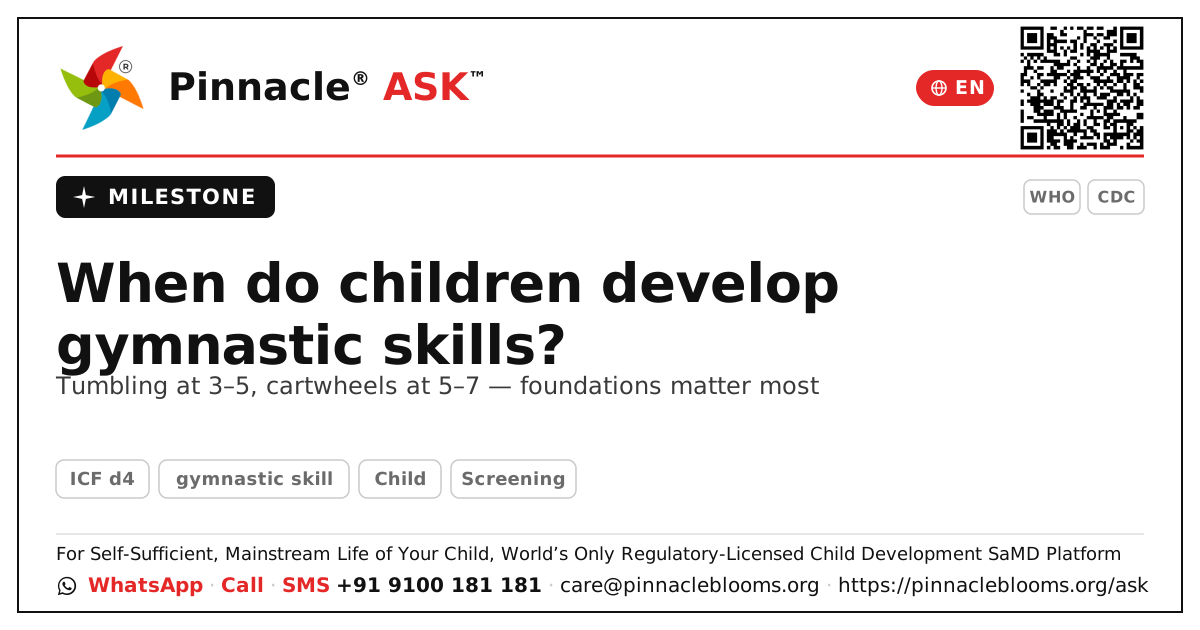
Cartwheels and balance beams come later than you might think — and that's exactly how healthy little bodies are meant to grow.
In short
There is no single age at which a child "should" do gymnastic skills — these are advanced movement abilities that build gradually on earlier foundations. Most children begin enjoying playful tumbling, rolling and balancing between 3 and 5 years, with more coordinated skills like cartwheels and hops emerging around 5 to 7 years. What matters far more than any one trick is steady progress through the building blocks of balance, strength and coordination.The science of how it builds
Gymnastic-type skills sit within the ICF domain of mobility and motor activity (d4) — they draw on core strength, balance, body awareness and motor planning that develop in a predictable order:- Around 3 years — jumps with two feet, climbs play equipment, begins to balance briefly on one foot
- Around 4 years — hops on one foot, does forward rolls with help, catches and throws
- Around 5–7 years — skips, does cartwheels, balances and coordinates more complex movements
Children vary widely, and a child who is cautious or simply less practised is not behind. Real concern is warranted only when a child is not walking, running or climbing at all by the expected ages, frequently falls, or seems unusually stiff or floppy — these point to foundational motor development, not gymnastics specifically.
The Pinnacle way
A clinical AbilityScore® and any diagnosis are formed only at a Pinnacle Blooms Network centre, under qualified clinician care — never from a web page or a single observation. If your child's underlying balance or coordination worries you, our team can map their motor foundations through structured profiling and, where helpful, occupational therapy. Learn more about how gymnastic skill fits the bigger movement picture.Trusted sources
Guidance aligns with the WHO ICF framework for activity and participation and CDC developmental milestone resources on gross-motor play in early childhood.Next step — if you're unsure whether your child's movement is on track, book a free developmental check with Pinnacle Blooms Network on WhatsApp: +91 91001 81181.
This is general information, not a diagnosis — a clinical AbilityScore® and any diagnosis are formed only at a Pinnacle Blooms Network centre under qualified clinician care.
What to watch
Look at the foundations, not the tricks: persistent worry is warranted if a child is not walking, running or climbing at all by expected ages, falls very frequently, or appears unusually stiff or floppy — these point to underlying motor development and deserve a check.
Try this at home
Turn the living room into a gentle gym: cushions to clamber over, a taped line to balance along, and rolls on a soft mat. Ten playful minutes a day builds the balance and core strength every gymnastic skill stands on.
Trusted sources
Developed by SETU Consortium · Pinnacle Blooms Network · Last reviewed 2026-06-10 · reviewed every 540 days
This is general information, not a diagnosis. A clinical AbilityScore® and any diagnosis are formed only at a Pinnacle Blooms Network centre, under qualified clinician care.
Frequently asked
Is my child behind if they can't do a cartwheel by age 5?
Not at all. Cartwheels typically appear between 5 and 7 years, and many children develop them later simply through practice or interest. A cautious or less-practised child is not behind — look instead at whether they run, jump and climb happily.
What movement skills come before gymnastic skills?
Gymnastic skills build on foundations like walking, running, jumping with two feet, climbing and balancing on one foot. These usually appear between 2 and 4 years and are the building blocks worth watching.
When should I be concerned about my child's movement?
Seek a developmental check if your child is not walking, running or climbing at all by expected ages, falls very frequently, or seems unusually stiff or floppy. These reflect foundational motor development rather than gymnastics itself.