
grammar use
At What Age Should a Child Use Grammar?
Grammar develops between ages 3 and 7: short phrases and plurals around 3, longer sentences and pronouns by 4, most everyday grammar by 5, and irregular forms and complex sentences by 6–7. Errors like "runned" are a normal, healthy part of learning the rules.
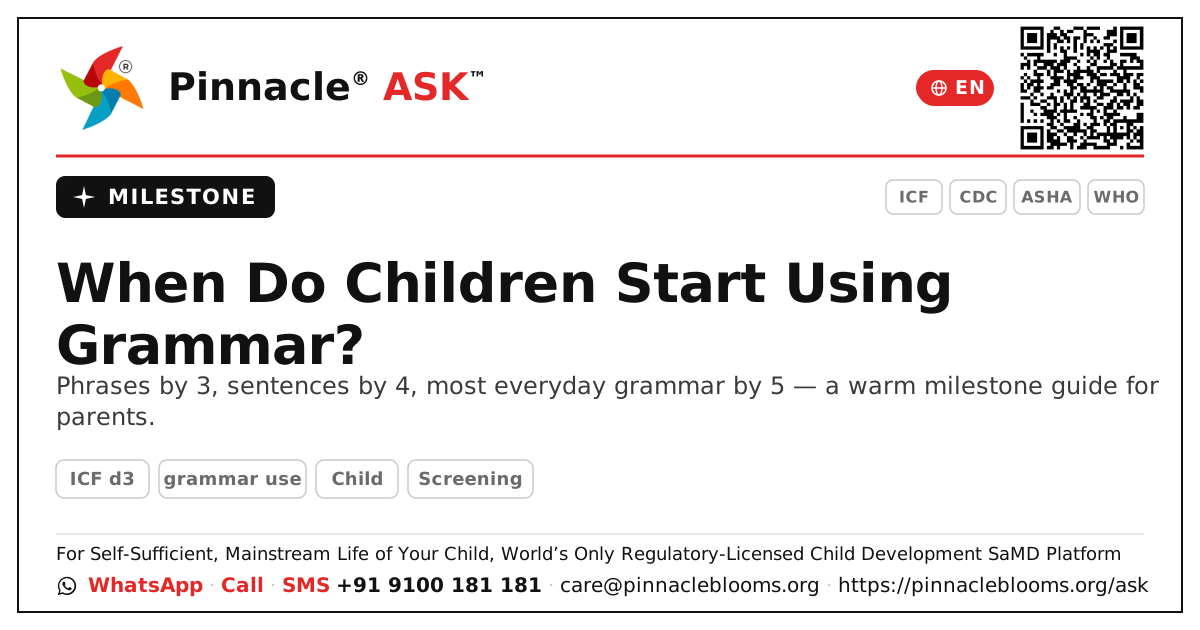
The moment little words snap into proper sentences — "I goed" softening into "I went" — is one of the quiet wonders of childhood.
In short
Grammar grows steadily between 3 and 7 years. By around age 3 most children join two or three words and use simple plurals and verbs; by 4 they manage longer sentences with pronouns and tenses; and by 5–7 they handle past tense, questions and connecting words like because and but. Small errors such as "runned" or "foots" are normal and a sign the brain is busy learning the rules.How grammar unfolds
- Around 3 years — short phrases ("more milk"), plurals ("dogs"), and present-tense verbs ("running").
- Around 4 years — sentences of 4–5 words, pronouns (I, you, she), and beginning past tense ("jumped").
- Around 5 years — most everyday grammar in place; tells simple stories that mostly hang together.
- 6–7 years — irregular forms ("went", "feet"), complex sentences, and accurate questions.
Children growing up with two languages may mix grammar across them — this is healthy bilingual development, not a delay.
When to look closer
Consider a speech therapy check if, well past these stages, a child still leaves out small words, uses only single words past age 3, is hard to understand, or stops using grammar they once had. A friendly screen reassures most families and helps the few who benefit from early support.The Pinnacle way
A clinical AbilityScore® and any diagnosis are formed only at a Pinnacle Blooms Network centre under qualified clinician care — never from an online list. Our team uses a clinician-administered structured assessment to map grammar use within your child's wider communication profile. Learn more about the AbilityScore®. Backed by 25 million+ therapy sessions and 700+ therapists across 70+ centres.Trusted sources
Guided by WHO developmental frameworks, the CDC "Learn the Signs. Act Early." milestones, and ASHA guidance on language development.Next step — if you're curious about your child's sentence-building, book a gentle developmental check on WhatsApp: +91 91001 81181.
This is general information, not a diagnosis — a clinical AbilityScore® and any diagnosis are formed only at a Pinnacle Blooms Network centre under qualified clinician care.
What to watch
Watch for a child still using only single words past age 3, leaving out small linking words well beyond age 5, being very hard to understand, or losing grammar skills they once had — these warrant a friendly speech check.
Try this at home
When your child says "I goed", gently echo the correct form back in play — "Yes, you went to the park!" — rather than correcting. Modelling teaches grammar far better than drilling.
Trusted sources
Developed by SETU Consortium · Pinnacle Blooms Network · Last reviewed 2026-06-10 · reviewed every 540 days
This is general information, not a diagnosis. A clinical AbilityScore® and any diagnosis are formed only at a Pinnacle Blooms Network centre, under qualified clinician care.
Frequently asked
Is it normal for my 4-year-old to say "runned" and "foots"?
Yes — these are called over-regularisation errors and they are a healthy sign your child has learned the grammar rules and is applying them everywhere. The irregular exceptions (ran, feet) usually settle by around 6–7 years.
My child speaks two languages and mixes grammar. Should I worry?
Mixing grammar across languages is a normal part of bilingual development, not a delay. Keep speaking both languages naturally; children sort the systems out over time.
When should I seek a speech check about grammar?
Consider a friendly screen if your child still uses only single words past age 3, regularly leaves out small linking words well beyond age 5, is hard to understand, or stops using grammar they previously had.