
Developmental Language Disorder
Successful adults who grew up with Developmental Language Disorder
Yes — many adults who grew up with Developmental Language Disorder lead successful, fulfilling lives across every profession. DLD affects language processing, not intelligence, creativity or potential; with strengths-first support, well-matched speech and language therapy and self-advocacy skills, children with DLD grow into capable, thriving adults. A clinical AbilityScore® and any diagnosis are formed only at a Pinnacle Blooms Network centre under qualified clinician care.
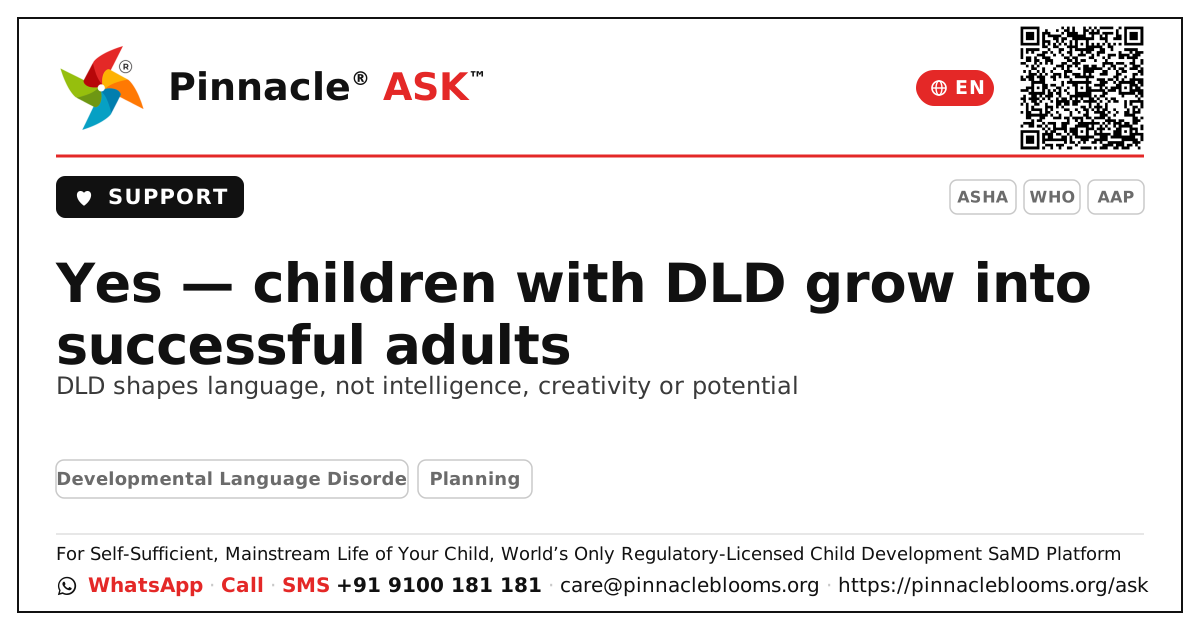
Yes — and resoundingly so. A childhood word-finding struggle is the start of a story, not the end of one.
In short
Absolutely yes. Many adults who grew up with Developmental Language Disorder (DLD) lead rich, successful lives — as engineers, artists, entrepreneurs, tradespeople, parents and leaders. DLD affects how the brain processes and produces language; it does not limit intelligence, creativity, ambition or kindness. With the right support and self-understanding, children with DLD grow into capable, thriving adults.What the journey really looks like
DLD is common — research suggests around 1 in 14 children, roughly two in every classroom. That means countless adults today have lived with it, often having found their own clever ways around language hurdles long before the term existed.What helps a child with DLD flourish into adulthood:
- Strengths-first thinking — children with DLD frequently shine in visual reasoning, hands-on problem-solving, art, sport, empathy and practical skills. Building a life around strengths matters as much as supporting language.
- Early, well-matched support — speech and language therapy that targets understanding, vocabulary, sentence-building and conversation gives children tools they carry for life.
- Self-advocacy — as they grow, young people who understand their own DLD learn to ask for instructions in writing, request extra time, or rephrase — quiet skills that serve them powerfully at work.
- Belief from the adults around them — children who are seen as capable tend to become capable adults. Your confidence is contagious.
DLD is lifelong in that the brain's wiring stays, but its impact changes enormously with support, maturity and the right environment. Success isn't the absence of difficulty — it's having the tools, confidence and people to move through it.
How you help, starting now
Notice and name what your child does well. Give instructions one step at a time and check understanding gently. Read and talk together every day, without quizzing. Celebrate effort over perfect words. And seek a developmental check if language seems behind peers — early support widens the road ahead.The Pinnacle way
A clinical AbilityScore® and any diagnosis are formed only at a Pinnacle Blooms Network centre, under qualified clinician care — never from an app or online form. Across [70+ centres in 4 states](/) our therapists build language and confidence together through targeted speech and language therapy, with each child's profile shaped by a clinician-administered AbilityScore® assessment — always strengths-first.Trusted sources
American Speech-Language-Hearing Association guidance on spoken-language disorders and lifelong outcomes; WHO ICD-11 framing of developmental language disorder; AAP/HealthyChildren.org guidance on supporting children's language development.Next step — Want to help your child build language and confidence for life? Book an assessment with a Pinnacle clinician.
This is general information, not a diagnosis — a clinical AbilityScore® and any diagnosis are formed only at a Pinnacle Blooms Network centre under qualified clinician care.
What to watch
Watch how your child communicates compared with peers — difficulty understanding instructions, finding words, building sentences or following conversations that persists past the early years is worth a developmental check, while noticing and naming their genuine strengths matters just as much.
Try this at home
Each day, name one thing your child did well that wasn't about words — a kind act, a clever fix, a great drawing — so they grow up knowing their worth was never measured by language alone.
Trusted sources
Developed by SETU Consortium · Pinnacle Blooms Network · Last reviewed 2026-06-10 · reviewed every 365 days
This is general information, not a diagnosis. A clinical AbilityScore® and any diagnosis are formed only at a Pinnacle Blooms Network centre, under qualified clinician care.
Frequently asked
Does DLD mean my child won't do well in life?
Not at all. DLD affects how language is processed and produced — not intelligence, creativity or ambition. Many adults with DLD succeed in trades, arts, business, sport and caring professions. With support, self-understanding and belief from those around them, children with DLD grow into capable, fulfilled adults.
Does Developmental Language Disorder go away in adulthood?
The underlying way the brain processes language tends to be lifelong, but its impact changes dramatically with support, maturity and the right environment. Many adults develop effective strategies — asking for written instructions, taking extra time, rephrasing — that make language hurdles far smaller and rarely limiting.
What helps a child with DLD succeed long term?
Strengths-first thinking, early and well-matched speech and language therapy, growing self-advocacy skills, and the steady confidence of the adults around them. Building a life around what a child does well — alongside supporting language — is what helps them thrive into adulthood.