
YOUR QUESTION. A CLEARER NEXT STEP.
My 2-year-old can't brush their teeth — is that a concern?
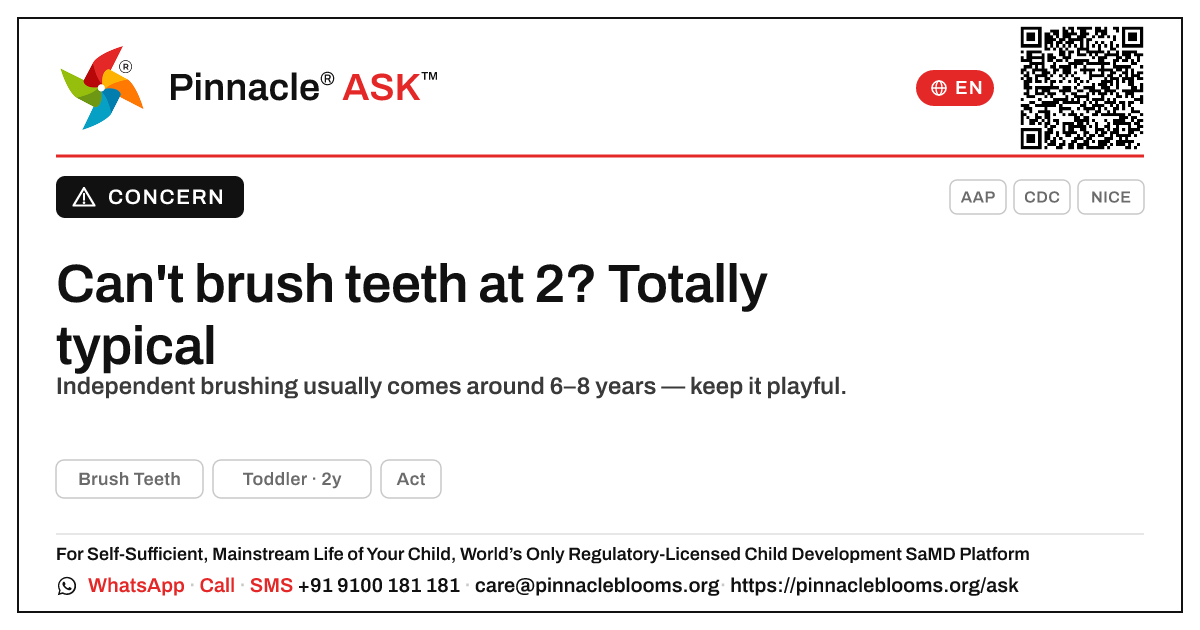
A 2-year-old who cannot brush their own teeth is completely typical — at this age you brush for them and let them practise. Independent, effective brushing is usually mastered only around 6–8 years. There is nothing to worry about; keep it playful. Consider a gentle developmental check only if brushing sits alongside wider delays in self-help, fine-motor or communication skills — and that is reassurance, not a diagnosis.
In this answer 5 sections
Tiny hands and toothbrushes are a tricky team at two — most toddlers need lots of loving help with this for a good while yet.
In short
A 2-year-old who cannot brush their own teeth independently is completely typical — this is exactly the age where you brush for them and let them have a happy practice turn afterwards. Full, effective tooth-brushing is a skill most children only master around 6–8 years, once their hand control and attention mature. There is nothing to worry about here; keep the routine playful, and only think about a developmental check if brushing is part of a wider picture of delayed self-help, motor or communication skills.
What's typical at age 2
Brushing teeth is a complex life skill that layers many smaller abilities — gripping the brush, knowing where the teeth are, moving the wrist back and forth, not swallowing the paste, and sitting still long enough to finish. At two, most of these are still developing:
- Adult-led brushing is the norm — you do the real cleaning, twice a day, with a smear of fluoride toothpaste. This is the recommended approach for years yet.
- A practice turn is wonderful — handing your toddler the brush to "have a go" builds interest, grip and routine, even though it won't clean properly.
- Resistance and wriggling are common — many two-year-olds dislike having their teeth brushed; songs, mirrors, turn-taking and copying you usually help more than insisting.
- Spitting and rinsing come later — don't expect tidy spitting at this age.
So "cannot brush their teeth yet" is the expected stage, not a delay.
When a gentle check makes sense
Brushing on its own tells us little — but it's worth a calm developmental review if it sits alongside other things, such as: not feeding themselves with a spoon at all, very limited words or gestures, not pointing or sharing attention, marked difficulty with grasping or hand use, or losing skills once had. In that case it's the wider pattern, not the toothbrush, that's worth a clinician's eye — early and reassuring.
The Pinnacle way
A clinical AbilityScore® and any diagnosis are formed only at a Pinnacle Blooms Network centre, under qualified clinician care — never from an online list. If you'd like a fuller picture of how your child's self-help, motor and play skills are growing, our occupational therapy team supports the hand control, sequencing and sensory comfort that life skills like brushing rest upon. You can also start with a simple developmental check any time.
Trusted sources
American Academy of Pediatrics (healthychildren.org) guidance on toddler oral care and adult-supervised brushing; CDC milestone and "Learn the Signs, Act Early" resources on self-help and fine-motor development; NICE oral health guidance on supervised brushing in young children.
Next step — Keep brushing for your little one and enjoy the practice turns. If you'd like reassurance about the bigger picture, book a developmental assessment with a Pinnacle clinician.
This is general information, not a diagnosis — individual assessment and diagnosis require an appropriately qualified healthcare professional.
CONNECT THE ANSWER TO YOUR CHILD’S DAY
Something to notice. Something to discuss.
What to notice
Brushing independently is not expected at two, so it isn't a worry alone. Consider a gentle developmental check only if it sits alongside other signs — not feeding with a spoon, very few words or gestures, no pointing or shared attention, marked trouble grasping or using hands, or loss of a skill once had. The wider pattern matters, not the toothbrush.
In everyday life
Make brushing a duet: you do the proper cleaning first, then hand over the brush for a happy practice turn while you sing a short, predictable tooth song. Brushing in front of a mirror and letting your toddler copy you builds interest and grip far better than insisting.
Bring your observations and questions to your child’s professional. Choose activities that suit your child’s comfort, abilities and agreed plan.
Bring your questions to a first visitQuestions families ask
At what age should a child brush their teeth by themselves?
Most children only manage effective, independent brushing around 6–8 years, once their hand control and attention mature. Until then, adults should do the real brushing twice a day and let the child have a practice turn.
Should I let my 2-year-old try brushing themselves?
Yes — a practice turn is lovely for building interest, grip and routine. Just follow it with proper brushing done by you, using a smear of fluoride toothpaste, so the teeth are actually cleaned.
My toddler refuses to let me brush their teeth. Is that normal?
Very common. Songs, mirrors, turn-taking and copying you usually work better than insisting. If feeding, hand use, words or play are also markedly delayed, a calm developmental check can offer reassurance.
FOLLOW THE SOURCE
References behind this answer.
- Organisation website · further readingAAP HealthyChildren — toddler oral care & brushing
- Source referenceCDC — developmental milestones & self-help skills
- Organisation website · further readingNICE — oral health and supervised brushing in young children
References are supplied with this answer. An organisation homepage offers further reading; it does not establish an independent review of this page.
Content attribution: SETU Consortium · Pinnacle Blooms Network.
PEOPLE, TOPICS & DEVELOPMENT
See the connections.
Browse the wider question collections connected with this answer’s audience, developmental area and stage.
FROM UNDERSTANDING TO PURPOSEFUL SUPPORT
One question. Your child’s whole life.
Your child’s self-sufficient, mainstream-included life is the purpose from the beginning. At Pinnacle, that purpose shapes what we understand, the goals we choose, the people we bring together, everyday practice and review.
Connect this question with the right support.
Start with your child’s strengths, your observations and what you want everyday life to become.
Make the next conversation useful.
Bring the situations you notice at home or school. We’ll explain a suitable service, centre and first visit, including availability and fees, before you decide.
How PinnacleAI® connects the journeyExplore the seven stages
- 1Understand abilities
A starting picture of your child’s capabilities.
- 2Choose meaningful goals
Readiness and a plan shaped around the child.
- 3Bring the right support together
Suitable therapies and people for those goals.
- 4Carry practice into everyday life
Guidance for family, home and school.
- 5Track and correct
Use observations to adjust the plan.
- 6Reassess and review
Decide what to continue, change or do next.
- 7Grow independence and participation
The child’s life gives each step its purpose.
Explore the whole PinnacleAI® system → · Participation at school and in the community →
PINNACLE’S EVIDENCE, OPEN TO YOU
Look at the evidence behind our work.
Read our research, inspect the original regulatory documents and check what each institutional measure means.
General information supports a conversation with an appropriately qualified professional. Advice, goals and support depend on the individual child.