
YOUR QUESTION. A CLEARER NEXT STEP.
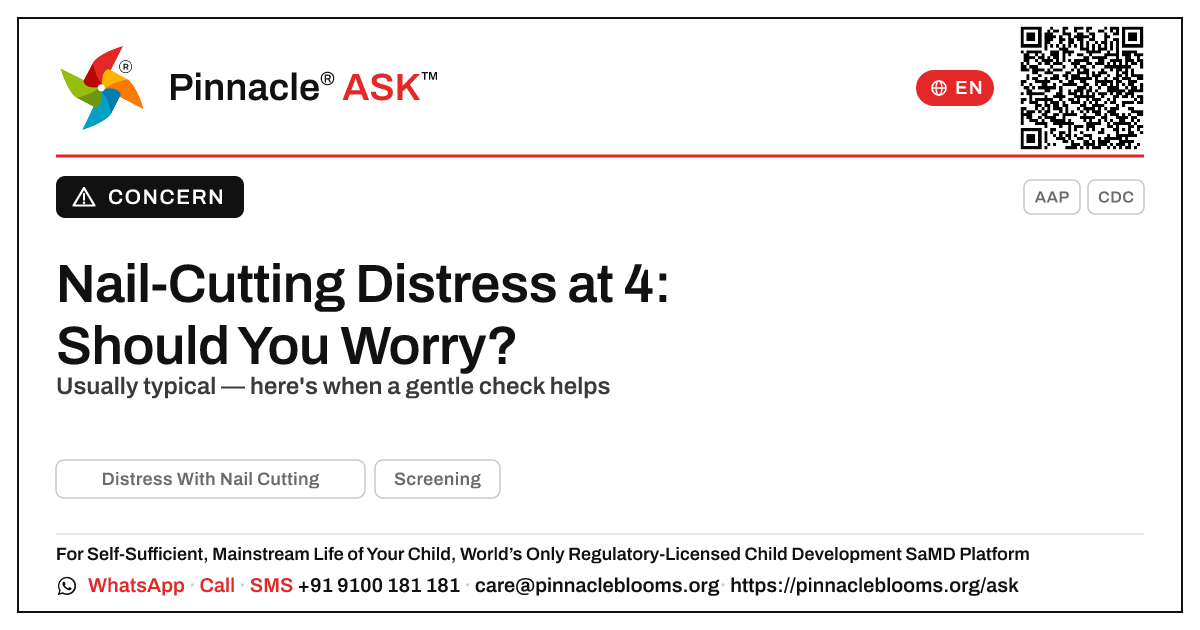
Should I worry about nail-cutting distress in my 4-year-old?
Distress with nail cutting in a 4-year-old is very common and usually typical — many children dislike the sensation, sound or being held still, and settle with familiar routines. Seek a gentle developmental check if the distress is intense and not easing, spreads across many everyday sensations like clothing, bathing or food textures, or travels with differences in talking, play or connecting. This is a reason to observe, not a diagnosis.
In this answer 5 sections
Plenty of little ones squirm, cry or pull away at nail-cutting time — noticing it and wondering gently is simply caring parenting.
In short
Distress with nail cutting is very common and usually completely typical in a 4-year-old. Many children dislike the sensation, the snip sound, or being held still — and most settle as they grow used to the routine. It is worth a gentle developmental check only if the distress is intense and not easing over time, spills across many other everyday sensations (clothing tags, hair washing, food textures, loud sounds, socks), or travels with differences in talking, play or connecting with others. None of this is a diagnosis — it simply means a calm clinician's look may help.
What this usually means at 4
At this age, nail-cutting upset is most often about the sensory experience and feeling out of control, not a disorder. Gentle signs it is just a passing dislike include: the upset is limited mainly to nail or hair cutting, your child settles afterwards, and they manage other daily sensations comfortably.
Reasons to seek a developmental check, not alarm:
- Big, widespread sensory reactions — strong distress not just with nails but with clothing, bathing, brushing teeth, food textures, or everyday sounds and touch.
- Not easing with familiarity — the distress stays severe despite gentle, repeated, predictable routines.
- Crowding out daily life — meltdowns around grooming that disrupt sleep, mealtimes or family routines often.
- Travelling with other differences — few words for age, little pretend play, limited eye contact or shared enjoyment, or difficulty with everyday transitions.
Things that gently help
Try trimming after a warm bath when nails are soft, while your child watches a favourite video, or one nail at a time with lots of praise. Let them "cut" a doll's nails first, or use a file instead of clippers. Naming the feeling — "the snip feels funny, I'm here" — builds trust.
The Pinnacle way
A clinical AbilityScore® and any diagnosis are formed only at a Pinnacle Blooms Network centre, under qualified clinician care — never from an online list. If sensory reactions seem big and widespread, our occupational therapy team gently helps children become more comfortable with everyday touch and grooming. You can always start with a simple developmental check via our home page.
Trusted sources
American Academy of Pediatrics (healthychildren.org) guidance on sensory sensitivities and developmental monitoring in young children; CDC developmental milestones and "Learn the Signs, Act Early" resources.
Next step — Trust what you notice each day. If grooming distress is intense or spreads across many senses, book a developmental assessment for a calm, clear review.
This is general information, not a diagnosis — individual assessment and diagnosis require an appropriately qualified healthcare professional.
CONNECT THE ANSWER TO YOUR CHILD’S DAY
Something to notice. Something to discuss.
What to notice
Seek a check if nail-cutting distress is intense and not easing with gentle routines, spreads across many sensations (clothing tags, bathing, teeth, food textures, sounds), disrupts daily life, or travels with few words, limited pretend play, little eye contact or difficulty with transitions.
In everyday life
Trim nails right after a warm bath when they're soft, one nail at a time with praise, while your child watches a favourite video — and let them practise on a doll first to build trust.
Bring your observations and questions to your child’s professional. Choose activities that suit your child’s comfort, abilities and agreed plan.
Bring your questions to a first visitQuestions families ask
Is it normal for a 4-year-old to cry during nail cutting?
Yes — many children this age dislike the sensation, the snip sound, or being held still. Most settle with gentle, predictable routines and grow more comfortable over time.
When should I be concerned about nail-cutting distress?
Consider a developmental check if the distress is intense and not easing, spreads to many other sensations like clothing, bathing or food textures, disrupts daily life, or comes with differences in talking, play or connecting with others.
What can help make nail cutting easier?
Try trimming after a warm bath when nails are soft, doing one nail at a time with praise, using a file instead of clippers, or letting your child practise on a doll first. Naming the feeling calmly also helps build trust.
FOLLOW THE SOURCE
References behind this answer.
- Organisation website · further readingAAP HealthyChildren — sensory sensitivities & development
- Source referenceCDC Learn the Signs, Act Early — milestones
References are supplied with this answer. An organisation homepage offers further reading; it does not establish an independent review of this page.
Content attribution: SETU Consortium · Pinnacle Blooms Network.
PEOPLE, TOPICS & DEVELOPMENT
See the connections.
Browse the wider question collections connected with this answer’s audience, developmental area and stage.
FROM UNDERSTANDING TO PURPOSEFUL SUPPORT
One question. Your child’s whole life.
Your child’s self-sufficient, mainstream-included life is the purpose from the beginning. At Pinnacle, that purpose shapes what we understand, the goals we choose, the people we bring together, everyday practice and review.
Connect this question with the right support.
Start with your child’s strengths, your observations and what you want everyday life to become.
Make the next conversation useful.
Bring the situations you notice at home or school. We’ll explain a suitable service, centre and first visit, including availability and fees, before you decide.
How PinnacleAI® connects the journeyExplore the seven stages
- 1Understand abilities
A starting picture of your child’s capabilities.
- 2Choose meaningful goals
Readiness and a plan shaped around the child.
- 3Bring the right support together
Suitable therapies and people for those goals.
- 4Carry practice into everyday life
Guidance for family, home and school.
- 5Track and correct
Use observations to adjust the plan.
- 6Reassess and review
Decide what to continue, change or do next.
- 7Grow independence and participation
The child’s life gives each step its purpose.
Explore the whole PinnacleAI® system → · Participation at school and in the community →
PINNACLE’S EVIDENCE, OPEN TO YOU
Look at the evidence behind our work.
Read our research, inspect the original regulatory documents and check what each institutional measure means.
General information supports a conversation with an appropriately qualified professional. Advice, goals and support depend on the individual child.