
YOUR QUESTION. A CLEARER NEXT STEP.
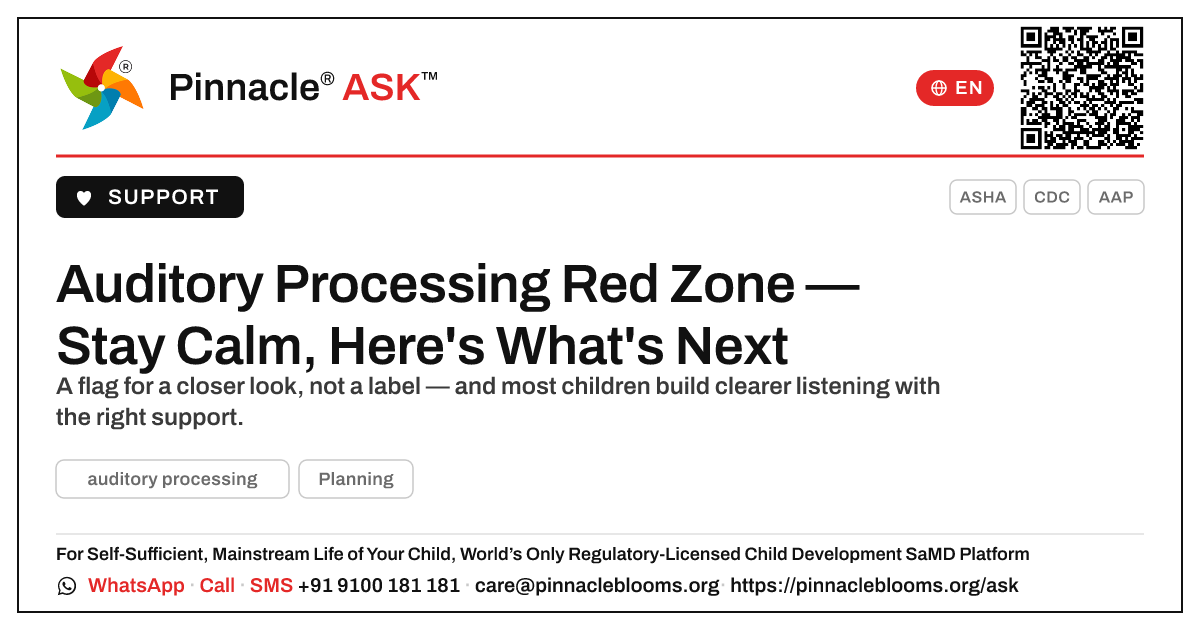
Your Child Is in the Red Zone for Auditory Processing — Next Steps
A red zone on an auditory processing screen is a flag for further assessment, not a diagnosis. The first step is a hearing check to rule out treatable causes, followed by a clinician-administered evaluation to see whether the difficulty sits in hearing, language, attention or processing. AbilityScore® is part of Pinnacle’s developmental assessment. Diagnosis, where needed, requires an appropriately qualified healthcare professional.
In this answer 5 sections
A red zone on a screening simply means it's time for a closer look — not a label, and not a reason to panic.
In short
A "red zone" on an auditory processing screen is a flag for further assessment, not a diagnosis. The single most important next step is a clinician-administered evaluation that first checks your child's hearing, then looks carefully at how their brain makes sense of the sounds it receives. With the right plan — often involving a speech-language therapist and structured listening support — most children build clearer, more confident listening over time, and earlier support usually helps most.
What auditory processing means
Auditory processing is how the brain interprets what the ears hear — telling speech apart from background noise, following multi-step instructions, and noticing the small sound differences between similar words. A child can have perfectly healthy hearing yet still find this filtering and decoding hard, which can look like "not listening", frequent "what?", or struggling in noisy classrooms.
Because many things can produce a red flag — glue ear, attention, language, or true processing differences — a screen result is a starting point that tells us where to look next.
What to do next
- Rule out hearing first. Ask for an audiological hearing check — undetected fluid or hearing loss is the commonest, most treatable explanation and must be excluded before anything else.
- Book a structured developmental assessment so a clinician can see whether the difficulty sits in hearing, language, attention or processing — and how they interact.
- Reduce listening load at home now — face your child when you speak, cut background noise, give one instruction at a time, and check understanding gently.
- Share the screen result with the assessing team so they can target the evaluation.
The Pinnacle way
This is general information, not a diagnosis — a clinical AbilityScore® and any diagnosis are formed only at a Pinnacle Blooms Network centre, under qualified clinician care, never from a screen or app. Our clinicians use a clinician-administered structured assessment to map exactly where your child's listening can be strengthened, then shape support — frequently through speech therapy — around their strengths. Explore more about auditory processing and how we begin your child's journey.
Trusted sources
American Speech-Language-Hearing Association guidance on auditory processing in children; CDC developmental and hearing resources; American Academy of Pediatrics family guidance via HealthyChildren.org.
Next step — A red zone deserves a calm, expert look. Book a developmental assessment with a Pinnacle clinician.
CONNECT THE ANSWER TO YOUR CHILD’S DAY
Something to notice. Something to discuss.
What to notice
Watch for frequent 'what?', trouble following multi-step instructions, struggling to hear in noisy or busy rooms, mishearing similar-sounding words, or seeming to 'switch off' when spoken to from across a room.
In everyday life
Cut background noise, face your child when you speak, and give one short instruction at a time — then gently check they understood before adding the next.
Bring your observations and questions to your child’s professional. Choose activities that suit your child’s comfort, abilities and agreed plan.
Bring your questions to a first visitQuestions families ask
Does a red zone mean my child has an auditory processing disorder?
No. A red zone on a screen is a flag that says 'look more closely', not a diagnosis. Many things — including treatable hearing issues, attention or language — can cause it. A clinician-administered assessment is what sorts this out.
Should we get a hearing test first?
Yes. Checking your child's actual hearing is the essential first step, because undetected fluid or hearing loss is the most common and most treatable explanation, and it must be ruled out before assessing processing.
Can auditory processing improve with support?
Most children make real, steady progress with the right plan — often including speech-language therapy, structured listening strategies and changes to the listening environment at home and school. Earlier support generally helps most.
What can we do at home while we wait for the assessment?
Reduce background noise, face your child when you talk, use short single-step instructions, and check understanding gently. These small changes ease the listening load straight away.
FOLLOW THE SOURCE
References behind this answer.
- Source referenceASHA — Understanding auditory processing in children
- Source referenceCDC — Hearing in children
- Organisation website · further readingAAP — HealthyChildren.org family guidance
References are supplied with this answer. An organisation homepage offers further reading; it does not establish an independent review of this page.
Content attribution: SETU Consortium · Pinnacle Blooms Network.
PEOPLE, TOPICS & DEVELOPMENT
See the connections.
Browse the wider question collections connected with this answer’s audience, developmental area and stage.
FROM UNDERSTANDING TO PURPOSEFUL SUPPORT
One question. Your child’s whole life.
Your child’s self-sufficient, mainstream-included life is the purpose from the beginning. At Pinnacle, that purpose shapes what we understand, the goals we choose, the people we bring together, everyday practice and review.
Connect this question with the right support.
Start with your child’s strengths, your observations and what you want everyday life to become.
Make the next conversation useful.
Bring the situations you notice at home or school. We’ll explain a suitable service, centre and first visit, including availability and fees, before you decide.
How PinnacleAI® connects the journeyExplore the seven stages
- 1Understand abilities
A starting picture of your child’s capabilities.
- 2Choose meaningful goals
Readiness and a plan shaped around the child.
- 3Bring the right support together
Suitable therapies and people for those goals.
- 4Carry practice into everyday life
Guidance for family, home and school.
- 5Track and correct
Use observations to adjust the plan.
- 6Reassess and review
Decide what to continue, change or do next.
- 7Grow independence and participation
The child’s life gives each step its purpose.
Explore the whole PinnacleAI® system → · Participation at school and in the community →
PINNACLE’S EVIDENCE, OPEN TO YOU
Look at the evidence behind our work.
Read our research, inspect the original regulatory documents and check what each institutional measure means.
General information supports a conversation with an appropriately qualified professional. Advice, goals and support depend on the individual child.