
YOUR QUESTION. A CLEARER NEXT STEP.
ADHD vs Separation Anxiety Disorder in Young Children
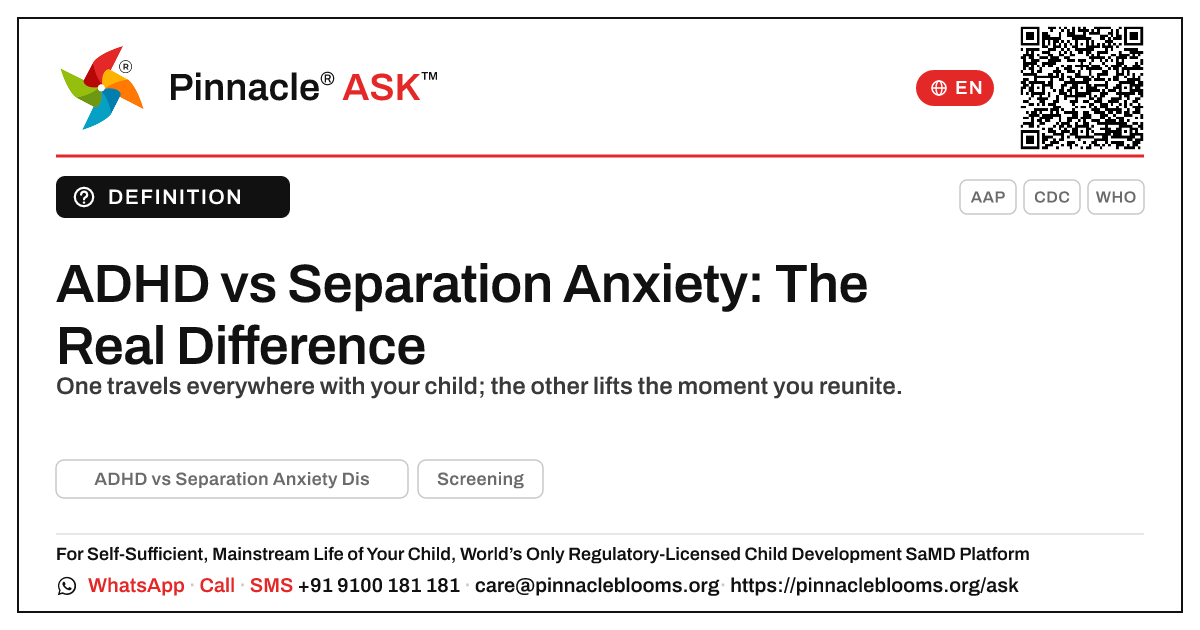
ADHD and Separation Anxiety Disorder can both make a young child restless and hard to settle, but they differ at the root. ADHD is a brain-based difference in attention, activity and impulse, and the difficulties show up across all settings with anyone. Separation Anxiety Disorder is an emotional condition where distress is specifically about being apart from a caregiver — clinging, crying and physical complaints that ease quickly on reunion. The key clue: ADHD travels with the child everywhere, while separation anxiety lifts once the child feels safely reunited. They can overlap, and a clinician should distinguish them.
In this answer 5 sections
Both can make a young child restless, tearful or hard to settle — but one is about attention and impulse, and the other is about fear of being apart from you.
In short
ADHD (Attention-Deficit/Hyperactivity Disorder) is a difference in how a child's developing brain manages attention, activity and impulse — the busyness and distractibility show up almost everywhere: home, playgroup, the park, with anyone. Separation Anxiety Disorder is an emotional condition where the distress is specifically about being apart from a beloved caregiver — clinging, crying, tummy aches or panic that ease the moment you are back together. The simplest clue: ADHD difficulties travel with the child across all settings; separation anxiety melts away once the child feels safely reunited.
How they differ in everyday life
With ADHD, a young child may flit from toy to toy, struggle to sit for a story, climb and dash without pause, and seem not to listen — and this pattern is fairly constant, whether you are there or not. The drive is internal restlessness, not fear.
With Separation Anxiety Disorder, the same child can play happily and focus well — until a goodbye looms. Then come the tears, the refusal to go to school or sleep alone, the worry that something bad will happen to you, and the physical complaints like headaches or stomach aches at drop-off. Reunite them, and calm returns quickly.
They can also overlap — an anxious child may look distractible, and a child with ADHD may become anxious about repeated tellings-off. Some mild separation worry is also entirely normal in toddlers and eases with age; it becomes a 'disorder' only when it is intense, lasting and stops a child living their ordinary day. This is exactly why a careful clinical look matters — the same behaviour can have very different roots.
When to seek a look
Consider a developmental screening if the restlessness, distractibility or impulsiveness shows across many settings and is affecting play and learning, or if separation distress is severe, persists for weeks, and is keeping your child from school, sleep or friendships. Early understanding means earlier, gentler support.
The Pinnacle way
This is general information, not a diagnosis — a clinical AbilityScore® and any diagnosis are formed only at a Pinnacle Blooms Network centre, under qualified clinician care, never from an app or form. Our clinicians observe where, when and why the behaviour appears before recommending support — which may draw on behavioural therapy for attention, regulation and gentle separation steps, with guidance for the whole family. Learn more about ADHD and how we look at the bigger picture.
Trusted sources
The American Academy of Pediatrics and HealthyChildren on ADHD and on childhood anxiety; the CDC on children's attention and behaviour; the World Health Organization's ICD-11 framing of these as distinct conditions.
Next step — Unsure which pattern fits your child? Book a developmental screening and let a Pinnacle clinician understand the why behind the behaviour.
CONNECT THE ANSWER TO YOUR CHILD’S DAY
Something to notice. Something to discuss.
What to notice
Watch where the difficulty appears: restlessness, distractibility and impulsiveness across home, playgroup and outings point one way, while crying, clinging, tummy aches or panic specifically around goodbyes — easing on reunion — point another. Note how long it lasts and whether it stops your child managing school, sleep or play.
In everyday life
For separation worry, practise short, confident goodbyes: a quick warm ritual, a clear 'I'll be back after snack time', then leave calmly — long lingering raises anxiety. For attention, keep tasks short and playful with movement breaks. Either way, notice and praise the calm moments.
Bring your observations and questions to your child’s professional. Choose activities that suit your child’s comfort, abilities and agreed plan.
Bring your questions to a first visitQuestions families ask
Can a child have both ADHD and separation anxiety?
Yes. The two can occur together, and one can fuel the other — an anxious child may look distractible, and a child with ADHD may grow anxious after repeated corrections. A clinician untangles which is leading so support fits your child.
How can I tell them apart at home?
Notice where the behaviour shows. ADHD restlessness and distractibility appear almost everywhere and with anyone. Separation anxiety distress is tied to goodbyes and eases quickly once your child is safely back with you.
Is some separation distress normal in young children?
Yes — clinginess and tears at goodbyes are a normal part of early development and usually ease with age. It becomes a concern only when it is intense, lasts for weeks and stops your child managing school, sleep or play.
When should I seek a screening?
Consider a developmental screening if attention or activity difficulties affect play and learning across settings, or if separation distress is severe, persistent and keeping your child from everyday life such as school or sleep.
FOLLOW THE SOURCE
References behind this answer.
- Organisation website · further readingAAP HealthyChildren — ADHD and childhood anxiety
- Organisation website · further readingCDC — children's attention and behaviour
- Organisation website · further readingWHO ICD-11 — conditions framework
References are supplied with this answer. An organisation homepage offers further reading; it does not establish an independent review of this page.
Content attribution: SETU Consortium · Pinnacle Blooms Network.
PEOPLE, TOPICS & DEVELOPMENT
See the connections.
Browse the wider question collections connected with this answer’s audience, developmental area and stage.
FROM UNDERSTANDING TO PURPOSEFUL SUPPORT
One question. Your child’s whole life.
Your child’s self-sufficient, mainstream-included life is the purpose from the beginning. At Pinnacle, that purpose shapes what we understand, the goals we choose, the people we bring together, everyday practice and review.
Connect this question with the right support.
Start with your child’s strengths, your observations and what you want everyday life to become.
Make the next conversation useful.
Bring the situations you notice at home or school. We’ll explain a suitable service, centre and first visit, including availability and fees, before you decide.
How PinnacleAI® connects the journeyExplore the seven stages
- 1Understand abilities
A starting picture of your child’s capabilities.
- 2Choose meaningful goals
Readiness and a plan shaped around the child.
- 3Bring the right support together
Suitable therapies and people for those goals.
- 4Carry practice into everyday life
Guidance for family, home and school.
- 5Track and correct
Use observations to adjust the plan.
- 6Reassess and review
Decide what to continue, change or do next.
- 7Grow independence and participation
The child’s life gives each step its purpose.
Explore the whole PinnacleAI® system → · Participation at school and in the community →
PINNACLE’S EVIDENCE, OPEN TO YOU
Look at the evidence behind our work.
Read our research, inspect the original regulatory documents and check what each institutional measure means.
General information supports a conversation with an appropriately qualified professional. Advice, goals and support depend on the individual child.