
YOUR QUESTION. A CLEARER NEXT STEP.
Is Multi-Purpose Cleaning Spray right for my child?
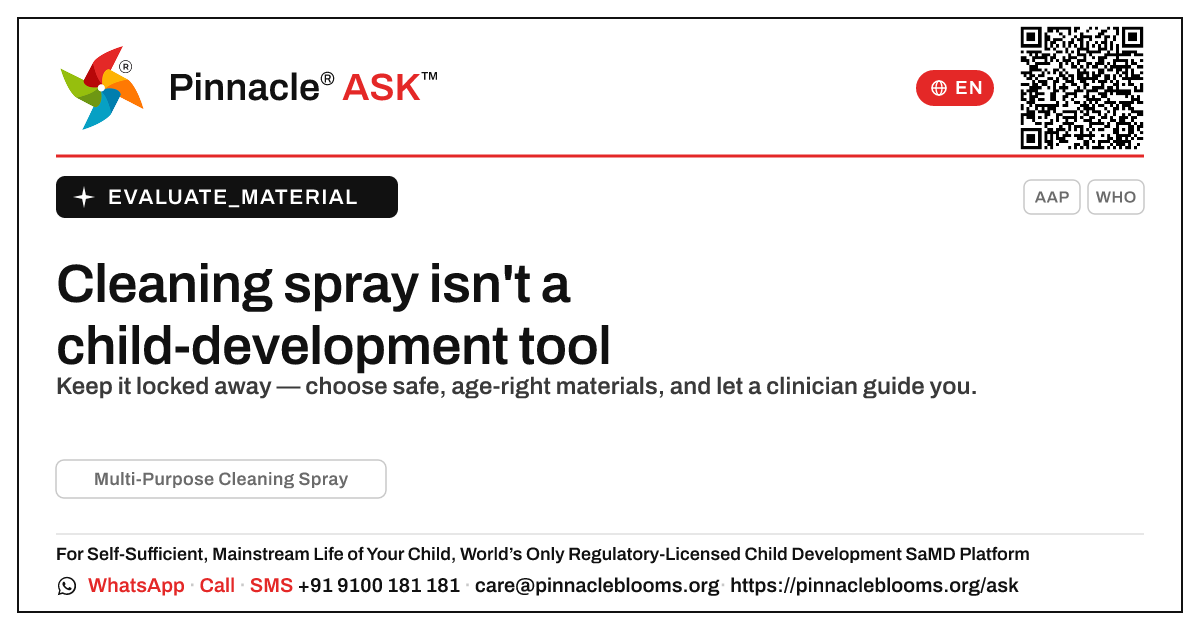
A Multi-Purpose Cleaning Spray is a household surface cleaner, not a child-development material — it is not designed for children to use and should be kept locked away out of reach. For supporting your child's skills, choose child-safe play materials and let a Pinnacle clinician recommend age-right options.
In this answer 4 sections
Sometimes the most useful answer is the honest one: this is a cleaning product, not a child-development tool.
In short
A Multi-Purpose Cleaning Spray is a household surface cleaner — it is not a developmental toy, therapy material or learning aid, and it is not designed for children to use or handle. The safe answer is to keep all cleaning sprays securely out of your child's reach and never present them as play. If you came here wondering how to choose materials that genuinely help your child's growth, we can point you to far better options.
What this actually is — and the safety bit
A multi-purpose cleaning spray is a chemical product for cleaning floors, kitchens and bathrooms. Because young children explore the world with their hands and mouths, these products carry real risks:
- Keep locked away and up high — out of sight and reach of crawling and toddling children.
- Never decant into food or drink bottles — children recognise familiar containers and may drink from them.
- Spray onto a cloth, not the air, near young children to reduce fumes they breathe in.
- If a child swallows, sprays into the eyes, or breathes a lot of fumes, call your local poison helpline or visit a doctor straight away.
If your underlying goal is to support sensory play, fine-motor skills or independence, child-safe materials — chunky crayons, stacking blocks, textured balls, picture books — do this safely and joyfully.
The Pinnacle way
A clinical AbilityScore® and any diagnosis are formed only at a Pinnacle Blooms Network centre, under qualified clinician care — never from a product label or an app. If you're choosing materials to encourage everyday skills, our occupational therapy team can recommend age-right, child-safe activities, and you can always revisit what this item is on its overview page.
Trusted sources
American Academy of Pediatrics guidance on home safety and poison prevention; WHO household chemical safety principles.
Next step — Want materials that truly help your child grow? Book a Pinnacle assessment and get safe, age-matched recommendations.
This is general information, not a diagnosis — individual assessment and diagnosis require an appropriately qualified healthcare professional.
CONNECT THE ANSWER TO YOUR CHILD’S DAY
Something to notice. Something to discuss.
What to notice
Watch that all cleaning sprays stay locked away and out of reach, that none are decanted into drink or food bottles, and that your child is never given them as a toy or play item.
In everyday life
Store every cleaning product up high in a latched cupboard, and keep one safe play basket — blocks, board books, chunky crayons — at your child's level instead.
Bring your observations and questions to your child’s professional. Choose activities that suit your child’s comfort, abilities and agreed plan.
Bring your questions to a first visitQuestions families ask
Can my child use a multi-purpose cleaning spray for play or learning?
No. It is a chemical household cleaner, not a developmental material, and it should never be handled or used by children. Keep it locked away and choose child-safe play materials instead.
What should I do if my child swallows or sprays a cleaning product?
Act straight away — call your local poison helpline or take your child to a doctor. Do not wait for symptoms. Keep the product label with you so the clinician knows what was involved.
What materials actually help my child's development?
Age-right, child-safe items like stacking blocks, textured balls, picture books and chunky crayons support fine-motor, sensory and language skills. A Pinnacle occupational therapist can recommend options matched to your child.
FOLLOW THE SOURCE
References behind this answer.
- Organisation website · further readingAAP HealthyChildren: home safety & poison prevention
- Organisation website · further readingWHO: household chemical safety
References are supplied with this answer. An organisation homepage offers further reading; it does not establish an independent review of this page.
Content attribution: SETU Consortium · Pinnacle Blooms Network.
PEOPLE, TOPICS & DEVELOPMENT
See the connections.
Browse the wider question collections connected with this answer’s audience, developmental area and stage.
FROM UNDERSTANDING TO PURPOSEFUL SUPPORT
One question. Your child’s whole life.
Your child’s self-sufficient, mainstream-included life is the purpose from the beginning. At Pinnacle, that purpose shapes what we understand, the goals we choose, the people we bring together, everyday practice and review.
Connect this question with the right support.
Start with your child’s strengths, your observations and what you want everyday life to become.
Make the next conversation useful.
Bring the situations you notice at home or school. We’ll explain a suitable service, centre and first visit, including availability and fees, before you decide.
How PinnacleAI® connects the journeyExplore the seven stages
- 1Understand abilities
A starting picture of your child’s capabilities.
- 2Choose meaningful goals
Readiness and a plan shaped around the child.
- 3Bring the right support together
Suitable therapies and people for those goals.
- 4Carry practice into everyday life
Guidance for family, home and school.
- 5Track and correct
Use observations to adjust the plan.
- 6Reassess and review
Decide what to continue, change or do next.
- 7Grow independence and participation
The child’s life gives each step its purpose.
Explore the whole PinnacleAI® system → · Participation at school and in the community →
PINNACLE’S EVIDENCE, OPEN TO YOU
Look at the evidence behind our work.
Read our research, inspect the original regulatory documents and check what each institutional measure means.
General information supports a conversation with an appropriately qualified professional. Advice, goals and support depend on the individual child.