
YOUR QUESTION. A CLEARER NEXT STEP.
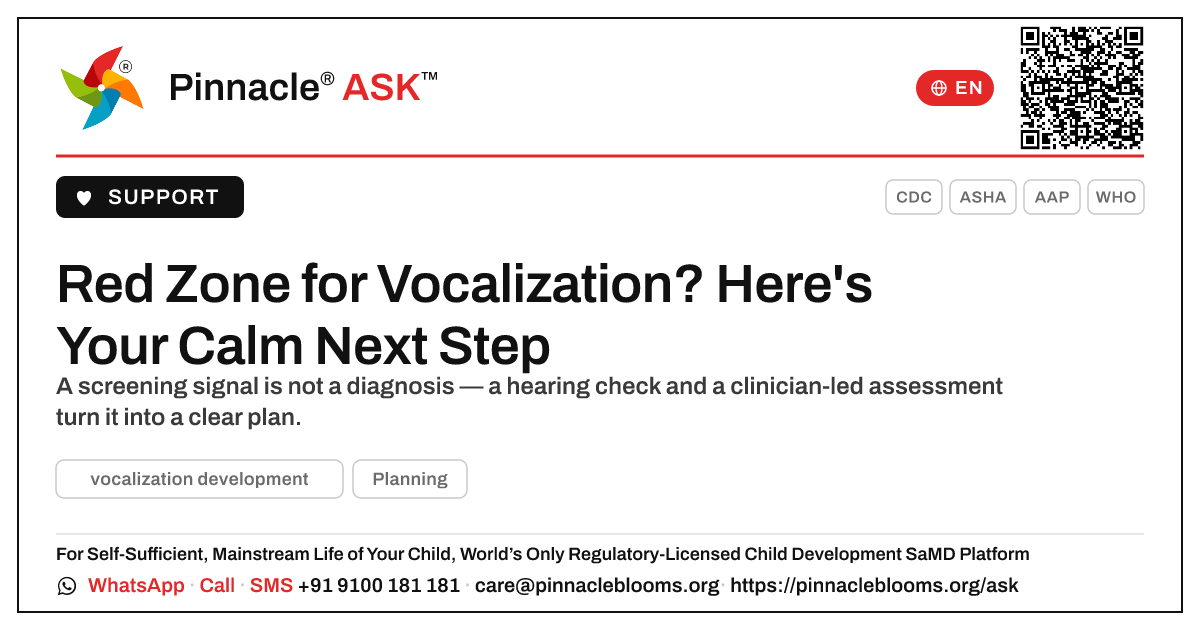
My child is in the red zone for vocalization — next steps
A red zone for vocalization development is a screening signal, not a diagnosis — the next step is a hearing check and a clinician-led speech-language assessment, while keeping rich everyday talk flowing at home. AbilityScore® is part of Pinnacle’s developmental assessment. Diagnosis, where needed, requires an appropriately qualified healthcare professional.
In this answer 4 sections
A red zone is not a verdict — it is simply a signal that your child's babbling and sound-making would benefit from a closer, caring look.
In short
A "red zone" result on a screening tool means your child's vocalization — their cooing, babbling and early sound-making — is developing differently from what is typical for their age, and it is worth a proper professional check. It is not a diagnosis and it does not tell you the cause. The next step is straightforward: book a clinician-led developmental assessment so a qualified speech-language professional can see exactly what is happening and shape a plan. Children often make lovely progress once the right support begins, and earlier support tends to help most.
What "red zone" really means — and what to do next
Vocalization is how babies and young children explore sound long before words arrive — cooing, squealing, babbling strings like "ba-ba-da", and copying tones and rhythms. A red flag on a screen tells you this area needs attention; it does not explain why. Many threads can affect early sounds — hearing, oral-motor coordination, or simply needing more rich back-and-forth talk time.
Here is a calm, practical sequence:
- Don't panic, and don't wait. A screen is a prompt to look closer, not a label. The most useful response is a timely professional assessment.
- Have hearing checked. Because so much of early vocalising depends on hearing sounds clearly, a hearing review is often a sensible early step.
- Book a clinician-led assessment. A speech-language professional observes your child directly and looks at the whole picture — sounds, understanding, play and interaction.
- Keep the talk flowing at home. Narrate your day, sing, pause and wait for your child to respond, and reply warmly to every sound they make. These everyday moments are genuinely powerful.
The Pinnacle way
A clinical AbilityScore® and any diagnosis are formed only at a Pinnacle Blooms Network centre, under qualified clinician care — never from an app or a screening result alone. Our structured, clinician-administered assessment gives your child a clear communication profile and a plan built around their strengths, supported through our speech therapy programme. You are always welcome to start here to understand how we support families across 70+ centres.
Trusted sources
WHO ICD-11 and developmental milestone guidance; CDC "Learn the Signs. Act Early." milestone resources; the American Speech-Language-Hearing Association (ASHA) on early communication; American Academy of Pediatrics (HealthyChildren.org).
Next step — Ready to turn a red flag into a clear plan? Book a developmental assessment with a Pinnacle clinician.
This is general information, not a diagnosis — individual assessment and diagnosis require an appropriately qualified healthcare professional.
CONNECT THE ANSWER TO YOUR CHILD’S DAY
Something to notice. Something to discuss.
What to notice
Watch for little or no cooing, squealing or babbling, few sound combinations like 'ba-ba' or 'da-da' by the expected age, not turning to sounds or voices, or a drop in sounds your child used to make.
In everyday life
Reply warmly to every sound your child makes, narrate your day, sing, and pause to give them a turn — these tiny back-and-forth moments fuel early vocalising more than anything else.
Bring your observations and questions to your child’s professional. Choose activities that suit your child’s comfort, abilities and agreed plan.
Bring your questions to a first visitQuestions families ask
Does a red zone result mean my child has a speech disorder?
No. A red zone is a screening signal that this area needs a closer look — it is not a diagnosis and does not tell you the cause. Only a clinician-led assessment can clarify what is happening and what, if anything, your child needs.
Should we get my child's hearing checked first?
It is often a sensible early step. Because early cooing and babbling depend heavily on hearing sounds clearly, a hearing review helps the clinical team build a complete picture.
What can I do at home right now?
Keep the talk flowing — narrate your day, sing, copy your child's sounds, and pause to wait for their response. Warm, frequent back-and-forth interaction is one of the most powerful ways to encourage vocalising.
How soon should we act?
Soon, but without panic. A screen is a prompt to assess, not a reason to wait. Earlier support tends to help most, so booking a clinician-led developmental assessment promptly is the best next step.
FOLLOW THE SOURCE
References behind this answer.
- Source referenceCDC — Learn the Signs. Act Early. milestones
- Source referenceASHA — how speech and language develop
- Organisation website · further readingAAP — HealthyChildren.org
- Organisation website · further readingWHO ICD-11
References are supplied with this answer. An organisation homepage offers further reading; it does not establish an independent review of this page.
Content attribution: SETU Consortium · Pinnacle Blooms Network.
PEOPLE, TOPICS & DEVELOPMENT
See the connections.
Browse the wider question collections connected with this answer’s audience, developmental area and stage.
FROM UNDERSTANDING TO PURPOSEFUL SUPPORT
One question. Your child’s whole life.
Your child’s self-sufficient, mainstream-included life is the purpose from the beginning. At Pinnacle, that purpose shapes what we understand, the goals we choose, the people we bring together, everyday practice and review.
Connect this question with the right support.
Explore how the relevant service contributes to everyday abilities, then speak with us about your child.
Make the next conversation useful.
Bring the situations you notice at home or school. We’ll explain a suitable service, centre and first visit, including availability and fees, before you decide.
How PinnacleAI® connects the journeyExplore the seven stages
- 1Understand abilities
A starting picture of your child’s capabilities.
- 2Choose meaningful goals
Readiness and a plan shaped around the child.
- 3Bring the right support together
Suitable therapies and people for those goals.
- 4Carry practice into everyday life
Guidance for family, home and school.
- 5Track and correct
Use observations to adjust the plan.
- 6Reassess and review
Decide what to continue, change or do next.
- 7Grow independence and participation
The child’s life gives each step its purpose.
Explore the whole PinnacleAI® system → · Participation at school and in the community →
PINNACLE’S EVIDENCE, OPEN TO YOU
Look at the evidence behind our work.
Read our research, inspect the original regulatory documents and check what each institutional measure means.
General information supports a conversation with an appropriately qualified professional. Advice, goals and support depend on the individual child.