AbilityScore®
What is the assessed starting picture?
A composite measurement helps organise discussion of developmental abilities and later change.

PinnacleAI® · Begin with ability
Your child’s self-sufficient, mainstream-included life is our purpose from the beginning. AbilityScore® helps us understand the abilities your child brings today—so the next goal, the people involved and the support we choose have a clear reason in that life.
Telephone guidance is free. We’ll explain the appropriate professional, assessment, centre and fees before you decide.
Find a Pinnacle centre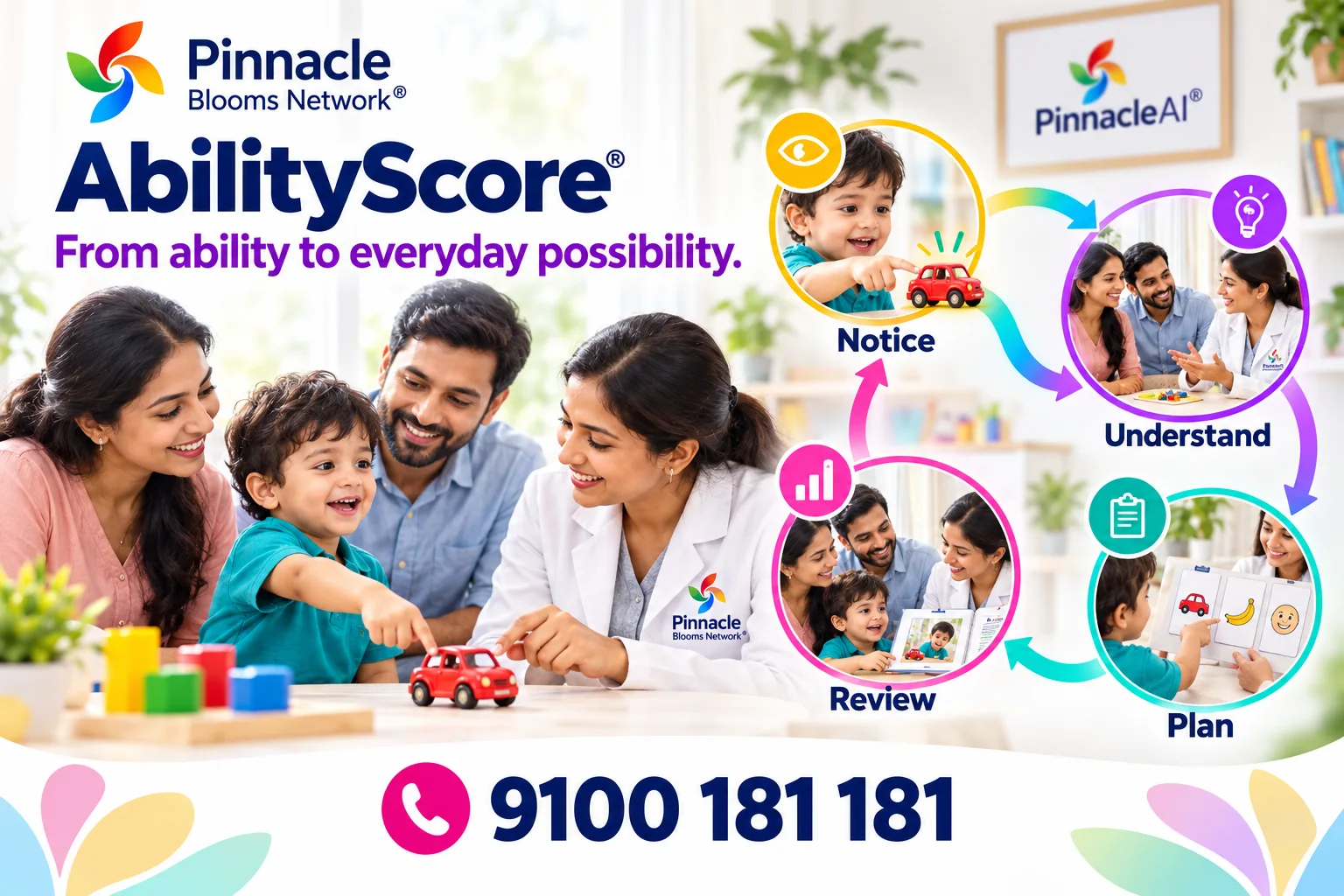
The starting picture. The next possibility.
AbilityScore® is PinnacleAI’s clinician-administered composite developmental measurement, displayed on a 0–1000 scale. A professional interprets the assessment with the child’s age, support and everyday context, then discusses meaningful next steps with the family.
You should leave an assessment understanding more than a number: what your child can do, what helps, which opportunity matters next and how the team will review it with you.
Architecture described in Evidence Dossier v2.0-M, Chapter 9, pp. 40–42 · 25 July 2026. These are versioned design quantities. They describe the measurement system, not a child’s outcome. Ask which assessment version is used for your child.
How the starting picture becomes useful
The clinician administers the assessment. Your family contributes the context. Together, you connect the information with a step that matters in your child’s day.
Bring the family’s priority, developmental history and everyday observations into the professional assessment.
A clinician administers the assessment. The composite sits alongside relevant abilities, support and context.
The professional and family connect that picture with a meaningful goal and suitable support.
Later assessment and daily observations help decide what to keep, adapt or explore next.
AbilityScore®
A composite measurement helps organise discussion of developmental abilities and later change.
7 Readiness Indexes
Separate views focus the discussion on communication, school, movement, learning, everyday independence and inclusion.
Your child’s plan
The professional and family choose the goal, suitable people and methods, everyday practice and review.
Explore the seven readiness views · How the child’s context stays connected · How planning uses a revisable forecast
Follow a real-life question
Illustrative planning example: a three-year-old chooses a favourite red car. This is an explanation of decisions, not an actual child report or a measured treatment result.
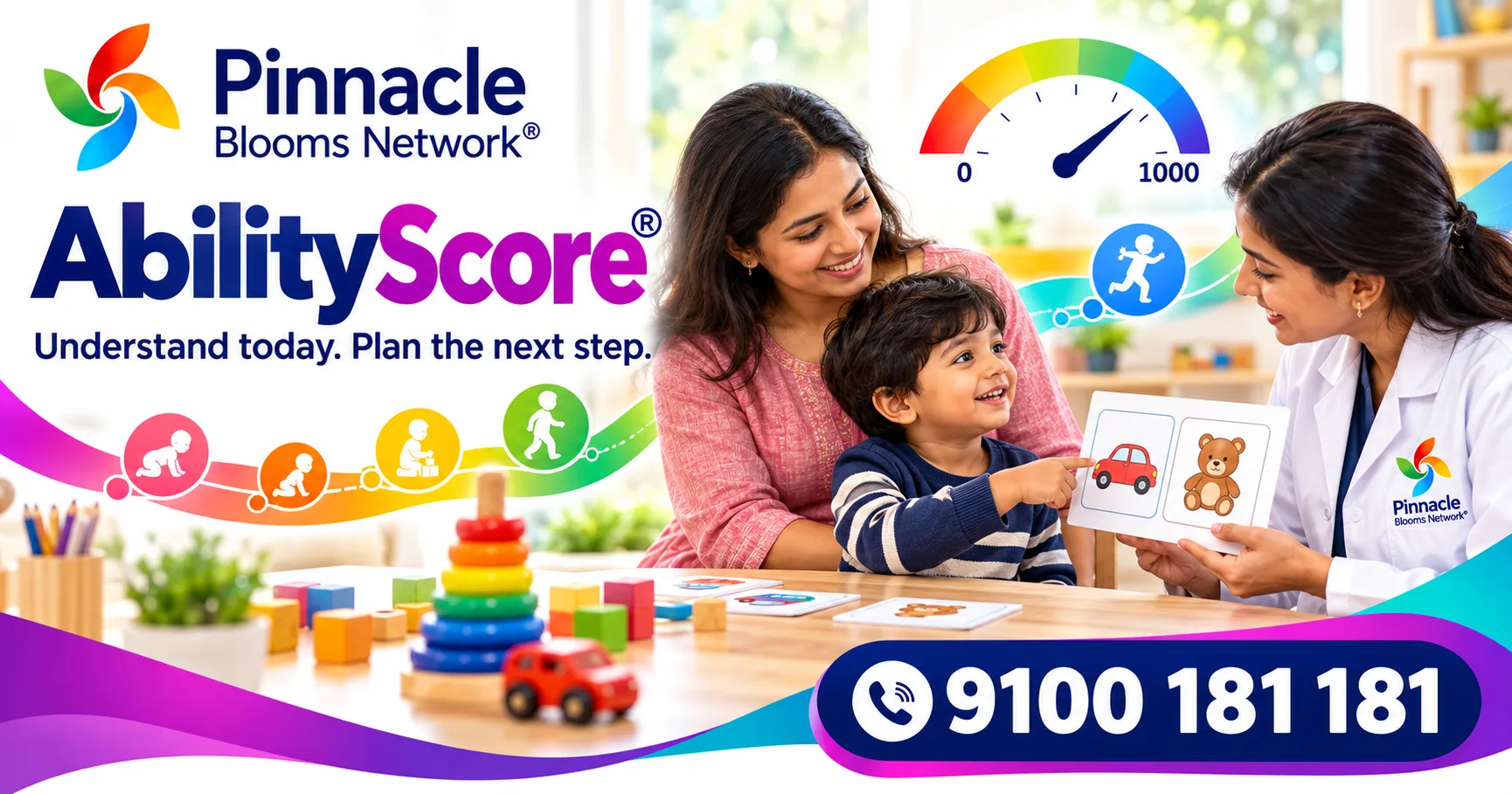
The child looks at the car, points and leads the mother toward it. She understands. A second familiar adult waits, unsure what the child means. The starting point includes a real choice and an existing way to communicate.
The parent explains who understands the request, where it happens and what help is used. A clinician assesses relevant abilities and interprets the composite in that wider context. One toy choice does not generate a clinical AbilityScore.
Together, the professional and family choose a way for the child to request the car that another person can understand: a suitable gesture, picture, word or communication aid. They agree how adults will respond, rather than choosing more words as the automatic goal.
An appropriate professional demonstrates the agreed approach. The family offers manageable opportunities, respects the child’s choice and notes what happened, with whom and with what help.
The review changes something specific
The useful change belongs in your child’s life. The assessment and everyday observations help the people around your child decide what to keep, adapt or explore next.
Clarity you can take home
You can ask the professional to connect the report with your child’s everyday experience. These four questions help make that conversation concrete.
Ask about the assessment version, age context and abilities that informed the report.
A familiar adult, communication aid, cue or calm setting can be important to the explanation.
Ask the team to connect the starting picture with the next everyday goal, suitable professional and practice.
Agree which real-life observations and assessment information will help judge the next decision.
The whole PinnacleAI® system
Measurement connects with a child-specific plan, suitable therapies, family practice and review. Your child’s self-sufficient, mainstream-included life gives every stage its purpose.
AbilityScore supports the assessed starting picture.
Explore this partChoose a relevant opportunity and a child-specific direction.
Explore this partSelect the professional contributions this goal needs.
Explore this partUse manageable, professionally guided family practice.
Explore this partBring observations across settings into a changed decision.
Explore this partCompare appropriately and decide what should happen next.
Explore this partKeep the child’s self-sufficient, mainstream-included life as the purpose throughout.
Explore this partThe right people for the purpose
Appropriate professionals recommend which support fits the assessed abilities and family priority. Your child’s goal brings the relevant contributions together.
Connect an assessed ability with a useful way to ask, share, choose or be understood.
Explore the therapyConnect access, movement and sensory or daily-routine support with participation.
Explore the therapyUnderstand the context of behaviour and choose suitable communication and support.
Explore the therapyConnect learning, accessible instructions and the environment with meaningful participation.
Explore the therapySee how suitable therapies integrate for autism support. The assessment informs a discussion; each child’s needs determine the proposed contributions.
Open. Honest. Transparent. Self-critical.
Pinnacle Blooms Network is operated by Bharath Healthcare Laboratories Private Limited, the legal licence holder. Explore the measurement design, Indian software licence and published research separately.
Company evidence dossier · July 2026
0–1000Chapter 9 of Evidence Dossier v2.0-M, pp. 40–42, describes the composite, clinical administration and the 349-skill, 17-domain, 591-observation architecture. These are versioned design quantities, not an outcome or independent validation result.
Inspect the sourceMD-5 · MFG/MD/2026/000248
Class BThe Indian licence covers PinnacleAI GPT-OS v1.0.0 as non-diagnostic developmental-support software for children aged 0–12, including ability measurement. It establishes the specified licence scope.
Inspect the sourceBIS · MD/L-2026029599
IS 23485:2019The management-system licence schedule names developmental ability mapping (Ability Score) within its software scope. Its scope and premises are available in the original record.
Inspect the sourceDOI 10.5281/zenodo.19482123
Methods preprintThe 9 April 2026 preprint describes construction and preliminary measurement findings. Read it alongside the separate external-validation protocol; a protocol is not a completed independent comparator study.
Inspect the sourceThe July 2026 company dossier describes the architecture used in this explanation. The April methodology preprint and external-validation protocol have their own versions and research status. Read each source in that context; this page does not present planned validation as completed independent findings.
Suggested citation: Pinnacle Blooms Network. AbilityScore®: Understand Your Child’s Abilities. Updated 5 October 2026. Bharath Healthcare Laboratories Private Limited.
Before you begin
Bring the questions that matter to your child. Understand the proposed next step before making a decision.
9100 181 181It is the display scale for PinnacleAI’s composite developmental measurement. A clinician explains it with the assessment version, the child’s age, relevant abilities, support and everyday context. It is not a percentage of development or a stand-alone IQ result.
No. The clinical score is clinician-administered and clinician-governed at a centre. Family questionnaires and daily observations contribute important context; they do not replace clinical administration or independently generate the clinical score.
The assessed picture helps the professional and family discuss which ability and support matter for a real-life priority. They then choose a specific opportunity, suitable methods and people, and what to review. A number alone does not prescribe a goal or therapy package.
AbilityScore is the composite developmental measurement. The Seven Readiness Indexes are separate views for particular areas of participation and support. The professional interprets both with the child’s context and the family’s priorities.
Bring that difference to the professional. The assessment version, setting, support and the child’s experience need to be understood together. Reassessment and review may lead to keeping useful support, adapting the plan or exploring a different need.
No. PinnacleAI GPT-OS is licensed as non-diagnostic developmental-support software. The score does not diagnose a condition, promise independence or determine admission. Care decisions require appropriate professionals, and school decisions involve the school and relevant support.
Start with one everyday moment you want to make easier, what your child already does and what help seems useful. Existing reports and relevant family observations can help the team explain the appropriate assessment, professional, centre and fees before you decide.
The Verify portal links the methodology preprint, the company evidence dossier, the MD-5 and BIS records, and the separate external-validation protocol. The protocol describes planned validation; it should not be read as completed independent comparator findings.
Let’s begin with your child
Start with one everyday moment. We’ll help you explore the suitable professional, assessment and first conversation so you can begin with clarity.
Telephone guidance is free. The team confirms the centre, professional, availability and fees with you.